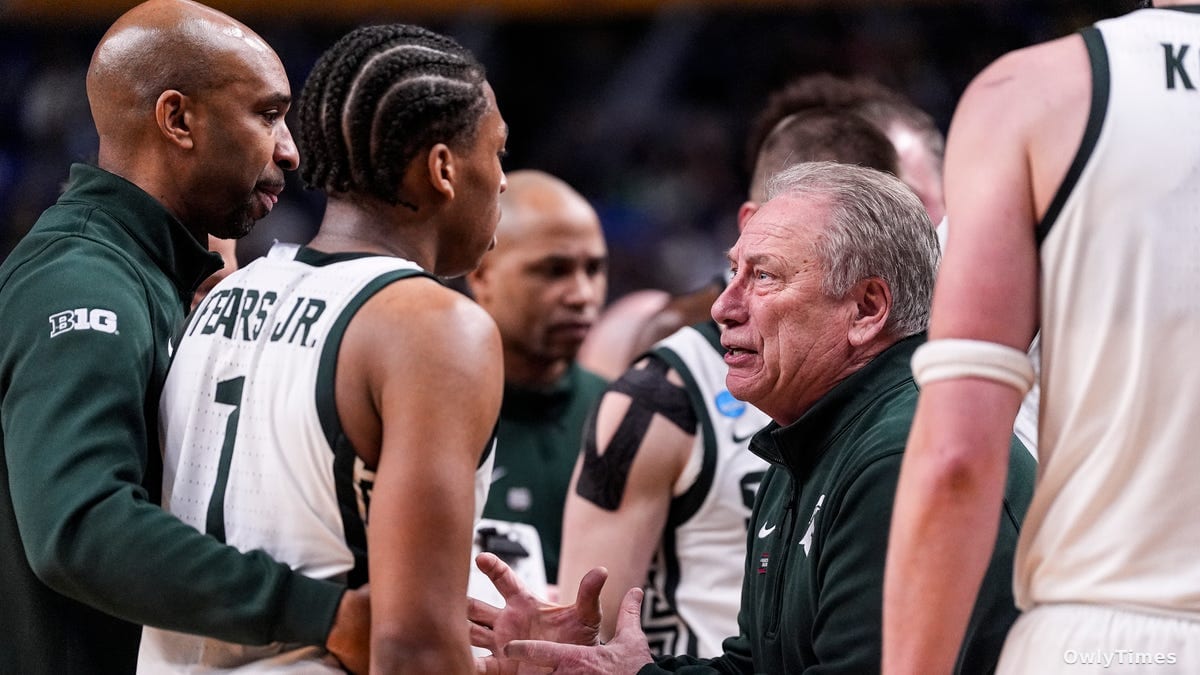

The air in Buffalo, New York, on March 18, 2026, carried the familiar, frantic electricity of the NCAA Tournament, but for Tom Izzo, the mood was less about the bracket and more about the breaking point. As he stood before the media, the Michigan State head coach looked like a man watching a beloved family heirloom being dismantled in real-time. For 31 seasons, Izzo has built a monument to stability at Michigan State, a career-long masterclass in consistency that has defied the modern trend of coaching volatility. Yet, as the industry shifts into an era of unchecked, high-stakes commercialization, Izzo finds himself in the uncomfortable position of being the last lighthouse in a storm that has already claimed contemporaries like Mike Krzyzewski, Roy Williams, and Jay Wright.
The Erosion of the Educational Ideal
The central tension defining Izzo’s twilight years isn’t just about winning—it’s about the soul of the sport. A Northern Michigan alumnus who majored in education, Izzo has spent decades championing the idea that college athletics should be a vehicle for learning. Today, he views the landscape as having shifted into a "dilapidated structure," where state-funded universities are increasingly reliant on private capital to fuel a cycle of unchecked spending. This isn’t a critique of athletes receiving compensation—a development Izzo has largely embraced after three decades of it being treated as a cardinal sin—but rather a lament for the vanishing emphasis on the "teaching" component of the college experience. He sees a system that has become an annual auction house, a far cry from the environment he entered as a graduate assistant in 1983 when the tournament field stood at just 52 teams.
The Cost of Expansion
The most immediate flashpoint for this friction is the proposed expansion of the NCAA Tournament from 68 to 76 teams, a move likely to be implemented by 2027. To Izzo, this is less about competitive integrity and more about an "attempted money grab" by an organization struggling to satisfy the financial demands of administrators, coaches, and athletes alike. When news of this plan began to circulate in late February, Izzo did not mince words. During an address on February 20, he openly condemned NCAA leadership, arguing that the governing body has far more pressing administrative crises to manage than the expansion of a bracket that currently balances 31 automatic qualifiers with 37 at-large berths.
A Legacy of Unbroken Streaks
Despite the external chaos, Izzo’s internal compass remains fixed on the pursuit of excellence. Having taken the reins from Jud Heathcote in 1995, Izzo has engineered a streak of 27 consecutive NCAA Tournament appearances—the longest active run in Division I and the most by any coach at a single institution in the history of the sport. Even with the heartbreak of the 2020 tournament cancellation—a "what-if" moment that robbed his Cassius Winston and Xavier Tillman-led squad of a potential title—his commitment to the grind has never wavered. He holds the record for the most Final Four appearances among active Division I coaches, with eight, a testament to a career defined by the steady accumulation of success rather than the "highs and lows" of the modern transfer-portal era.
The Final Signal of the Old Guard
Izzo has largely retreated from the national committees where he once spent two decades advocating for reform, choosing instead to focus his remaining energy on his own locker room. He is no longer looking to be an arbiter of the NCAA’s quagmire; he is simply trying to preserve a culture of consistency in an environment that seems hell-bent on destroying it. As the industry hurtles toward 2027 and the potential implementation of the 76-team field, the trajectory of this era will likely be measured by the next iteration of the tournament’s structure. If the sport continues to prioritize rapid, unchecked expansion over the stability that defined the careers of coaches like Izzo, the next reading of the NCAA’s strategic expansion metrics will confirm whether the "March Madness" brand can survive its own evolution, or if it will finally outpace the very legends who built it.

