
The silence in the Denver Nuggets’ front office this week was not the quiet of a team resting on its laurels; it was the suffocating stillness of a championship window beginning to creak shut. When the organization’s braintrust gathered for a press conference this past Friday, the air was thick with the reality that a season once framed as a run for glory had curdled into an early exit. For a franchise that entered the year viewing itself as a legitimate contender, the transition from analyzing tactical schemes to questioning the very viability of the roster is a jarring, high-stakes pivot.
The Myth of the "Healthy" Contender
There is a natural human tendency to blame misfortune for our shortcomings, and the Nuggets have a ready-made narrative in their injury report. Josh Kroenke, the team president, spoke with a tone of what-might-have-been, admitting he viewed this group as a "60-, 65-win team" if they could only stay on the floor. The numbers, however, tell a story of inconsistency: Aaron Gordon played just 36 regular-season games, Christian Braun saw 44, while Peyton Watson and Cameron Johnson each logged 54.
Yet, relying on health as a crutch ignores the brutal calculus of the postseason. Denver finished the regular season at 54-28, securing the No. 3 seed in the Western Conference, only to be dismantled in a six-game series by the Minnesota Timberwolves. The sting is magnified by the fact that the Timberwolves achieved this victory while notably shorthanded, missing Anthony Edwards, Donte DiVincenzo, and Ayo Dosunmu. To suggest the Nuggets were merely victims of circumstance is to ignore that the league has evolved, leaving a team that once dictated the pace now struggling to keep up.
The Price of Potential
The emergence of Peyton Watson as a legitimate creator has been the bright spot in an otherwise gloomy campaign, but his rise presents a classic organizational paradox. With Watson now a restricted free agent, the team is forced to balance the desire to retain homegrown talent against the rigid financial architecture of the second apron. Executives Ben Tenzer and Jonathan Wallace spoke glowingly of Watson’s development, yet they are acutely aware that keeping him could force the team to shed salary elsewhere to avoid a crushing luxury-tax bill. It is the perennial tension of the modern NBA: how do you build for the future when the cost of keeping your own players threatens to bankrupt your flexibility?
Adapt or Fade Away
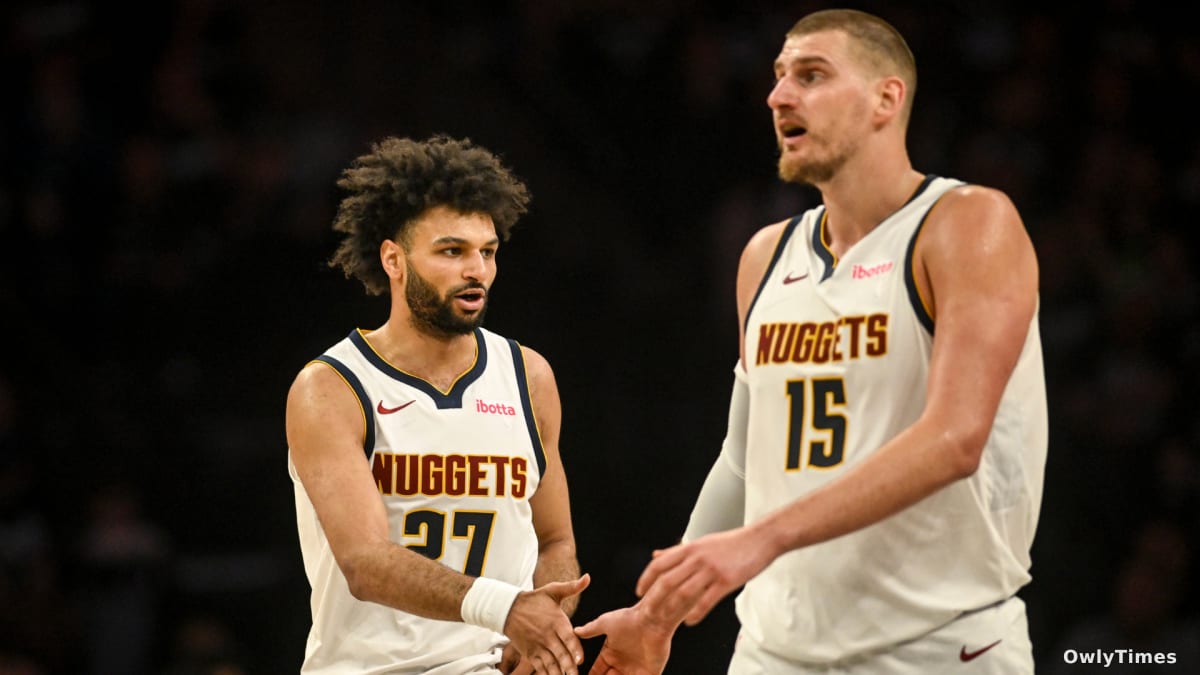
The tactical post-mortem, led by coach David Adelman, centered on the team’s recurring inability to handle ball pressure. Adelman pointed to the late-series insertion of backup guard Tyus Jones as a necessary, if desperate, attempt to provide the organization the poise it lacked against aggressive defenses. It is a harsh assessment of a core that has relied heavily on the brilliance of Nikola Jokić and the evolving play of Jamal Murray. Adelman’s demand for better one-on-one defense in the final seven seconds of the shot clock underscores a shift in philosophy: the Nuggets can no longer hide behind complex schemes when they are failing at the fundamental, individual level.
Everything is on the Table
Perhaps the most significant admission from Friday’s session was the shift in rhetoric regarding the roster’s permanence. While Kroenke declared that "everything's on the table, outside of trading Nikola," the door has been left ajar for significant upheaval. Even Jamal Murray, coming off his first All-Star season, is no longer untouchable in the theoretical sense. As the Nuggets contemplate whether to tinker or tear down, they are staring at a reality where the next reading of the team's salary cap flexibility and contract extensions will dictate whether they remain a championship threat or begin a slow, painful rebuild. The "season that never was" is over; the season of difficult consequences has just begun.