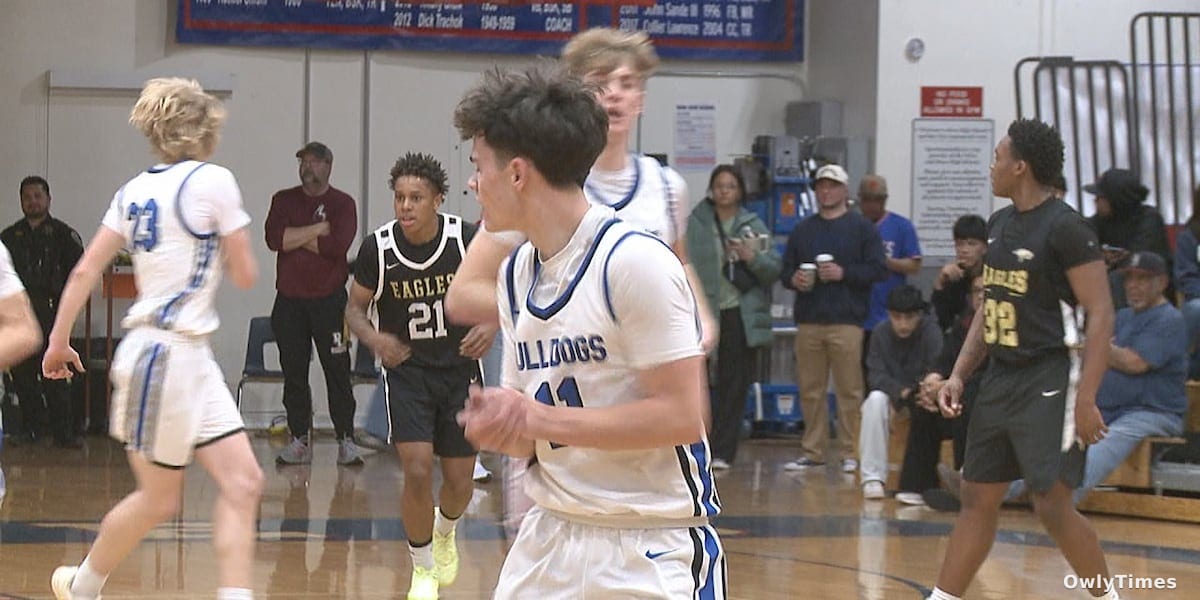

The squeak of sneakers on polished wood, the breathless hush before a free throw, the eruption of a crowd – these are the sounds echoing across Nevada this weekend as high school basketball crowns its champions. But beyond the brackets and buzzer-beaters, something else is culminating: a quiet, decades-long tradition of community storytelling, powered by a dedicated team often overlooked in the glare of athletic achievement. This isn’t just about who wins the 4A, 2A, and 1A state titles at Spanish Springs, Wooster, and Reno High Schools; it’s about the enduring power of local sports coverage, and what happens when that coverage is built on genuine connection.
The Caravan’s Legacy: More Than Just Scores
For years, the “Sports Caravan” – a local broadcast team comprised of Harrison Brenner, Ray Kinney, Trey McKevly, Brady Poppler, Wolf Larson, and a rotating group of directors – has been a fixture of Nevada high school sports. Eight broadcasts “up” and eight “down” this season, as KOLO reports, signifies a consistent commitment to bringing these games to viewers. But to understand the significance of this seemingly simple statistic, you have to remember a time before streaming, before instant highlights on social media. The Sports Caravan was the access point for many families, the way they followed their children, their neighbors, their community’s triumphs and heartbreaks. In 2026, with so many entertainment options vying for attention, maintaining that level of consistent, local engagement is a remarkable feat.
See the original kolotv.com story for the full account.
The numbers tell a story of shifting media landscapes. While national sports networks see viewership steadily increasing – ESPN averaged 2.4 million viewers for college basketball games this season, a 7% jump from 2025 – local sports broadcasts are facing an uphill battle. The Sports Caravan isn’t competing for eyeballs with LeBron James; it’s competing with TikTok, Netflix, and the endless scroll of personalized content. Yet, they’ve not only survived, but thrived, by offering something those platforms can’t: a deeply rooted sense of place. They know the players’ names, their stories, their families in the stands. This isn’t just broadcasting a game; it’s broadcasting a community.
The Human Cost of Shrinking Local News
This dedication feels particularly poignant in the context of the broader decline of local journalism. A 2024 report by Northwestern University’s Medill School of Journalism found that the U.S. has lost nearly a third of its newspapers since 2005, and with them, vital coverage of local events, including high school sports. The Sports Caravan, in a way, is filling a void, providing a service that’s increasingly rare. It’s a reminder that sports aren’t just about athletic prowess; they’re about social cohesion, about building identity, about giving young people a platform to shine. When that coverage disappears, a piece of the community disappears with it. The team’s announcement that they’ll be back for football season in August isn’t just a scheduling update; it’s a promise of continued connection.
Beyond the Scoreboard: Investing in Tomorrow’s Storytellers
What’s particularly interesting is the rotating cast of directors working alongside the core team. This isn’t a static operation; it’s a training ground, a place where aspiring broadcasters can gain experience and learn the ropes. KOLO’s acknowledgement of this element suggests a deliberate effort to invest in the future of local sports journalism. In a media landscape dominated by consolidation and cost-cutting, this commitment to mentorship is a refreshing anomaly. It’s a recognition that the future of local coverage depends on nurturing the next generation of storytellers.
The state championships this weekend are, of course, about the athletes, the coaches, and the schools competing for a title. But they’re also a testament to the power of local sports coverage, and the dedicated individuals who make it happen. As we look ahead, the question isn’t just who will win on the court, but whether communities across the country will continue to prioritize and support the local voices that connect us to the games – and to each other. Will other stations follow KOLO’s lead and actively invest in the future of local sports broadcasting, or will these vital community connections continue to erode? That’s a game worth watching.