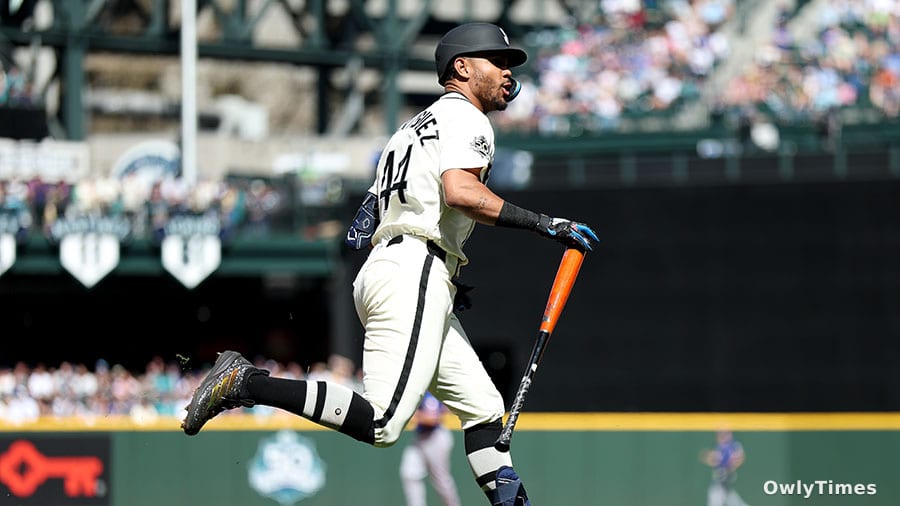

The ritual of spring in Seattle is often defined by the persistent rain, but for the Mariners faithful, the true seasonal indicator has become the slow-burn arrival of Julio Rodríguez. It is a familiar rhythm by now: the superstar center fielder struggles to find his footing in the crisp air of April, only to ignite when the mercury rises. Yet, as the team grapples with the recent news that third baseman Brendan Donovan has been placed on the 10-day IL, the pressure on Rodríguez to accelerate his timeline has never felt more acute.
The Quiet Evolution of an Elite Swing
Entering play this Monday, the 25-year-old Rodríguez carries a .592 OPS with a solitary home run across 23 games. By the harsh metrics of modern baseball, the start is undeniably sluggish. However, to focus solely on the surface-level slash line is to miss a fundamental shift in his approach at the plate. While he has struggled to find his power stroke, there is a visible, disciplined recalibration happening beneath the surface.
The data suggests a player consciously reining in his aggression. Throughout his career, Rodríguez has been a prolific swinger, historically attacking 53.5% of the pitches he encounters. From 2023 through 2025, that figure never dipped below 53.9%. This season, that number has contracted to 50.9%, a level of restraint not seen since his 2022 rookie campaign. He is, quite literally, learning to wait.
Patience as a Professional Skill
This newfound patience is most visible in his approach to the start of his at-bats. In 2026, Rodríguez has offered at just 28.6% of first pitches—a mark more than 10% lower than any previous point in his career. The byproduct of this patience is a walk percentage of 11.1%, four points higher than his career-best set in 2022.
As Mike Salk noted on Seattle Sports’ Brock and Salk, while the results remain modest, the process feels markedly different from the frantic starts of years past. The raw output in his last 15 games—a .734 OPS across 64 plate appearances—serves as a bridge between his early-season doldrums and the expected summer surge. It is not yet the version of Rodríguez that dominates highlight reels, but it is a version that is actively refusing to chase his way out of a slump.
The Veteran Shift
Beyond the mechanical adjustments, there is a psychological transformation taking hold. Mariners insider Shannon Drayer points to a maturing confidence in the batter's box, noting that Rodríguez is increasingly relying on internal experience rather than external expectations. The "jumpiness" that defined his earlier struggles is being replaced by a structured plan, even if the execution remains a work in progress.
This transition from a reactive hitter to one who operates from a base of experience is a critical developmental hurdle for any young star. According to Drayer, he is now making adjustments on his own terms, utilizing his fifth MLB season to diagnose his own tendencies rather than searching for answers from others. He is no longer just playing; he is managing his own at-bats.
The path forward for the Mariners relies on this internal maturation. Whether this disciplined approach eventually translates into the extra-base power that defined his rise will be determined by his continued consistency at the plate. The next readings of his swing percentage and walk rate will show whether this disciplined approach is a permanent evolution or a temporary reaction to his early-season cold streak.

