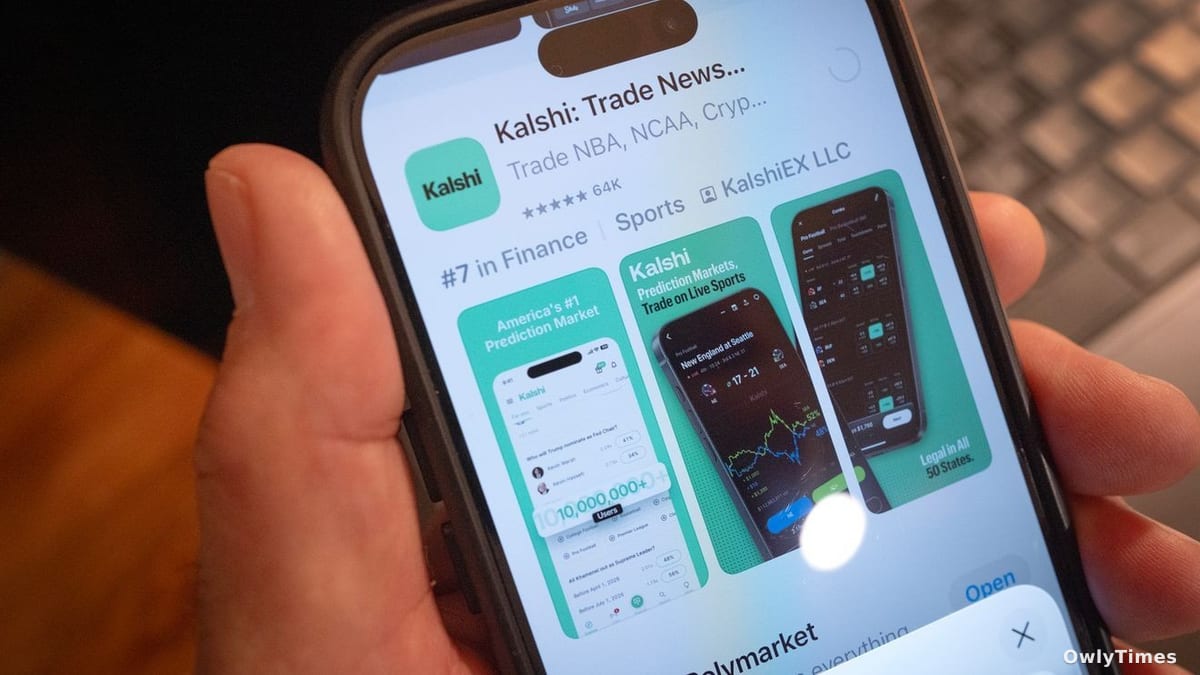

The strategic calculus behind Kalshi’s recent enforcement actions is less about policing individual bettors and more about securing the platform’s legitimacy as a regulated exchange. By levying fines and suspensions against political candidates who wagered on their own campaigns, the platform is attempting to preempt the kind of regulatory scrutiny that historically dismantled or severely constrained early financial derivatives markets. For a platform operating in the gray area of political gambling, establishing an internal "insider trading" framework is a calculated move to mimic the compliance standards of the New York Stock Exchange, thereby insulating the firm from accusations of operating an unregulated betting parlor.
The Cost of Political Curiosity
Who benefits and who loses in this crackdown? The platform itself stands to gain the most, as it builds a reputation for self-regulation that may deter future federal interventions. Conversely, the candidates find themselves in a precarious position, trading their professional reputation and long-term access to the platform for relatively nominal financial gains.
Matthew Klein, a Minnesota state senator and candidate for an open U.S. House seat, provides a textbook example of this miscalculation. Klein wagered $50 that he would win his nomination, a move he later framed as an act of curiosity regarding the app’s mechanics. The result was a $539.85 fine and a five-year suspension. When a candidate for federal office cites a lack of "clearer rules and regulations" as an excuse for violating existing exchange policies, it highlights the friction between personal ambition and the rigid, often unforgiving, infrastructure of automated surveillance systems.
Patterns of Suspicious Activity
The scale of this enforcement reveals that the "insider threat" is not merely anecdotal. In February alone, Kalshi opened 200 investigations related to potential insider trading, resulting in the removal of two users and the broader disciplinary actions against the three candidates. These figures suggest that as prediction markets move from the fringes of internet culture into the mainstream of campaign finance discourse, the impulse for candidates to "hedge" their own political futures—or manipulate market sentiment—is rising.
The case of Mark Moran, an independent U.S. Senate candidate in Virginia, illustrates a different strategic motivation. Unlike Klein, who claimed ignorance, Moran bet on his own candidacy announcement and later told CNN he "wanted to get caught" to highlight the nature of what he labeled illegal gambling. While Moran viewed his $6,299.30 fine as a protest, Kalshi treated it as a compliance breach, noting he ceased all communication with their investigation team. The contrast is sharp: one candidate views the market as a tool for personal inquiry, another as a platform for political theater, yet the exchange treats both as disruptions to its operational integrity.
Precedent and Proactive Engineering
Kalshi’s justification for these moves—that "bad actors will try to cheat" just as they do in traditional financial markets—mirrors the rhetoric used during the implementation of the Sarbanes-Oxley Act, where increased internal controls became the baseline for market participation. By treating political candidates as "insiders," Kalshi is effectively importing the regulatory rigor of the 2008 financial crisis reforms into the realm of election-based betting.
The Texas Republican candidate for the 21st Congressional District, who paid a $784.20 fine and accepted a five-year suspension, serves as the third data point in this series of enforcement actions. As the platform continues to refine its "proactive engineering solutions," the next reading of their internal investigation metrics will show whether these fines serve as an effective deterrent or if political candidates will continue to test the boundaries of these digital prediction markets.