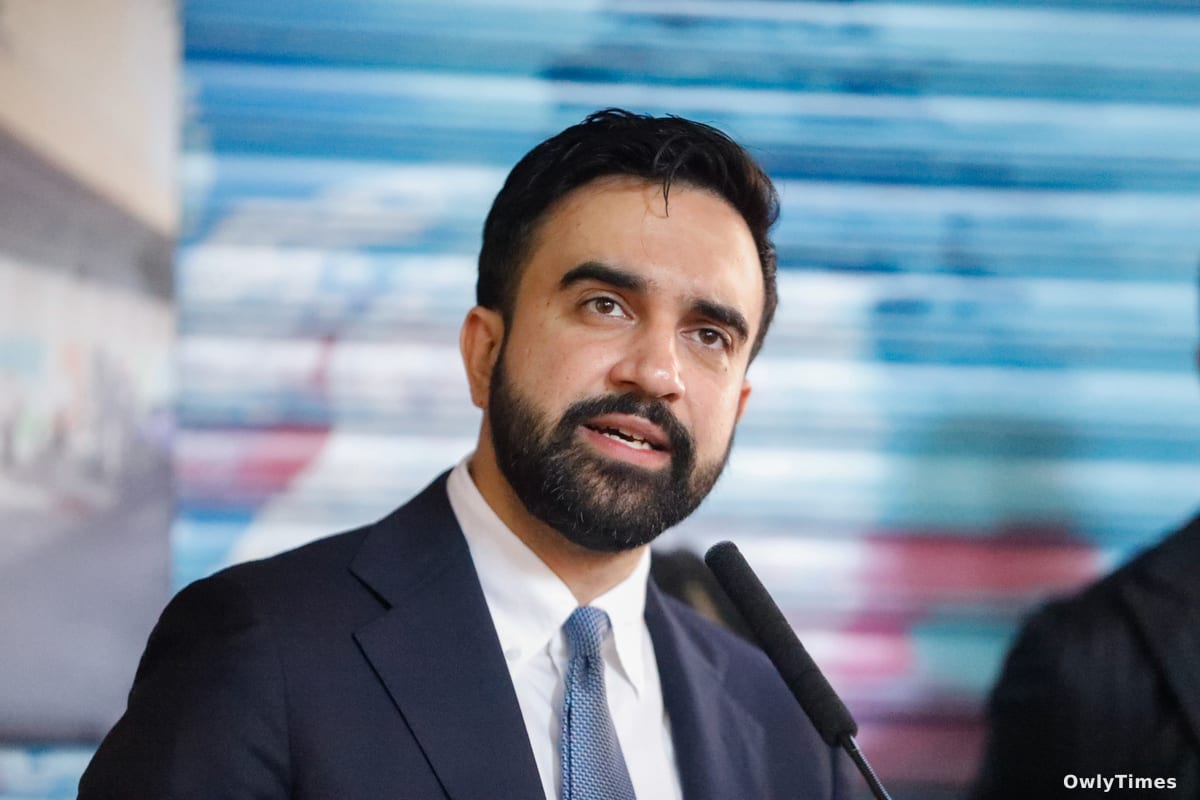

New York City’s corporate leadership is currently facing a fundamental breakdown in political alignment, as the workforce they rely on to drive growth actively funds the very administration their executives are working to contain. Follow the money, and the data reveals a sharp divide: while CEOs lobby against tax hikes and regulatory pressure from the administration of Mayor Zohran Mamdani, their own employees are fueling his campaign coffers with thousands of small-dollar donations.
The disconnect is most visible within the Partnership for New York City, a coalition of 300 major firms. An analysis by THE CITY shows that 1,971 employees from these member companies contributed more than $242,000 to Mamdani’s mayoral run. This trend suggests that the "young talent"—the demographic CEOs frequently cite as their primary motivation for maintaining a New York footprint—is fundamentally at odds with the political agenda of the C-suite.
The Tech Sector’s Internal Split
Nowhere is this divergence more pronounced than in Big Tech. Despite Mamdani’s regulatory focus on tech industry practices, such as subscription cancellation hurdles, the sector has become his most reliable financial base. Google employees alone accounted for the highest contribution volume among all partnership members, with 323 staff members donating a total of $55,726.61. The donor profile follows a clear pattern: software engineers and researchers, predominantly based in Brooklyn and Manhattan, are consistently opting for the mayor’s platform over the interests of their corporate leadership.
This financial support is matched by voter sentiment. A recent Marist poll indicates that Mamdani’s strongest approval ratings are held by college graduates aged 18 to 29. For these workers, the mayor’s brand of progressive governance appears to be a factor in their decision to remain in the city, an irony not lost on industry veterans. Mary Ann Tighe, New York region CEO of CBRE, notes that having a 34-year-old mayor is a recruitment asset, as it makes the city a more attractive destination for younger talent.
The Limits of Corporate Influence
The data suggests a structural weakness in the Partnership’s lobbying strategy. As Bradley Tusk, a former aide to Mayor Michael Bloomberg, points out, the days of top-down political alignment are waning. "You can’t just tell workers to do something and expect them to do it because it’s good for you," Tusk observed. If the city's leading businesses cannot articulate how their policy goals—such as preventing tax increases—tangibly benefit their own employees, their political influence will continue to be diluted by the very people they employ.
Steven Fulop, who assumed the role of CEO at the Partnership in January, faces the challenge of navigating this friction. While he frames the current situation as a temporary "adverse reaction" to the choices available in the November election rather than a deep-seated embrace of socialism, the numbers indicate a more persistent trend. With an average donation of $93 from Partnership-affiliated employees—closely tracking the campaign’s final $99 average—this is not merely the behavior of a fringe minority; it is a broad-based commitment from the city’s professional class.
The next reading of the city’s Campaign Finance Board data and future polling among college-educated residents will determine whether this internal corporate dissent is a passing phase of the early Mamdani administration or a permanent shift in the city’s political economy. For investors and consumers, the takeaway is clear: the traditional assumption that corporate interests and employee political loyalties move in lockstep is no longer a safe bet in New York City.