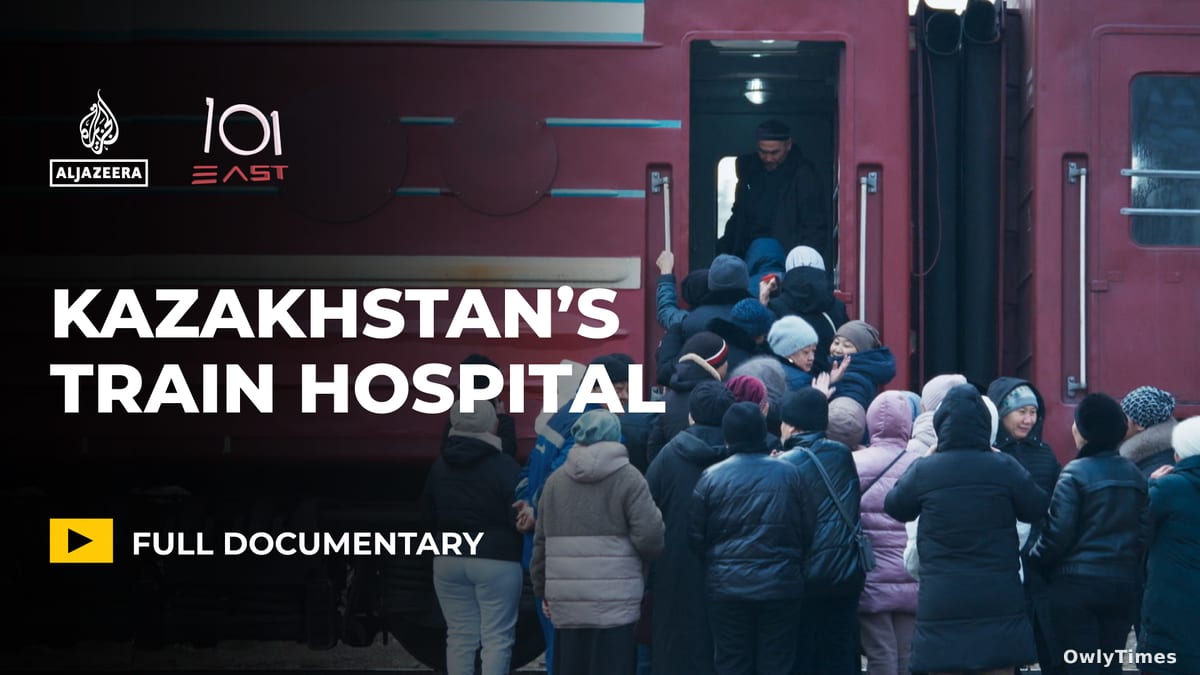

The image of a train evokes connection, progress, and often, a bringing together of disparate places. But in Kazakhstan, a train represents something far more fundamental: the very delivery of healthcare to communities effectively cut off from modern medicine. While headlines rightly celebrate the ingenuity of a “hospital on wheels,” the story emerging from the 20,000-kilometer annual journey of Kazakhstan’s medical train isn’t simply about logistical innovation. It’s a stark illustration of systemic healthcare inequities, and a question of whether mobile solutions can truly bridge the gap when foundational infrastructure is absent. As reported by 101 East on February 28, 2026, this train isn’t a supplemental service; for tens of thousands of Kazakhs, it is the healthcare system.
Reaching the Unreachable: The Scale of Kazakhstan’s Healthcare Disparity
Kazakhstan, a nation roughly the size of Western Europe, presents a unique challenge to equitable healthcare access. Vast stretches of sparsely populated land, particularly in the central and northern regions, lack the population density to support permanent hospitals or even consistent clinics. The medical train, operating for eight months of the year, directly addresses this geographic barrier, reaching over 100 isolated communities. This isn’t a matter of convenience; it’s a matter of basic access. Consider that in many of these regions, the nearest medical facility might be hundreds of kilometers away, accessible only by arduous travel – a distance prohibitive for the elderly, those with chronic conditions, or during the harsh winter months. The train’s provision of free diagnostics, consultations, and specialized care isn’t charity, but a necessary intervention to prevent treatable conditions from becoming life-threatening emergencies. The sheer distance covered – 20,000 kilometers annually – underscores the scale of the problem; it’s not a few isolated cases, but a widespread, systemic lack of access.
See the original Al Jazeera story for the full account.
Beyond Logistics: What the Train’s Success Reveals About Primary Care Gaps
The 101 East report focuses on the doctors living and working aboard the train, highlighting their dedication to providing care “often in sub-zero temperatures.” While this paints a compelling picture of commitment, it’s crucial to understand what kind of care is being delivered. The train is staffed with specialist doctors, meaning they possess expertise in areas like cardiology, oncology, or neurology. This is a critical detail often lost in broader coverage. The presence of specialists suggests that the primary need isn’t simply for basic medical attention, but for addressing complex health issues that have gone undiagnosed or untreated due to the lack of initial access to primary care physicians. The train is, in effect, functioning as a mobile tertiary care center, stepping in where preventative medicine and early intervention should be. This isn’t a criticism of the train’s mission, but a diagnosis of the underlying problem: a severe shortage of primary care infrastructure in these regions.
The Limits of a Mobile Solution: Sustainability and Comprehensive Care
The medical train is undeniably a lifeline for many Kazakhs, but it’s essential to acknowledge its limitations. While the 101 East report doesn’t delve into the financial specifics, the cost of maintaining and operating a fully-equipped medical train – including staffing, fuel, and supplies – must be substantial. This raises questions about the long-term sustainability of the program, particularly in the context of fluctuating national budgets. Furthermore, the train’s episodic nature presents challenges for continuity of care. Specialists can provide diagnoses and initiate treatment plans, but ongoing management of chronic conditions requires consistent follow-up, something a mobile unit cannot reliably provide. The train also lacks the capacity for complex surgeries or intensive care, meaning patients with severe conditions may still need to be transported to larger urban centers, negating some of the benefits of initial access.
Future Tracks: Integrating Mobile Care with Permanent Infrastructure
The success of Kazakhstan’s medical train demonstrates a clear need and a viable, if imperfect, solution. The next crucial step isn’t simply to expand the train’s reach, but to integrate it into a broader strategy for strengthening primary healthcare infrastructure in remote regions. This could involve investing in telemedicine capabilities, training and deploying local healthcare workers, and establishing small, strategically located clinics that can provide ongoing care and serve as referral points for the train’s specialist services. The question now facing Kazakhstan’s healthcare policymakers is this: will the medical train remain a necessary emergency measure, or can it become a catalyst for building a more equitable and sustainable healthcare system for all its citizens? The coming years will reveal whether the train is a temporary fix or a stepping stone towards lasting change.





