
The image was striking: Bryce Bennett, the American downhill skier, poised at the start gate in Bormio, Italy, last week, a flash of color barely visible beneath his racing suit. It wasn’t the sleek design of his gear, or the sponsors emblazoned across his chest, but the subtle grid of bright pink KT Tape tracing the back of his neck. Most viewers likely missed it, focused on the impending rush of 90 mph down a treacherous slope. But that tape wasn’t about bracing for impact; it was about something far more fundamental – a silent conversation between Bennett’s brain and his body, a high-tech nudge to optimize performance at the very edge of human capability. And it speaks to a quiet revolution happening in sports, and increasingly, in everyday life, that goes far “Beyond the headlines” of injury recovery.
The Sixth Sense of Athletes
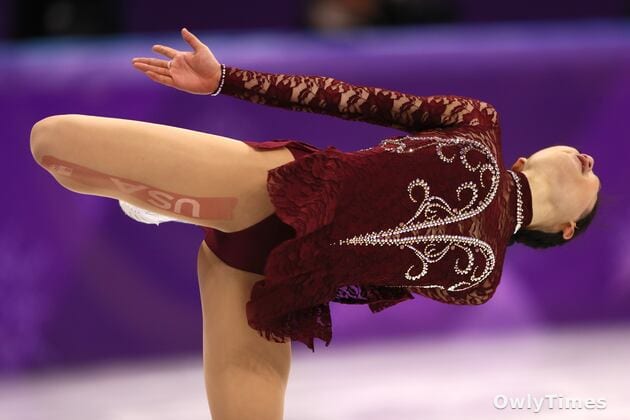
We’ve all seen the colorful strips of kinesiology tape – KT Tape – adorning athletes for years, often assumed to be a quick fix for sprains or strains. But according to Christopher Harper, an orthopedic specialist and member of the KT Tape medical advisory board, that’s a fundamental misunderstanding of its power. “A lot of people think the primary use is bracing of a joint or something like that,” he told me. “It can be used in subtle ways that way but that’s not really the primary function. The primary function is to improve proprioception, that proprioceptive feedback.” Proprioception, Harper explained, is essentially your body’s “sixth sense” – its ability to understand where it is in space and how it’s moving, even without visual cues. It’s the unconscious coordination that allows a figure skater to land a triple axel or a skier to navigate a slalom course. And KT Tape, surprisingly, isn’t about supporting movement, but about enhancing the signals that make that movement possible.
Source material: deseret.com.
The science lies in the skin. Harper detailed how cutaneous feedback – the information sent from your skin to your brain – profoundly influences proprioception and anticipatory motor planning. The tape, strategically applied, heightens that feedback, allowing athletes to make those split-second adjustments crucial in high-speed, low-margin sports. It’s not just about reacting faster; it’s about knowing how to react before the brain even fully processes the need. This explains the seemingly bizarre practice of skiers applying tape to their faces during frigid competitions – not as a barrier against frostbite, though it proved surprisingly effective, but as a constant sensory reminder, a way to stay “tuned in” to their bodies in extreme conditions.
A Neuromuscular Bookmark for Peak Performance
The implications extend beyond the slopes and the ice rink. Harper revealed that KT Tape is actually used more in physical and neurological rehabilitation than in elite sports. He described its use with children recovering from strokes or dealing with neurological conditions, helping to correct posture and retrain movement patterns. This highlights a crucial point: KT Tape isn’t just a performance enhancer for the already capable; it’s a tool for re-establishing capability.
And the tape’s utility isn’t limited to active exertion. Harper described a fascinating application during competitions: athletes using tape as a “neuromuscular bookmark.” During the often lengthy delays between heats or races, the body shifts from intense activity to rest, and temperature fluctuations can disrupt proprioceptive awareness. Taping specific muscles helps maintain that crucial mind-body connection, allowing athletes to “hang onto their warm-up a little bit longer.” It’s a subtle intervention, but in a world where milliseconds can determine victory or defeat, subtlety is everything.
Beyond the Arena: Posture and the Modern Workplace
But perhaps the most surprising revelation is the potential for KT Tape to address the everyday aches and pains of a largely sedentary population. Harper pointed out that 87% of jobs now involve sitting at a computer, leading to widespread postural issues like forward head and rounded shoulders. “There’s ways to use the tape to help posturally cue you,” he explained, emphasizing that it’s not about bracing, but about retraining. The tape acts as a constant reminder, subtly guiding the body into a more optimal alignment even during routine activities like reaching for a dish in the cupboard.
This isn’t about a quick fix, but about leveraging the power of proprioception to break ingrained habits. The tape doesn’t force better posture; it provides the sensory feedback necessary for the body to learn and maintain it independently. It’s a testament to the tape’s versatility – a tool with 101-plus uses, as Harper put it, far beyond its initial reputation as a simple injury treatment. This is a shift in thinking about athletic recovery and physical wellbeing, moving away from reactive treatment and towards proactive enhancement.
What will happen as this technology becomes more accessible and understood? Will we see KT Tape integrated into workplace wellness programs, or become a common sight in everyday life, subtly reshaping our posture and movement patterns? The future of kinesiology taping isn’t just about helping athletes reach their peak; it’s about unlocking the potential for better movement and wellbeing for everyone.





