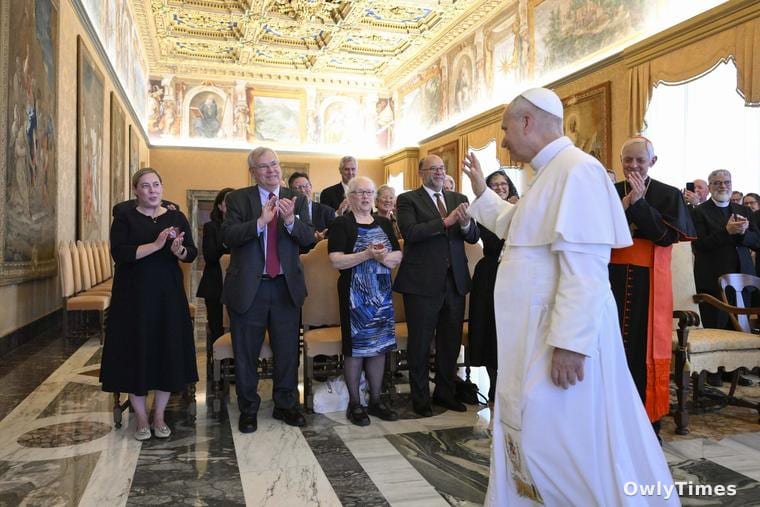

For centuries, the relationship between scientific inquiry and religious faith has been portrayed, and often experienced, as one of tension, if not outright opposition. Yet, a recent address by Pope Leo XIV has reframed this historical dynamic, posing a crucial scientific and societal question: What if the greatest threats to both science and religion are not each other, but a common, underlying challenge to objective truth itself? This question, articulated on May 11 during an audience with members of the Vatican Observatory Foundation, prompts a deeper look into the shared responsibilities of both domains, particularly regarding our planet's well-being.
The Shared Threat to Truth and Planet
When headlines distill complex messages, they often highlight the most immediate warning. In this case, the Pope's declaration that "the principal threat facing both religion and science today is the denial of the existence of objective truth" might capture attention. However, what the address actually found, beyond a stark warning, is a nuanced argument for convergence. Pope Leo XIV specifically linked this denial to tangible consequences, stating that "Too many in our world refuse to acknowledge what both science and the Church clearly teach: that we bear a solemn responsibility for the care of our planet and for the well-being of those who inhabit it, especially the most vulnerable, whose lives are threatened by the irresponsible exploitation of both people and the natural world." This isn't merely a philosophical lament but a direct call to action, emphasizing that both scientific understanding and ethical teachings point to the same conclusions about environmental stewardship and human dignity.
The Pope’s remarks, as reported by the National Catholic Register, underscore that the Church's commitment to "rigorous and honest science remains not only valuable but essential." This perspective is a critical counterpoint to any simplistic narrative of faith rejecting scientific discovery. Instead, it posits that when objective truth is undermined, whether by ideological bias or misinformation, the capacity for both scientific progress and moral leadership to address global crises like climate change and social injustice is severely hampered.
A Legacy of Bridging Faith and Scientific Inquiry
The Vatican Observatory itself serves as a powerful symbol of this intertwined history. Pope Leo XIV recalled that his predecessor, Pope Leo XIII, refounded the observatory in 1891. This was a period when science was increasingly seen as a rival to religious authority, prompting the Church to feel an "urgent need to counter the growing perception that faith and science were enemies." The very existence and continued operation of institutions like the Vatican Observatory challenge the notion of an irreconcilable chasm between the two. Instead, they demonstrate a long-standing commitment to scientific exploration from within a faith tradition, showing that "people of deep faith feel called to explore the origins and workings of the universe."
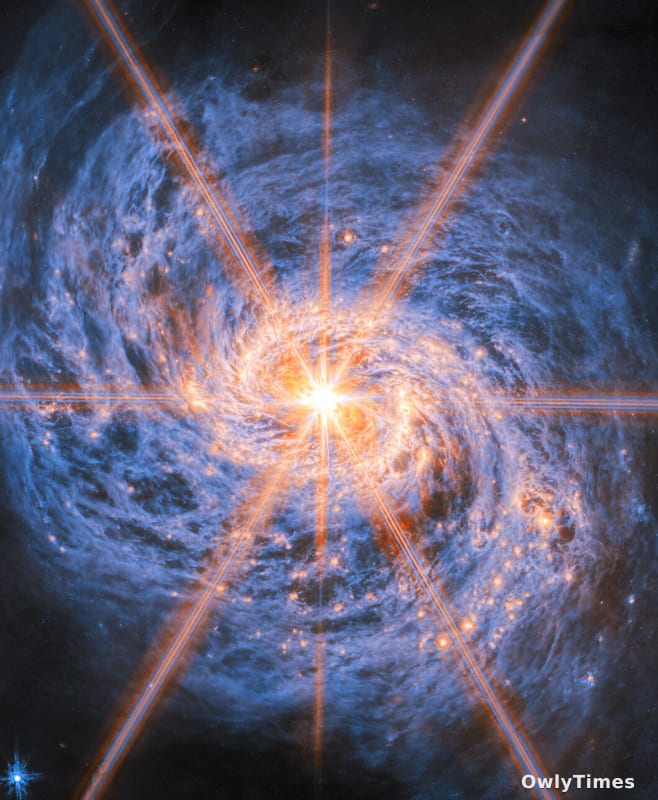
The unique role of astronomy within this context was also highlighted. Astronomy, the Pope suggested, occupies "a particular place in this mission" due to its capacity to evoke wonder and a sense of proportion. Contemplating the vastness of the cosmos "awakens in us both admiration and a healthy sense of proportion." However, this "gift is today threatened" by light pollution. Echoing a 2012 homily by Pope Benedict [XVI], Pope Leo XIV lamented that "we have filled our skies with artificial light that blinds us to the lights God has placed in them." This eloquent image extends beyond environmental concern, serving as a metaphor for how modern distractions and a denial of objective truth can obscure deeper realities.
Fostering Scientific Engagement Globally
The Pope expressed gratitude to the scientists and benefactors of the Vatican Observatory Foundation, whose work sustains its activities. He noted that their generosity enables the observatory to "share the wonder of astronomy with students around the world and to offer workshops and summer courses to those working in Catholic schools and parishes." This outreach is crucial, not just for scientific literacy, but for fostering a holistic understanding of the universe that integrates factual knowledge with a sense of meaning and purpose.
Limitations to consider in interpreting these remarks include the nature of a papal address itself; while deeply influential, it is a call to theological and ethical reflection rather than a scientific paper. Its "findings" are directives for thought and action within a specific worldview, rather than empirical data. However, its significance lies in its capacity to shape the dialogue around science and faith, especially within a global community.
The next research steps, following this address, are not confined to laboratories but extend to how educational and religious institutions worldwide can actively counter the "denial of objective truth." The Vatican Observatory's continued work in research, education, and public engagement will be a key indicator of how effectively this message is translated into practice. Its ongoing efforts to foster scientific understanding and wonder, while explicitly linking these endeavors to a broader theological vision, will demonstrate whether the shared threat identified by Pope Leo XIV can indeed be met with a unified front for truth and planetary stewardship.