
Is your phone about to get a whole lot faster, and did you even notice? The release of Linux 7.0, the latest iteration of the operating system powering everything from Android devices to supercomputers, just quietly dropped, and most people won’t feel a direct impact – yet. But the real story here isn't the version number, or even the technical wizardry under the hood; it’s the relentless, often invisible, push to squeeze more performance and capability out of the hardware you already own, and prepare it for what comes next.
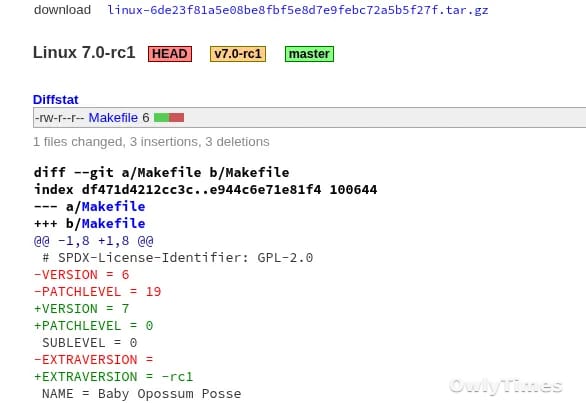
Linus Torvalds, the famously blunt creator of Linux, marked the end of the 7.0 merge window with the release of the first release candidate, 7.0-rc1. He admitted the major version bump was largely due to his own difficulty with remembering numbers, but don’t let the casual explanation fool you. This isn’t just housekeeping. Linux 7.0 is a substantial update, packed with changes that will ripple through the tech ecosystem over the coming months. It’s expected to become the default kernel for major distributions like Ubuntu 26.04 LTS and Fedora 44, meaning millions of users will be running it without ever consciously choosing to upgrade.
Drawn from phoronix.com.
The Hardware Future is Being Written Now
The most immediate impact of Linux 7.0 will be felt by hardware manufacturers. The kernel includes significant “enablement work” for upcoming Intel Nova Lake and Diamond Rapids processors, as well as AMD Zen 6. This isn’t about making your current Intel or AMD chip run faster today; it’s about ensuring that when the next generation of CPUs hits the market, they’ll work seamlessly with the operating system. Beyond the big names, the update also includes increased support for Qualcomm Snapdragon X2 platforms, signaling a continued push to broaden Linux’s reach into the mobile space. This is crucial as Qualcomm increasingly targets the laptop market, aiming to challenge Intel and AMD’s dominance. The inclusion of new graphics hardware support for upcoming AMD products further solidifies Linux’s position as a key platform for gaming and professional graphics workloads.
Beyond the Processor: A Deep Dive into Improvements
But the changes aren’t limited to processors. Linux 7.0 delivers a slew of improvements across the board. Apple users might be surprised to see support for USB Type-C PHY integrated into the kernel, a move that could streamline compatibility and potentially unlock new features for Apple devices running Linux. File system performance gets a boost with enhancements to exFAT, F2FS, and EXT4, meaning faster read/write speeds for everything from transferring large files to simply booting up your system. Even seemingly minor tweaks, like sensor monitoring on more ASUS motherboards, contribute to a more stable and reliable user experience.
Perhaps the most significant, and quietly revolutionary, change is the official conclusion of the Rust experiment. For years, developers have been exploring the possibility of using Rust, a newer programming language known for its safety and performance, within the Linux kernel. With 7.0, Rust is officially recognized as a supported language, opening the door for more secure and efficient kernel development in the future. This is a long-term play, but it could dramatically reduce the number of security vulnerabilities in the core of the operating system.
Performance Gains: What Does It Mean for You?
The technical specifications are impressive, but what does it all mean for the average user? Quite a bit, actually. Linux 7.0 brings noticeable performance gains for specific workloads. Users of PostgreSQL databases on AMD EPYC servers will see significant improvements, as will anyone relying on fast sequential reads from exFAT drives. Optimizations to memory management and the scheduler promise a snappier overall experience, even on older hardware. The reintroduction of large pages for Nouveau (the open-source driver for NVIDIA graphics cards) could provide a much-needed performance boost for users running older NVIDIA GPUs. These aren’t headline-grabbing changes, but they add up to a smoother, more responsive computing experience.
The kernel source code is available for cloning from git.kernel.org, and Torvalds himself will be releasing a detailed feature overview in the coming days. But the real question isn’t what changed in Linux 7.0, but how these changes will be leveraged by the companies building the devices and services we rely on every day.
My prediction? Watch closely for announcements from Android device manufacturers in the next six to nine months. The Qualcomm Snapdragon X2 support, combined with the broader performance improvements, will likely lead to a new wave of Linux-powered smartphones and tablets that offer a compelling alternative to the iOS ecosystem. The quiet revolution happening within the Linux kernel is about to become a lot more visible.