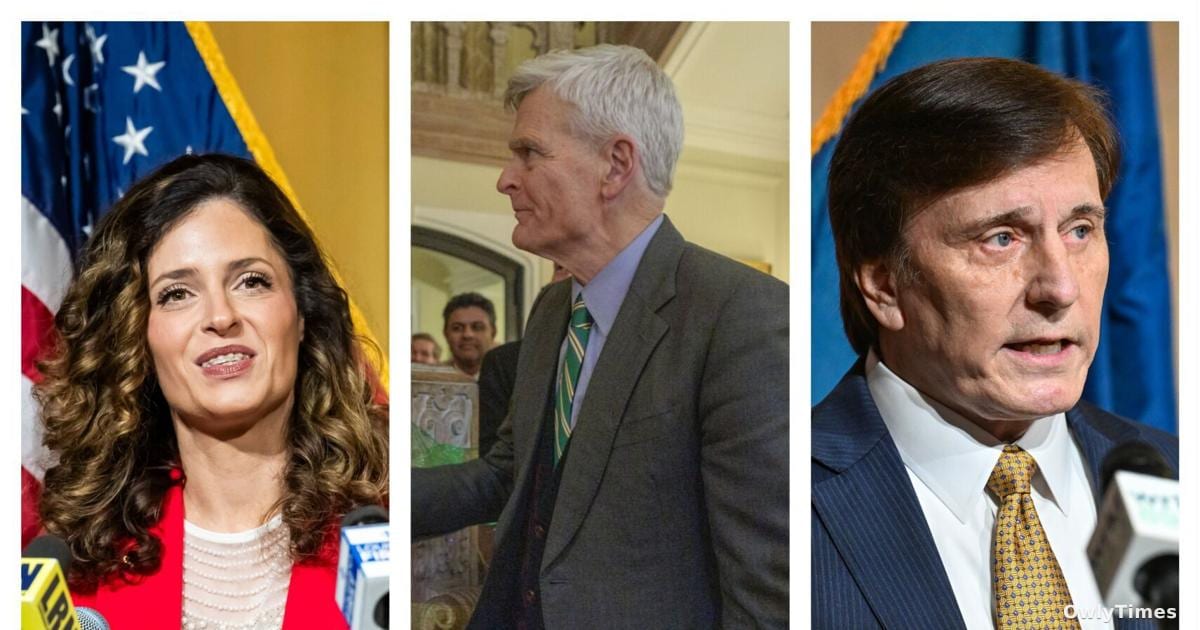

The strategic calculation in Louisiana’s unfolding Senate race isn’t about policy debates – it’s about controlling the narrative before voters truly begin to focus. Bill Cassidy’s preemptive attacks on Julia Letlow, launched through a super PAC and focusing on past stock disclosures and votes aligning her with Democrats, aren’t a sign of weakness, but a calculated move to define her before she can define herself. This isn’t about winning a debate on the merits; it’s about seeding doubt and leveraging a significant financial advantage to shape perceptions in a low-information environment. The immediate effect is a reshuffling of the power dynamics, benefiting both Cassidy and state Treasurer John Fleming, who are positioning themselves as the true conservative alternatives.
The core of this strategy rests on a simple, brutal truth of political campaigns: perception often trumps reality, especially early on. By labeling Letlow “Liberal Letlow,” Cassidy’s side aims to exploit a vulnerability inherent in her relatively short tenure in Congress and limited statewide recognition. The attacks, tying her to figures like Nancy Pelosi and Joe Biden, are designed to trigger pre-existing partisan animosity and raise questions about her ideological alignment. This tactic mirrors historical precedents, notably the “Daisy” ad used during the 1964 presidential election, which didn’t directly address policy but instead evoked fear and uncertainty to damage an opponent’s image. The difference here is the speed and scale – the digital age allows for rapid dissemination of negative messaging, amplified by substantial financial resources.
Original reporting: NOLA.com.
Who benefits and who loses from this early barrage? Cassidy clearly aims to consolidate his base and prevent Letlow from gaining momentum. Fleming, meanwhile, benefits from the collateral damage, appearing as the consistent conservative voice in contrast to both Cassidy’s establishment image and Letlow’s now-clouded record. Letlow, despite securing a crucial endorsement from Donald Trump, is currently struggling to counter the financial firepower and relentless messaging of Cassidy’s allies. The fact that her campaign didn’t respond to interview requests suggests a tactical decision to weather the storm, but also highlights a potential weakness in her ability to rapidly respond to attacks. Jeff Landry’s subsequent endorsement, while valuable, feels reactive rather than proactive, a public alignment with Trump following the former president’s lead rather than setting the terms of the debate.
The dynamic is further complicated by the involvement of figures like Ralph Abraham, whose offer of a CDC position to Fleming raises questions about backroom deals and the lengths to which different factions are willing to go to influence the outcome. This isn’t simply a contest between candidates; it’s a power struggle within the Louisiana Republican party, with Landry and his allies attempting to exert control over the Senate race. The appointment of Kyle Ruckert, Landry’s former chief of staff, to oversee Letlow’s campaign underscores this point – it’s a clear attempt to bring her closer into the governor’s orbit. The situation echoes the 1968 Democratic National Convention, where behind-the-scenes maneuvering and factionalism ultimately overshadowed the policy debates and contributed to a fractured party.
Polling data confirms the effectiveness of Cassidy’s strategy, at least in the short term. While initial surveys showed Letlow leading, subsequent polls reveal a tightening race, with Cassidy now ahead or statistically tied. The shift is particularly noticeable in head-to-head matchups, where both Cassidy and Fleming now outperform Letlow. However, the data also reveals a significant number of voters who view Cassidy unfavorably, suggesting a ceiling on his potential support. This “underwater” rating is a critical vulnerability, and the fact that he trails both Letlow and Fleming in hypothetical runoffs indicates that he is far from secure. Pearson Cross’s assessment – that Cassidy’s side “is making the smart play right now” because voters don’t yet know Letlow – is astute, but it also acknowledges the inherent risk in relying on negative campaigning.
The current situation isn’t simply about winning the primary; it’s about positioning for the general election and shaping the future of the Louisiana Republican party. The unanswered question is whether Letlow can effectively leverage the Trump endorsement and counter the “Liberal Letlow” narrative. Her response will be crucial, but she faces a daunting challenge given Cassidy’s financial advantage and the relentless attacks. The political chess move to watch next isn’t a policy announcement or a fundraising event, but rather the state Republican Executive Committee’s decision on whether to endorse Letlow. A party endorsement would signal a unified front and potentially shift the momentum back in her favor, while a continued stalemate would further solidify Cassidy’s position and embolden Fleming’s challenge.





