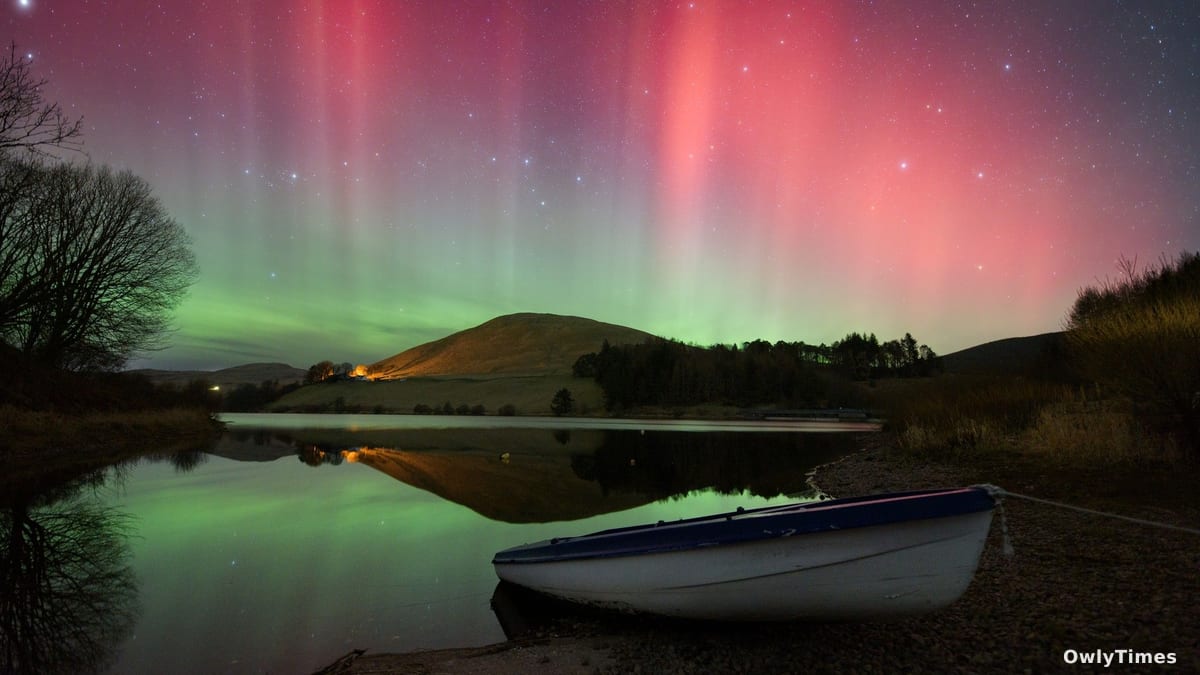

The persistent allure of the aurora borealis, or northern lights, isn’t simply about their ethereal beauty; it’s a window into a complex interplay of solar physics and terrestrial magnetism. This month, that window may open wider than it has in years, but understanding why requires looking beyond sensational headlines proclaiming a guaranteed light show. The convergence of the spring equinox with a still-active, though waning, solar cycle presents a unique opportunity for auroral displays, but the actual experience will depend on factors far more nuanced than simply marking March 20th on your calendar.
The phenomenon at play is known as the “equinox effect,” first detailed in a 1973 paper by Christopher Russell and Robert McPherron in the Journal of Geophysical Research. Their work explained that during the spring and fall equinoxes, Earth’s magnetic field aligns in a way that maximizes interaction with the solar wind – a constant stream of charged particles emitted by the sun. Specifically, the southward-pointing magnetic fields within the solar wind more readily cancel out Earth’s northward-pointing magnetic field during these periods. This “opens the door,” as some scientists describe it, allowing more charged particles to enter Earth’s atmosphere and collide with oxygen and nitrogen, creating the vibrant auroral displays. This isn’t a doubling of intensity necessarily, but a doubling of the probability of auroral activity, a crucial distinction often lost in popular reporting.
Reporting from Live Science informs this analysis.
Currently, this equinox effect is coinciding with the tail end of Solar Cycle 26, the sun’s roughly 11-year cycle of activity. NASA, the National Oceanic and Atmospheric Administration (NOAA), and the International Solar Cycle Prediction Panel tentatively identified October 2024 as the peak of this cycle, though definitive confirmation remains months, even years, away. The sun’s activity is measured by counting sunspots – areas of intense magnetic concentration – and while these numbers are currently trending downward, as noted by the U.K. Met Office in January, the sun remains capable of significant outbursts. These outbursts, particularly coronal mass ejections (CMEs) – vast clouds of charged particles – are the true drivers of spectacular auroral events. A particularly potent sunspot in early February produced auroras visible at unusually low latitudes, a tantalizing preview of what’s possible, but that specific sunspot has since dissipated.
It’s important to understand that the equinox effect doesn’t create auroras; it simply makes Earth more susceptible to them. Without substantial solar activity – flares and CMEs – the equinox effect will be largely imperceptible. The current decline in sunspot numbers suggests a decrease in these energetic events, potentially tempering expectations. NOAA’s Space Weather Prediction Center anticipates Solar Cycle 26 will transition into Cycle 27 between January 2029 and December 2032, a period expected to be characterized by lower solar activity overall. This means the conditions favorable for widespread, low-latitude auroras, like those seen sporadically in recent months, may become less frequent in the coming years.
Limitations to consider include the inherent unpredictability of space weather. While scientists can forecast general trends, predicting the timing and intensity of CMEs remains a significant challenge. Furthermore, the visibility of auroras is heavily influenced by local light pollution and atmospheric conditions. Even with strong solar activity and favorable geomagnetic conditions, clear, dark skies are essential for optimal viewing. The claim that these conditions will produce the “best auroras until the mid-2030s” is a long-term projection based on cyclical patterns, but doesn’t guarantee frequent or easily visible displays in the immediate future.
The next crucial step in understanding these events is continued, high-resolution monitoring of the sun’s activity. Missions like NASA’s Parker Solar Probe and ESA’s Solar Orbiter are providing unprecedented insights into the sun’s magnetic field and the origins of the solar wind. Analyzing this data will refine our ability to predict CMEs and their impact on Earth’s magnetosphere. But beyond the scientific advancements, the question remains: will we see a significant increase in auroral visibility this month, and if so, will observers be prepared to witness it? Keep an eye on space weather forecasts from NOAA’s Space Weather Prediction Center, and be ready to travel to darker locations if the conditions look promising – because even a statistically doubled chance of seeing the aurora requires a little luck, and a lot of clear sky.





