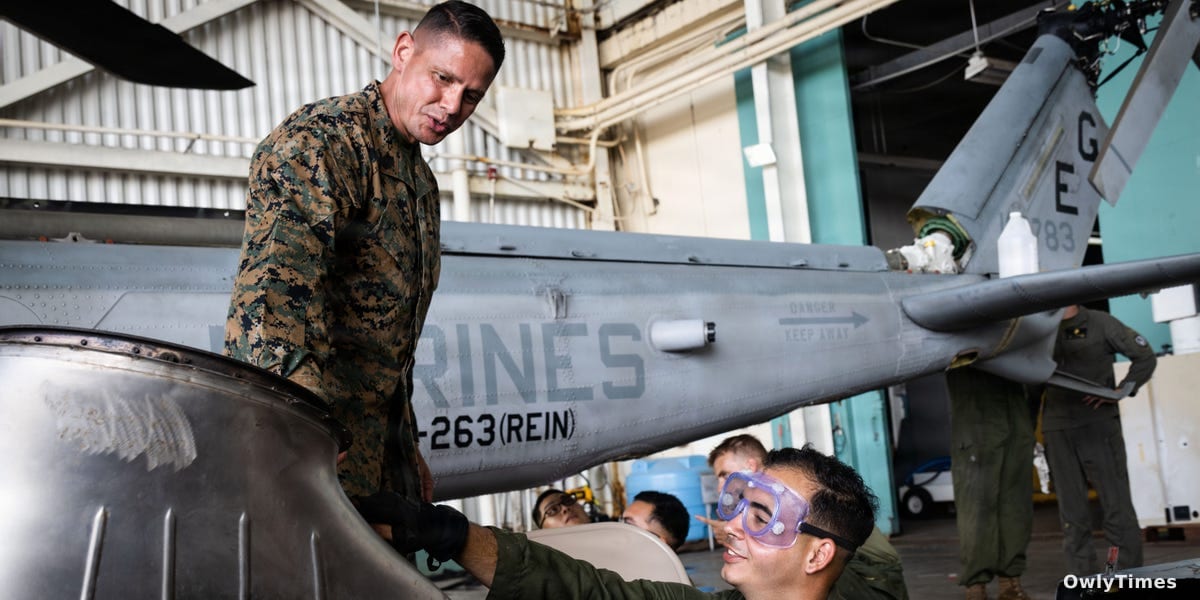

The Marine Corps is confronting a quiet crisis hidden within its success: the difficult, and sometimes destabilizing, transition its highly-trained personnel face when leaving active duty. It’s not a question of Marines lacking skills – quite the opposite – but of a systemic disconnect between the end of service and the beginning of a civilian career. Sergeant Major Carlos Ruiz, the Corps’ top enlisted leader, is now publicly advocating for a radical shift in how and when Marines begin their job searches, pushing for engagement with potential employers up to a year before separation. This isn’t simply about smoothing the path to employment; it’s a recognition that the vulnerability experienced during this gap – the loss of income, healthcare, and the structured life of the military – is directly linked to concerning trends in veteran mental health.
The core of Ruiz’s argument, presented during a recent congressional hearing on service member quality of life, centers on minimizing the “in-between time” he describes as a period of heightened risk. Data already indicates veterans are particularly vulnerable to mental health challenges immediately following their service, and the financial and logistical stresses of a delayed job search can exacerbate these issues. Approximately 14% of all service members transitioning to civilian life are Marines, representing roughly 28,000 individuals annually out of a total of 200,000 separating each year. However, a 2023 government watchdog report revealed a troubling statistic: a quarter of those needing the most transition support didn’t receive it, and a full 70% hadn’t even begun the job search process a year before their discharge date. This isn’t a failure of the congressionally mandated Transition Readiness Program, but a failure to anticipate and proactively address the complexities of re-entering civilian life.
What’s often lost in headlines about veteran support is the nuance of when intervention is most effective. Ruiz isn’t suggesting simply improving the existing transition program, but fundamentally altering the timeline. He envisions partnerships with agencies like the Secret Service – currently facing an 18-month application process even as they seek to expand their ranks – and industries like shipbuilding and emergency response, where a consistent demand for skilled labor exists. The idea is to build a “pipeline” where a Marine can move directly from active duty into a new role, potentially even beginning training while still in uniform. The Secret Service, for example, is already working to condense its qualifying events, potentially shortening the hiring process by six months, a move spurred in part by conversations with Ruiz last month. This proactive approach acknowledges that the bureaucratic hurdles of background checks, interviews, and paperwork can be initiated during a Marine’s final year of service, rather than becoming roadblocks after separation.
However, implementing this vision isn’t without its challenges. Ruiz acknowledges the need for buy-in from the Marine Corps’ mid-level leadership, who may be hesitant to allow subordinates to dedicate time to job searching while still fulfilling their active duty obligations. This resistance stems from a cultural expectation of prioritizing current duties above future planning, a mindset that, while effective in a combat environment, can be detrimental during the transition process. Furthermore, a 2020 Department of Veterans Affairs report highlighted a significant gap in understanding among veterans themselves regarding the challenges of civilian life, suggesting that even with earlier engagement, proactive preparation is crucial. The existing patchwork of programs designed to assist transitioning service members, both within the Department of Defense and the civilian sector, are demonstrably “not good enough,” as Ruiz bluntly stated.
This article draws on reporting from Business Insider.
The urgency of this issue is underscored by the disproportionately high rate of suicide among recently separated Marines. The Corps, known for its strong sense of camaraderie, sees its veterans face the highest risk of suicide within the first year after leaving the service compared to other branches. While correlation doesn’t equal causation, the link between early instability and mental health concerns is undeniable. Moreover, studies indicate that over 40% of veterans leave their first post-military job within a year, suggesting a persistent mismatch between skills and opportunities. Ruiz is also exploring the possibility of formal, long-term partnerships with private sector companies, including those in Big Tech, that would guarantee job placement for selected Marines upon completion of their enlistment, contingent on meeting pre-defined benchmarks.
Looking ahead, the critical question isn’t whether these initiatives will be implemented, but whether they will be scaled effectively. Will the Marine Corps be able to overcome internal resistance and prioritize proactive career planning? More importantly, will other branches of the military and civilian employers adopt similar strategies? The success of these efforts will be measured not just by the number of Marines placed in jobs, but by a demonstrable reduction in the rates of unemployment, financial instability, and, ultimately, suicide among those who have served. We should be watching for a clear shift in the conversation around veteran transition – from reactive support after separation to proactive engagement during service – and tracking whether the Marine Corps’ pioneering efforts lead to a measurable improvement in the well-being of its former members.