
Beyond Borders: How Virginia Marine Science is Shaping Global Maritime Leadership
The seemingly straightforward question of how to effectively manage shared ocean resources – preventing pollution, combating illegal fishing, responding to coastal disasters – is, in reality, a complex web of international law, national policy, and crucially, scientific understanding. For decades, the U.S. Coast Guard (USCG) has recognized this, and for the past two years, has been actively integrating a unique component into its International Maritime Officer’s Course (IMOC): a focused immersion in the applied marine science conducted at William & Mary’s Batten School of Coastal & Marine Sciences and the Virginia Institute of Marine Science (VIMS). This isn’t simply about sharing data; it’s about cultivating a shared understanding of the scientific basis for maritime decision-making among future admirals and maritime leaders from around the globe. While headlines often focus on geopolitical tensions at sea, this program quietly builds a foundation for collaborative solutions rooted in evidence.
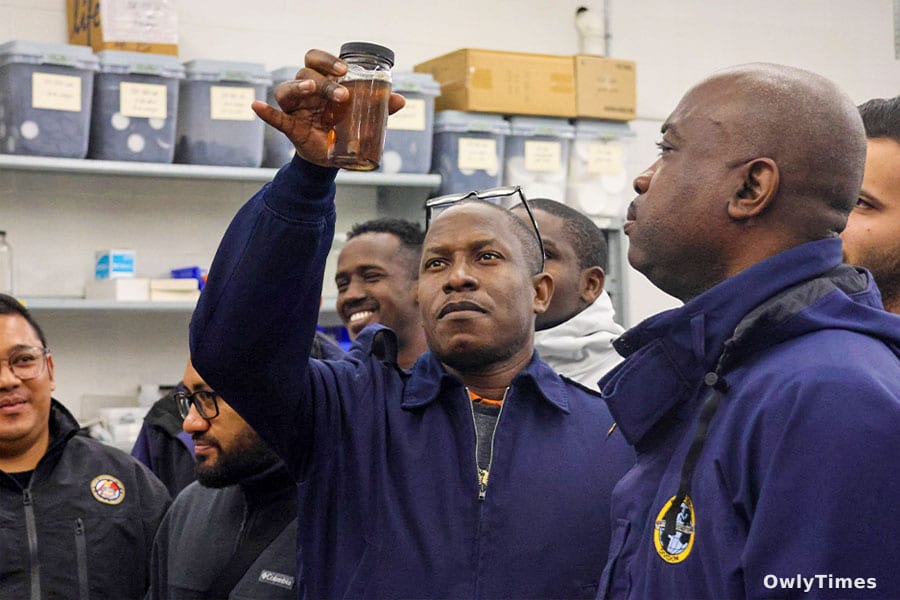
The IMOC program, now in its 75th cohort, is a 12-week professional military education initiative designed to connect international officers – representing coast guards, navies, and maritime police forces – with U.S. Coast Guard strategies. Since 2022, a dedicated daytrip to VIMS and the Batten School has become a cornerstone of the curriculum. Lieutenant Christopher Xirau, of the USCG Training Center Yorktown’s International Division, emphasizes the long-term impact of this exposure. “Bringing international officers here to see pollution response and prevention, and the other work you do, is something that they will take back to their countries,” he stated. The program’s prestige is significant; many participants are on a trajectory for high-level command, meaning the lessons learned at VIMS could influence maritime policy for decades to come. It’s a strategic investment in global maritime governance, predicated on the belief that informed leaders make better decisions.
The structure of the program is deliberately reciprocal. It’s not a one-way lecture series, but rather a “subject matter expert exchange,” as Xirau describes it. While the USCG shares its operational approaches, the program actively solicits insights from the international officers themselves. This exchange is particularly valuable given the diverse experiences represented. Emily Hein, assistant director for advisory services at VIMS, notes that participants range from those with no prior interaction with marine scientists to those actively involved in research or recent enforcement actions – “Some of them have never talked to a scientist, while others may have seized an illegal fishing vessel just last month.” This spectrum of experience enriches the discussions and highlights the varied challenges faced by different nations.
This piece references the news.wm.edu report.
The curriculum at VIMS focuses on translating scientific findings into practical applications. Officers receive briefings on spill planning and response, the complexities of illegal fishing, and the scientific tools used to support decision-making in marine environments. This isn’t abstract theory; Hein, who works directly with the USCG on oil and hazmat spill response in Virginia, emphasizes the program’s goal: “The goal is that when they get back home, they will center science in their actions and decision-making.” This emphasis on practical application is a key differentiator. Many maritime training programs focus on legal frameworks and operational tactics, but fewer prioritize the underlying scientific basis for those decisions.
The Value of Nuance in a Global Context
The success of this program hinges on recognizing that maritime challenges aren’t universally experienced. What works in the Gulf of Mexico may not be applicable in the South China Sea, and vice versa. The IMOC program actively seeks to address this by fostering a space for comparative analysis. Megan La Peyre, associate dean of research & advisory services, highlights the importance of this nuanced perspective. “Different countries do things differently, so it’s helpful to learn what does and does not work in various places,” she explained. This acknowledgement of contextual variation is critical, particularly in areas like fisheries enforcement, where cultural norms and economic realities can significantly impact compliance.
It’s also important to acknowledge the inherent limitations of a program like IMOC. A single day at VIMS provides a valuable overview, but it cannot replicate the depth of understanding gained through years of dedicated research or on-the-water experience. The program’s effectiveness relies heavily on the officers’ willingness to integrate the information presented into their existing frameworks and to continue seeking scientific expertise upon their return home. Furthermore, the program’s reach is limited to those nations participating in the IMOC program, leaving a significant portion of the global maritime community unrepresented.
A Partnership Built on Trust and Shared Stewardship
The ongoing collaboration between the USCG and William & Mary/VIMS isn’t simply a logistical arrangement; it reflects a deep level of trust. La Peyre emphasizes that this partnership positions the Batten School & VIMS as a “global leader in applied marine science.” The USCG’s willingness to incorporate scientific training into its flagship international program signals a recognition of the vital role science plays in effective maritime governance. This trust is further reinforced by the W&M Whole of Government Center of Excellence (WGC), which serves as the coordinating body for both the IMOC program and another course focused on International Maritime Domain Awareness. The WGC’s involvement underscores the university’s commitment to serving as a resource for national security and international cooperation.
However, the program’s reliance on continued funding and logistical support from both the USCG and William & Mary/VIMS introduces a potential vulnerability. Shifts in budgetary priorities or changes in institutional leadership could impact the program’s sustainability. Maintaining this partnership requires ongoing commitment from all stakeholders.
Looking ahead, the next crucial step is to assess the long-term impact of the IMOC program. Are officers who have participated in the VIMS component more likely to prioritize scientific data in their decision-making? Are they more inclined to collaborate with scientists on maritime challenges? Tracking these outcomes will be essential to demonstrating the program’s value and justifying continued investment. More broadly, the question remains: how can we scale this model of science-informed maritime leadership to reach a wider audience and address the increasingly complex challenges facing our oceans? The future of effective ocean governance may well depend on the answer.





