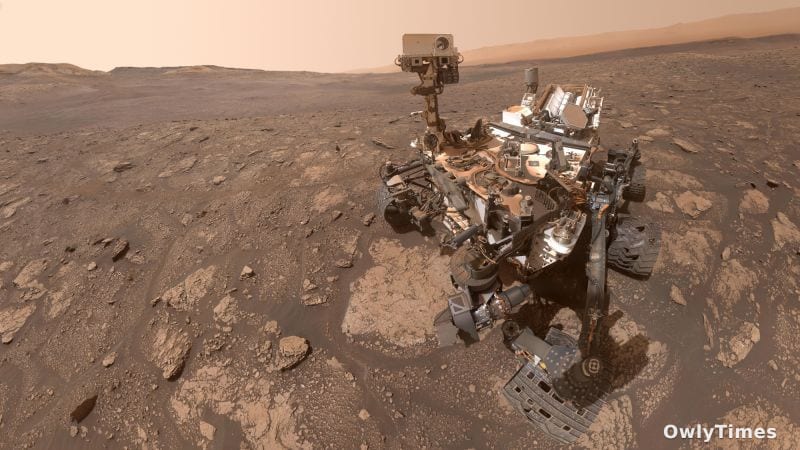

How do we identify the remnants of life when the biological signatures have been subjected to billions of years of harsh radiation? This is the central challenge facing the Curiosity mission as it navigates the desolate, wind-swept surface of Gale Crater. While headlines often frame such discoveries as "proof of life," the reality is far more nuanced and, in many ways, more scientifically compelling: we have confirmed that the Martian surface acts as a long-term vault for complex organic matter.
The recent findings, published in Nature Communications, represent a shift in our ability to probe Martian geology. By utilizing a "wet chemistry" experiment—the first of its kind on another planet—researchers dissolved a rock sample collected from the Mary Anning site into a chemical solution called tetramethylammonium hydroxide (TMAH). This process allowed the rover’s Sample Analysis at Mars (SAM) instrument to break down large, otherwise unidentifiable molecules. The result was the detection of 21 carbon-containing molecules, including seven that had never been identified on Mars before.
Among these, the identification of a nitrogen heterocycle—a ring of carbon atoms incorporating nitrogen—stands out as particularly significant. As Dr. Amy Williams, the study’s lead author and an associate professor of geological sciences at the University of Florida, notes, these structures can serve as precursors to the building blocks of life, such as RNA and DNA. The study suggests these molecules have been preserved within these rocks for roughly 3.5 billion years, a testament to the protective nature of Martian sedimentary layers.
It is important, however, to temper our excitement with scientific caution. The presence of organic molecules does not equate to the presence of biology. The study authors explicitly clarify that this experiment was not designed to distinguish between biological origins, meteorite delivery, or simple geologic processes. In fact, the detection of benzothiophene—a molecule also found in the Murchison meteorite—suggests that some of these materials may have been delivered to the surface via external impacts rather than generated in situ.
The limitations of this methodology are clear: we are reading a fragmented record. While the rover can identify these chemical building blocks, it lacks the high-resolution instrumentation required to definitively link them to ancient life. As Dr. Briony Horgan, a professor at Purdue University, points out, the current data builds a foundation, but the "smoking gun" remains out of reach for a rover operating 140 million miles away.
The path forward for planetary science is now heavily focused on sample return. While an ambitious joint plan by NASA and the European Space Agency faced a setback when Congress canceled the original funding structure in January, the scientific consensus remains firm. The next phase of this inquiry will be driven by the progress of the Perseverance rover’s sample collection efforts. Whether these samples eventually reach laboratories on Earth will determine if we can move beyond identifying "habitable environments" and finally answer the question of whether Mars was ever home to life. For researchers like Ashwin Vasavada, project scientist at NASA’s Jet Propulsion Laboratory, the urgency is personal: after two decades of exploration, the scientific community is waiting for the final chapter of a story that began when Curiosity first touched down in 2012.





