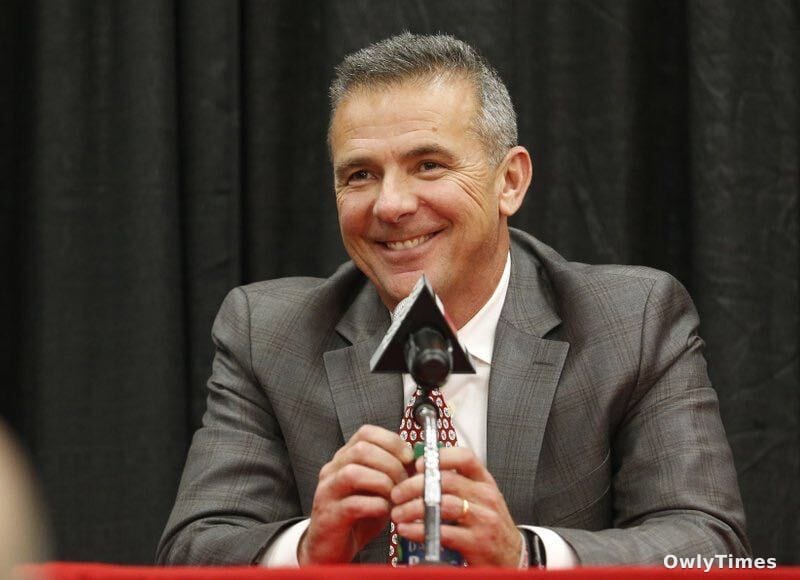

The air in Tallahassee felt thick with more than just Florida humidity last Wednesday. It carried the scent of ambition, political maneuvering, and a carefully constructed narrative. While lawmakers debated budgets and policy, the Senate Higher Education Appropriations Committee quietly advanced the nomination of Urban Meyer to a position of influence at New College of Florida – a move that speaks volumes about the evolving priorities of higher education in the Sunshine State, and the enduring power of a winning, if selectively remembered, legacy. This isn’t simply about a football coach joining a college board; it’s a case study in how success, failure, and political alignment can rewrite a public figure’s story.
From Gridiron Glory to Academic Oversight
The swift advancement of Meyer’s nomination, bundled with others and facing little individual scrutiny, is telling. He’s a man whose resume boasts three national championships – at the University of Florida and Ohio State – but also includes a spectacularly brief and unsuccessful foray into the NFL with the Jacksonville Jaguars, where he won a mere two games in 2021. That NFL chapter, a stark contrast to his collegiate dominance, was conspicuously absent from the celebratory tone of the hearing. Committee Chair Gayle Harrell’s opening “Go Gators” felt less like a show of school spirit and more like a deliberate glossing over of Meyer’s complex history with the university, including two resignations from the program within a year. The optics are clear: the committee, and by extension the administration, is prioritizing the championship rings over the coaching carousel. This isn’t unusual in the world of celebrity endorsements, but it’s particularly striking when the “endorsement” involves shaping the future of a public institution.
Source material: Florida Politics.
The Hillsdale Model and Florida’s Culture Wars
The real story here isn’t Meyer’s football prowess, but the vision for New College of Florida itself. President Richard Corcoran, a staunch ally of Governor Ron DeSantis, has openly stated his ambition to transform New College into a “Hillsdale College of the South.” Hillsdale College, a conservative Christian liberal arts college in Michigan, is known for its classical curriculum and rejection of federal funding – a model that aligns with DeSantis’ broader agenda of pushing back against what he characterizes as “woke ideology” in education. Meyer’s appointment fits neatly into this plan. Corcoran lauded Meyer’s “strategic mindset” and “lifetime of leadership,” framing him as someone who can build “culture” – a buzzword often deployed in the current culture wars. The fact that Meyer spent a weekend golfing with DeSantis and former Alabama coach Nick Saban, discussing the “positives and negatives” of college sports, further underscores the political alignment at play. It wasn’t a casual round of golf; it was a strategic summit.
Beyond the Sidelines: A Question of Priorities
Meyer’s own remarks during the hearing were carefully calibrated. He emphasized his role as a “proud resident of Sarasota,” a “father, grandfather,” and a “believer in the transformative power of higher education.” He conveniently highlighted his experience teaching a “leadership” course at Ohio State, downplaying the fact that his leadership in the NFL proved… less transformative. He spoke of unlocking New College’s “incredible opportunity to become an elite liberal arts college,” seemingly sidestepping the question of whether his skillset is truly suited to that task. The underlying message is clear: Meyer is being brought in not for his academic expertise, but for his perceived ability to instill a winning mentality – a mentality that, in this context, appears to be defined by conservative principles and a rejection of established norms. The state allocated $15 million in the last legislative session to support New College’s transformation, a figure that dwarfs funding increases for many other state universities. This prioritization signals a clear shift in values, one that favors ideological alignment over traditional academic metrics.
What This Means for the Future of Florida Education
The confirmation of Urban Meyer as a Trustee at New College of Florida isn’t just a footnote in the world of college football or Florida politics. It’s a bellwether for the future of higher education in the state, and potentially beyond. Will this experiment – importing a figure known for building winning teams into the realm of academic governance – actually improve the quality of education at New College? Or will it further politicize the institution, turning it into a proving ground for conservative ideology? The nation will be watching to see if Meyer’s “elite” vision for New College translates into genuine academic excellence, or simply a reflection of the political winds in Tallahassee. And, crucially, will other states follow suit, seeking to reshape their public universities in the image of politically favored figures and ideologies?

