
$80 Billion in Transit: Assessing the Economic Impact of Airport Disruptions in the Gulf
Four staff injured. One fatality. Two major airports disrupted. These aren’t isolated incidents; they represent a direct economic shock to a region increasingly vital to global trade and travel. Saturday’s drone and missile strikes targeting Dubai International Airport (DXB) and Abu Dhabi’s Zayed International Airport (AUH) aren’t simply security failures – they’re a calculated disruption to a logistical network handling an estimated $80 billion in annual air cargo and passenger revenue across the UAE alone. Follow the money, and the implications become clear: this isn’t about geopolitical signaling alone, it’s about economic leverage.
Reporting from Business Insider informs this analysis.
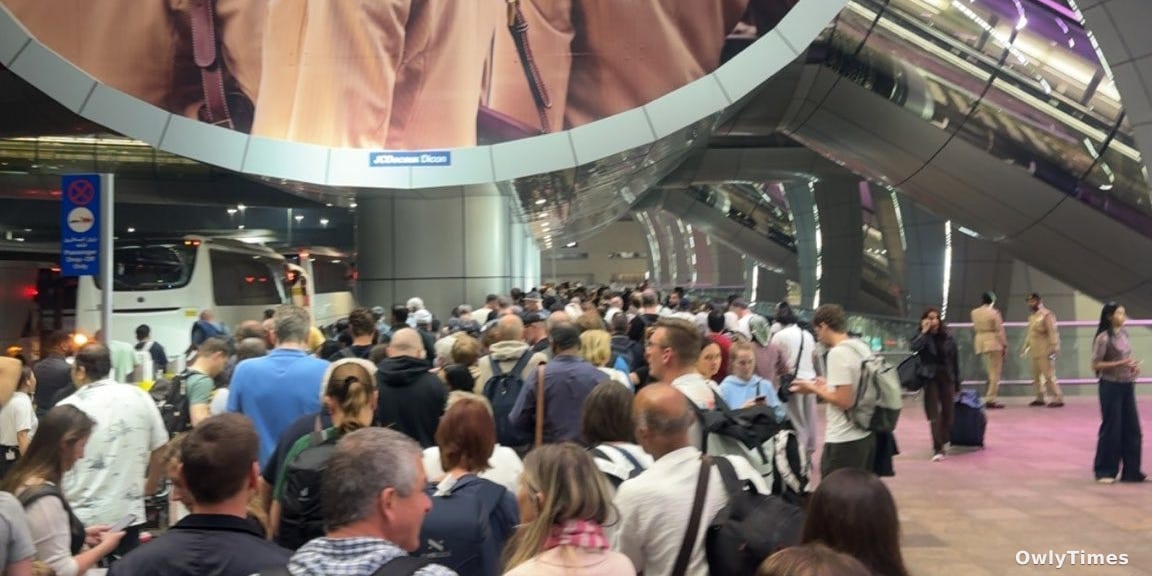
The immediate impact is quantifiable. DXB, consistently ranked among the world’s busiest airports, processed 86.9 million passengers in 2023, a 17.2% year-over-year increase. AUH saw 79.1 million passengers, a 25.1% jump. These aren’t just numbers; each passenger represents spending on hotels, retail, and local transport. The suspension of operations at Dubai World Central (DWC) further exacerbates the problem, creating a bottleneck that ripples through the entire travel ecosystem. Emirates, the UAE’s flagship carrier, immediately suspended check-in services, and other airlines followed suit, triggering cascading delays and cancellations. Jaiveer Cheema, an Emirates passenger stranded in Dubai, received a missile warning alert on his phone – a chilling indicator of the escalating threat and the disruption to ordinary travel.
The attacks coincide with a period of heightened tension following joint US-Israel strikes reportedly targeting Ayatollah Ali Khamenei, Iran’s Supreme Leader. While the precise origin of the drones impacting Kuwait International Airport remains unconfirmed, the timing strongly suggests a retaliatory response from Iran or its proxies. This escalation is critical because it moves beyond symbolic targets. Airports are not merely transportation hubs; they are economic engines. The “minor damage” reported by DXB belies the potential for significant financial losses stemming from operational shutdowns, rerouted flights, and reputational damage. Consider that a single hour of downtime at DXB can cost airlines an estimated $2.5 million in lost revenue, according to a 2022 report by aviation consultancy CAPA – Centre for Aviation.
The broader economic context is equally concerning. The UAE has positioned itself as a crucial transit point between East and West, benefiting from its strategic location and world-class infrastructure. This role is particularly important for air cargo, with DXB being one of the world’s largest air freight hubs. Disruptions to this flow of goods directly impact supply chains, potentially leading to increased costs for businesses and consumers globally. Kuwait’s airport also sustained damage, adding another layer of complexity to regional air travel and trade. The fact that the Kuwaiti airport was secured after repairs suggests a focused, but limited, objective – a disruption, not a complete shutdown. This nuance is important.
The response from authorities – quickly containing the damage at DXB and intercepting drones at AUH – demonstrates a degree of preparedness. However, the incident exposes vulnerabilities in the region’s air defense systems and raises questions about the long-term security of critical infrastructure. The suspension of operations at DWC, while precautionary, highlights the limited capacity to absorb diverted traffic, suggesting a need for increased investment in redundancy and alternative facilities. The immediate priority is restoring full operational capacity at all affected airports, but the underlying geopolitical risks remain.
What this means for your wallet: expect increased airfares and potential delays for travel to and from the Middle East in the coming weeks. More significantly, monitor supply chain disruptions – particularly for goods originating from or transiting through the region – as these could translate into higher prices for a range of consumer products. The key question now is whether this is a one-off escalation or the beginning of a sustained campaign targeting critical infrastructure. Investors should watch for further developments in regional security and assess the potential impact on airlines, logistics companies, and tourism-related businesses.