
100,000 Eyes on the Skies: The $4.4 Million Seat Crisis in the Middle East
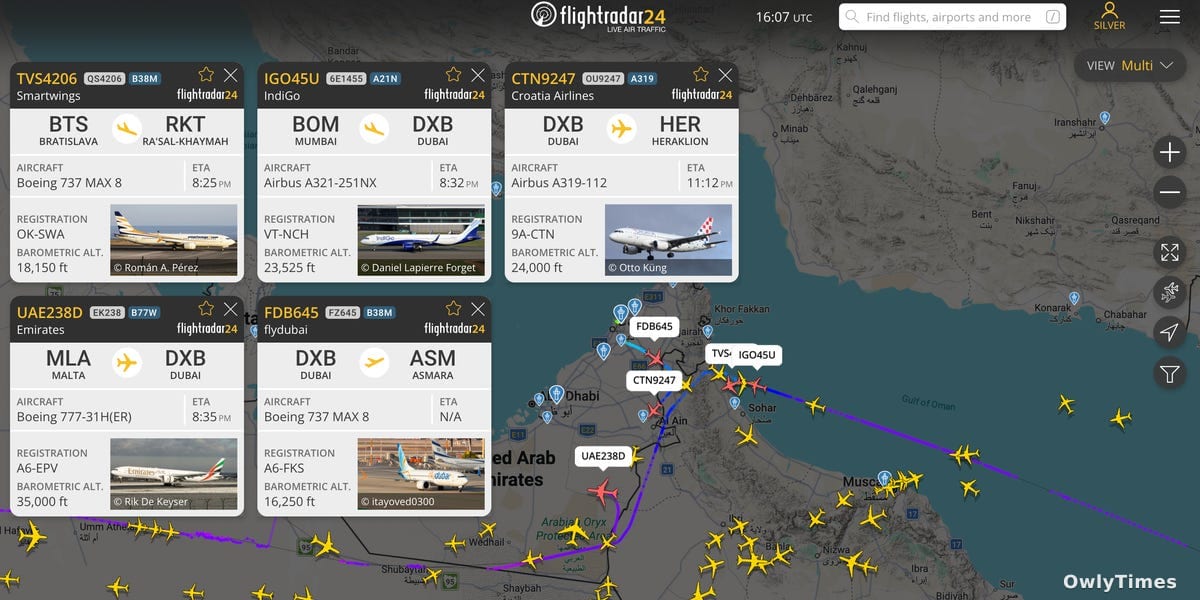
Over 100,000 people tracked their progress live on Flightradar24, a testament to the sheer scale of the disruption. The partial reopening of UAE airspace, beginning March 5th, isn’t a return to normalcy – it’s a pressure valve releasing a backlog of over 4.4 million canceled airline seats since Saturday, a figure calculated by Cirium and representing a significant economic bottleneck for the region. The crisis, triggered by escalating geopolitical tensions and missile attacks, isn’t simply about delayed vacations; it’s a complex logistical and financial challenge revealing the fragility of global air travel and the stark disparity in evacuation options.
Based on the original Business Insider report.
The initial six days of widespread airspace closures across the Middle East left tens of thousands stranded, a situation exacerbated by the region’s role as a major transit hub. Dubai and Abu Dhabi, for example, typically handle tens of thousands of passengers daily, a volume now drastically curtailed. Emirates, Flydubai, IndiGo, and Etihad Airways were among the first to initiate rescue flights, leveraging their large-capacity aircraft – notably the Airbus A380, capable of carrying up to 615 passengers – to reach destinations like London, Istanbul, and Singapore. This rapid response, coordinated with local officials, wasn’t altruistic; it was a calculated move to mitigate reputational damage and begin recouping losses from grounded fleets.
The uneven recovery highlights a critical tension: while the UAE is cautiously reopening, airspace over Iran, Iraq, Syria, Israel, Qatar, and Bahrain remains largely closed. This creates a fragmented landscape where airlines are forced to reroute flights, adding significant time and cost. Aeroflot and S7 Airlines, for instance, are experiencing three-hour longer flights to Moscow due to these detours. The economic impact extends beyond airlines. The region’s tourism sector, already reeling from previous disruptions, faces further setbacks. The cancellation of Air France’s planned repatriation flight from Dubai, suspended due to the “ongoing security situation,” underscores the precariousness of even short-term recovery plans.
The situation also exposes a clear divide in access to evacuation resources. While airlines are adding rescue flights, capacity remains severely limited. British Airways reported its rescue flights through Saturday were already fully booked, demonstrating the overwhelming demand. This has fueled a parallel market for private jet charters, with some travelers reportedly paying hundreds of thousands of dollars to secure passage – a luxury unavailable to the vast majority. The State Department has facilitated the return of nearly 18,000 Americans, including 7,300 through direct charter flights, but thousands more remain reliant on commercial options or arduous overland travel to neighboring countries like Oman and Saudi Arabia. The agency’s call for stranded citizens to fill out a monitoring form (+1 (202) 501-4444) reveals the logistical challenge of tracking and assisting a dispersed population.
The legal constraints faced by US carriers further complicate matters. As Mark Dombroff of Fox Rothschild explained, the Federal Aviation Administration (FAA) holds ultimate authority, and US airlines are bound by its restrictions. This effectively sidelines United and American Airlines from participating in rescue efforts, despite potential willingness. The reliance on airlines from other nations – Air India, Uzbekistan Airways, Kenya Airways, and others – to fill the gap underscores the limitations of a purely national response to a regional crisis. Qatar Airways’ complete grounding, due to Qatar’s airspace closure, exemplifies the most extreme impact, leaving passengers in Doha with limited options.
Dubai International Airport, normally bustling with around 1,200 daily flights, has seen operations reduced to just 100 takeoffs and landings since Saturday – less than 10% of its usual volume. This drastic reduction in air traffic translates directly into lost revenue for airlines, airports, and related businesses. The long-term consequences of this disruption are still unfolding, but the immediate financial strain is undeniable. The question now is not if air travel will recover, but how quickly and at what cost.
What this means for your wallet: Expect continued volatility in airfares, particularly for routes connecting Europe, Asia, and Africa to the Middle East. Even after airspace fully reopens, the reduced capacity and increased demand will likely drive up prices. Travelers should factor in potential delays and cancellations, and consider purchasing comprehensive travel insurance that covers disruptions caused by geopolitical events. Watch closely for announcements from the FAA regarding potential changes to flight restrictions, as this will directly impact the availability and cost of travel to and from the region.