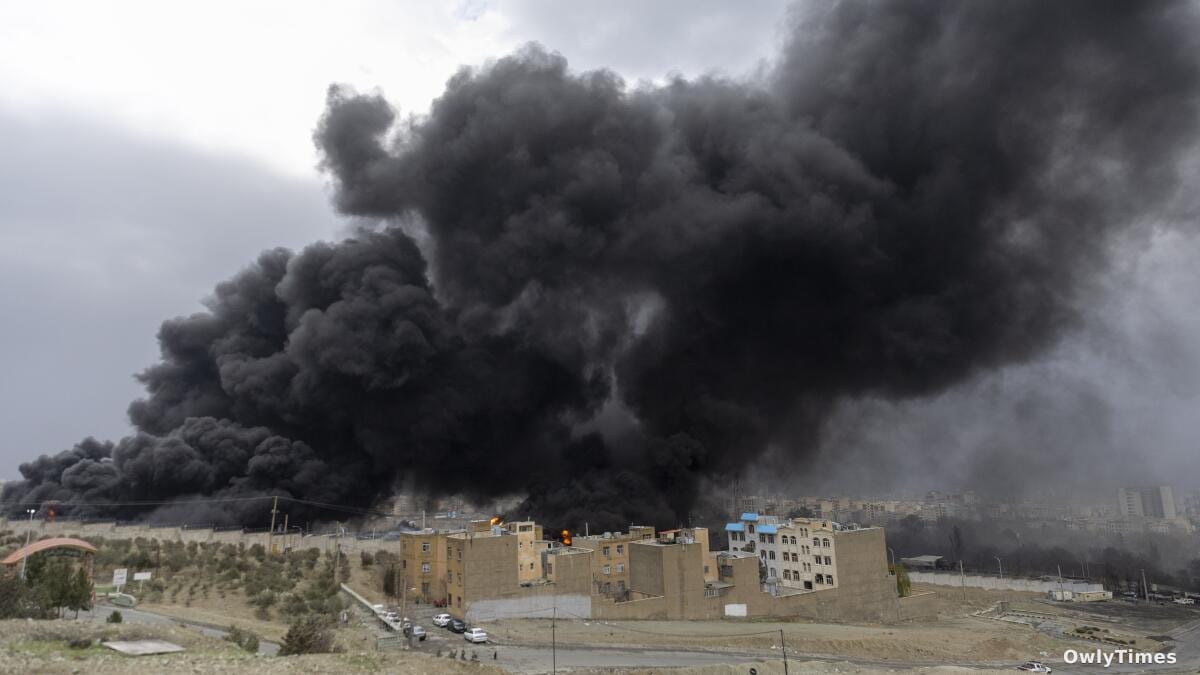

Is anyone actually surprised anymore? We’re nine days into a widening conflict in the Middle East, oil prices are spiking, and the conversation in Washington is fixated on whether or not to send more troops. The real story here isn't the escalating military action – it's the breathtakingly predictable cycle of escalation, denial, and blame that defines modern warfare, and the way ordinary people, from suburban gas stations to desalination plant workers, are footing the bill for geopolitical posturing.
The latest turn came Sunday with the announcement of a seventh U.S. service member killed, alongside reports from Iranian state TV confirming Mojtaba Khamenei as the successor to his father, the recently deceased Supreme Leader. President Trump, speaking on Air Force One, didn’t rule out ground troops, casually suggesting Iran would be “decimated” if such a move occurred. This isn’t strategy; it’s performance. It’s a demonstration of force predicated on the assumption that threats alone will suffice, a dangerous gamble when the other side, as Iranian Foreign Minister Abbas Araghchi bluntly stated, is “waiting for any enemy who enters into our soil to fight with them, and to kill them and destroy them.” The fact that Araghchi simultaneously rejected ceasefire calls isn’t a sign of Iranian intransigence, but a logical response to a situation where the initiating parties refuse to acknowledge responsibility.
This article draws on reporting from the Los Angeles Times.
The selection of Mojtaba Khamenei, a 56-year-old cleric with no prior government experience, is being framed by the White House as “unacceptable.” But this outrage rings hollow. The internal affairs of Iran, however distasteful to Washington, are ultimately decided by the Iranian people – a point Araghchi made emphatically. The focus on who leads Iran misses the fundamental issue: the decades-long power struggle for regional dominance, fueled by proxy wars and a relentless arms race. Khamenei’s lack of public profile shouldn’t be mistaken for a lack of influence; he’s been a “quiet force” within his father’s inner circle for years, and will now directly control the Islamic Revolutionary Guard Corps, the key player in Iran’s military strategy. This isn’t a leadership vacuum, it’s a consolidation of power.
The economic fallout is already being felt. Oil prices surged above $100 a barrel Sunday, a “fear premium” according to U.S. Energy Secretary Chris Wright, who assures us this is a “short-term problem.” Tell that to the truck driver filling up his tank, or the family struggling to heat their home. The White House, through Press Secretary Karoline Leavitt, frames the solution as “taking out the rogue Iranian regime,” conveniently ignoring the potential for even greater disruption to global energy markets. This isn’t about lowering gas prices; it’s about regime change, and the collateral damage is considered acceptable. The strikes on Iranian oil storage facilities, and the retaliatory attacks on desalination plants in Bahrain and Iran, aren’t isolated incidents – they’re a deliberate targeting of civilian infrastructure, a tactic that Iran’s Foreign Ministry spokesperson Esmaeil Baqaei rightly condemns as “poisoning civilians, devastating the environment.”
Perhaps the most disturbing element of this conflict is the casual disregard for civilian casualties. The U.S. military is investigating an explosion at an Iranian elementary school that killed over 165 people, most of them children. President Trump immediately blamed Iran, claiming their munitions are “inaccurate.” This is a stunning accusation, offered without evidence, while evidence suggests an American strike may be responsible. The conflicting narratives, the shifting blame, and the sheer scale of the destruction are numbing. Lebanon reports over half a million displaced people, and Pope Leo XIV expresses “deep dismay” at the escalating violence. These aren’t statistics; they’re lives shattered, communities uprooted, and a region teetering on the brink of wider chaos.
The pattern is clear: escalating military action, followed by economic disruption, and then a blame game designed to justify further escalation. The question isn’t if this conflict will expand, but how. Watch closely for a deliberate provocation – a staged incident, a false flag operation – designed to provide President Trump with the “very good reason” he claims he needs to deploy ground troops. The real test won’t be whether he sends them in, but whether the American public, already weary of endless wars, will accept the justification.





