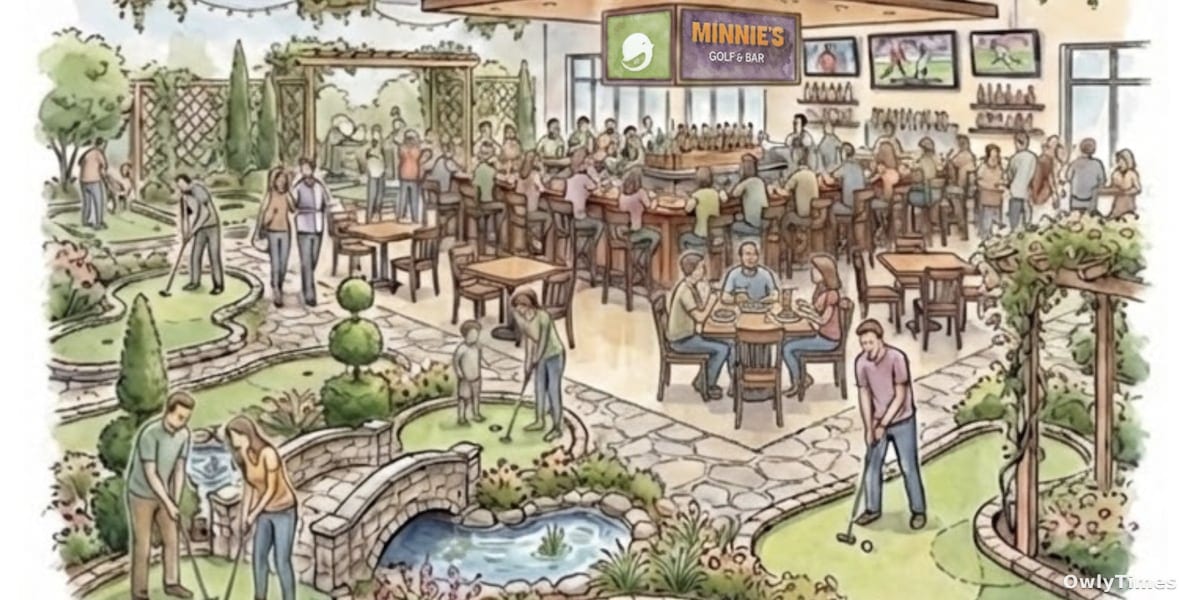

The chipped Formica of the diner booth felt cool under my elbows as I overheard two construction workers debating the future of Parkside. “Another bar?” one grumbled, stirring sugar into his coffee. “That’s all that district needs, another place for folks to spend their money.” His companion shrugged. “Nah, something different. Something to do that ain’t just…eating or drinking.” That conversation, overheard just last week, perfectly encapsulates the tightrope Urban Supply is walking as it continues to reshape Birmingham’s Parkside District, and the arrival of Minnie’s Golf & Bar in Winter 2026 is the latest, and perhaps most telling, move in that strategy. It’s not just about adding another entertainment option; it’s about redefining what “entertainment” means in a city grappling with its post-industrial identity.
Beyond Putt-Putt: The Rise of “Experiential Retail”
The announcement on Wednesday that Minnie’s, boasting two 9-hole mini-golf courses, a full-service bar, and a dedicated food truck, is coming to 1210 2nd Avenue South isn’t simply a local business story. It’s a microcosm of a national trend: the rise of “experiential retail.” For decades, brick-and-mortar stores have been battling the convenience of online shopping. The answer, increasingly, isn’t to compete on price or selection, but to offer something digital platforms can’t – a tangible, shareable experience. Minnie’s, spanning over 10,600 square feet and promising an outdoor patio, is designed to be Instagrammable, date-night worthy, and, crucially, a destination in itself. This isn’t your grandfather’s mini-golf; it’s a curated social space. According to a recent report by Deloitte, experiences now account for more than 50% of all discretionary spending in the US, a figure that has steadily climbed since 2014.
This piece references the wbrc.com report.
Orchestra Partners and the Parkside Gamble
Hunter Renfroe, Principal of Orchestra Partners, the development firm behind Urban Supply, framed the addition of Minnie’s as adding “a new layer of fun and creativity” to the tenant lineup. But the “fun and creativity” angle is also a calculated risk. Parkside, once a bustling manufacturing hub, has been undergoing a deliberate transformation, aiming to attract a younger, more affluent demographic. The district already features a mix of restaurants, breweries, and boutiques, but it’s faced criticism for feeling somewhat…sterile. The success of Urban Supply, and by extension Minnie’s, hinges on creating a genuine sense of community, not just a collection of trendy businesses. The investment in a dedicated lounge area for peak hours and private events, alongside family-friendly options, suggests a deliberate attempt to broaden the appeal beyond the typical bar crowd. This is a departure from the “build it and they will come” approach, and a bet that a carefully crafted atmosphere will draw people in.
The Shifting Landscape of Birmingham Nightlife
Birmingham’s nightlife scene has historically been fragmented, with pockets of activity scattered across the city. The Five Points South area remains a popular destination, but it’s often perceived as catering to a college crowd. Avondale has emerged as a craft beer hub, but lacks the same broad appeal. Parkside, with its central location and ambitious redevelopment plans, has the potential to become a unifying force. However, it’s also facing increased competition. Several new entertainment venues are planned or under construction in other parts of the city, including a large-scale music venue downtown. Minnie’s will need to differentiate itself not just from traditional bars, but from these emerging alternatives. The inclusion of a food truck and a focus on craft cocktails and mocktails suggests an attempt to offer a more comprehensive experience than simply a place to drink.
What’s at Stake for Birmingham’s Future?
The opening of Minnie’s Golf & Bar in Winter 2026 isn’t just about a new entertainment venue; it’s a test case for Birmingham’s broader economic development strategy. Can the city successfully transition from a manufacturing base to a knowledge-based economy fueled by creativity and innovation? Can it attract and retain young professionals by offering a vibrant and engaging lifestyle? The success of Urban Supply, and Minnie’s within it, will be closely watched by developers and city planners alike. The question isn’t simply whether people will go to Minnie’s, but whether it will contribute to a larger, more sustainable vision for Birmingham’s future. Will it become a genuine community hub, or just another Instagram backdrop? That’s the real putt Birmingham needs to sink.