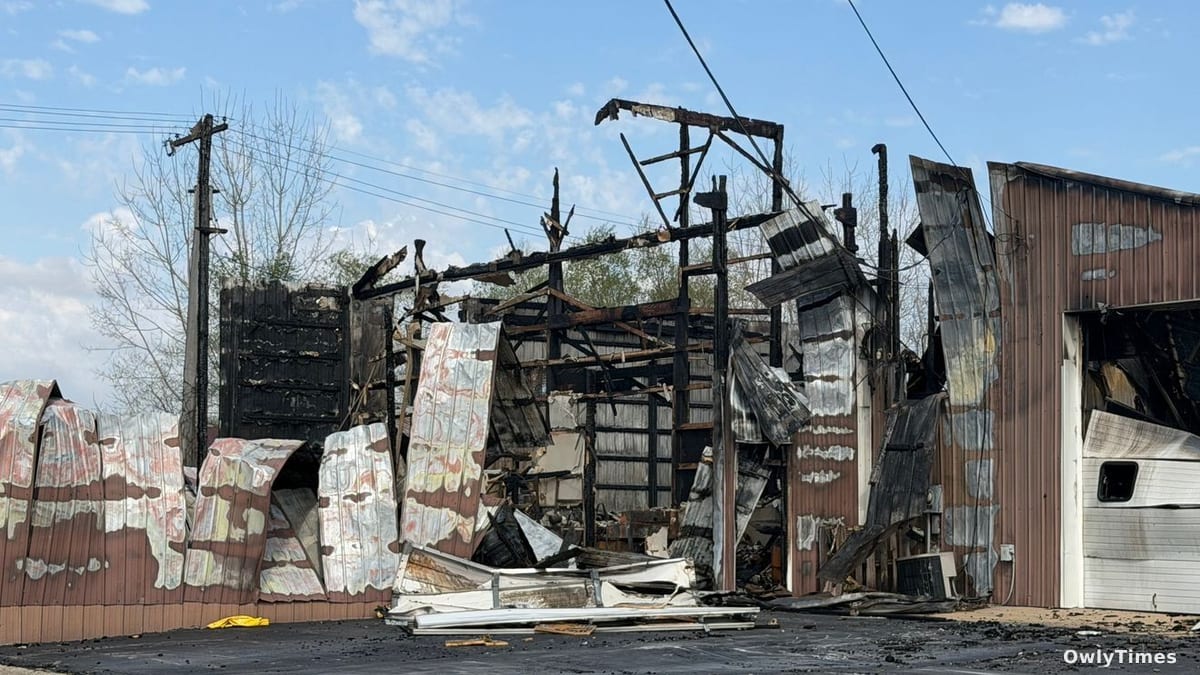

Three minutes is the precise window that separates a routine business operation from a total capital loss. At 5:15 p.m. on Tuesday, the last employee departed the Mishawaka warehouse operated by AAA Mattress & Furniture Warehouse. By 5:18 p.m., a lightning strike had ignited the structure, triggering a rapid, two-alarm conflagration that leveled the facility owned by the Source Company.
Follow the money and the operational risks, and you find a significant intersection between retail logistics and energy infrastructure. According to Mishawaka Fire officials, the warehouse served a dual purpose: it functioned as a retail storage hub and a storage site for Lithium-Ion batteries owned by NIPSCO. This proximity of high-density energy storage to standard commercial inventory fundamentally altered the fire department’s tactical response, requiring a multi-jurisdictional effort from Mishawaka, South Bend, Clay, and Penn Township fire departments to contain the blaze.
The Volatility of Industrial Storage
The fire’s progression was uncharacteristically swift, with flames fully engulfing the building within two minutes of ignition. For local stakeholders like Byron Stone, a salesman at Big C Lumber who observed the smoke from as far away as Bittersweet Road in Granger by 5:30 p.m., the visual impact was immediate. However, the financial and structural fallout is proving to be a long-term logistical burden.
The structural integrity of the facility was compromised almost instantly, leaving the building’s metal walls warped and the interior completely charred. David Pierce, the Mishawaka Fire Department assistant fire chief, noted that the collapsed roof and ceiling create ongoing hazards for emergency personnel. The presence of smoldering embers under the debris has necessitated multiple return trips by fire crews to address reignition risks, a recurring operational cost that highlights the danger of storing high-energy density components in traditional warehouse environments.
Market Adaptation Amidst Asset Loss
While the warehouse itself is a total loss, the economic ripple effects for the immediate area were contained, with neighboring businesses reporting only minor smoke damage. AAA Mattress & Furniture Warehouse is attempting to mitigate the sudden inventory disruption by discounting in-stock mattresses at its storefront. This reactive pricing strategy is a classic pivot intended to maintain cash flow and clear inventory, signaling an attempt to stabilize revenue streams while the parent company navigates the insurance and liability claims resulting from the Source Company property loss.
For investors and local business owners, the disaster serves as a stark case study in the risks of multi-tenant or multi-use industrial facilities. The integration of specialized energy infrastructure like Lithium-Ion battery arrays into standard supply chain warehouses creates a specific profile of fire risk that differs from conventional retail storage.
The ongoing process of site remediation and the final assessment of the smoldering hot spots will serve as the next indicator of when the site can be cleared and repurposed. Until the fire department clears the structural hazards, the total liability remains in flux, leaving the final tally for both the insurance carriers and the affected businesses to be determined by the last extinguished ember.





