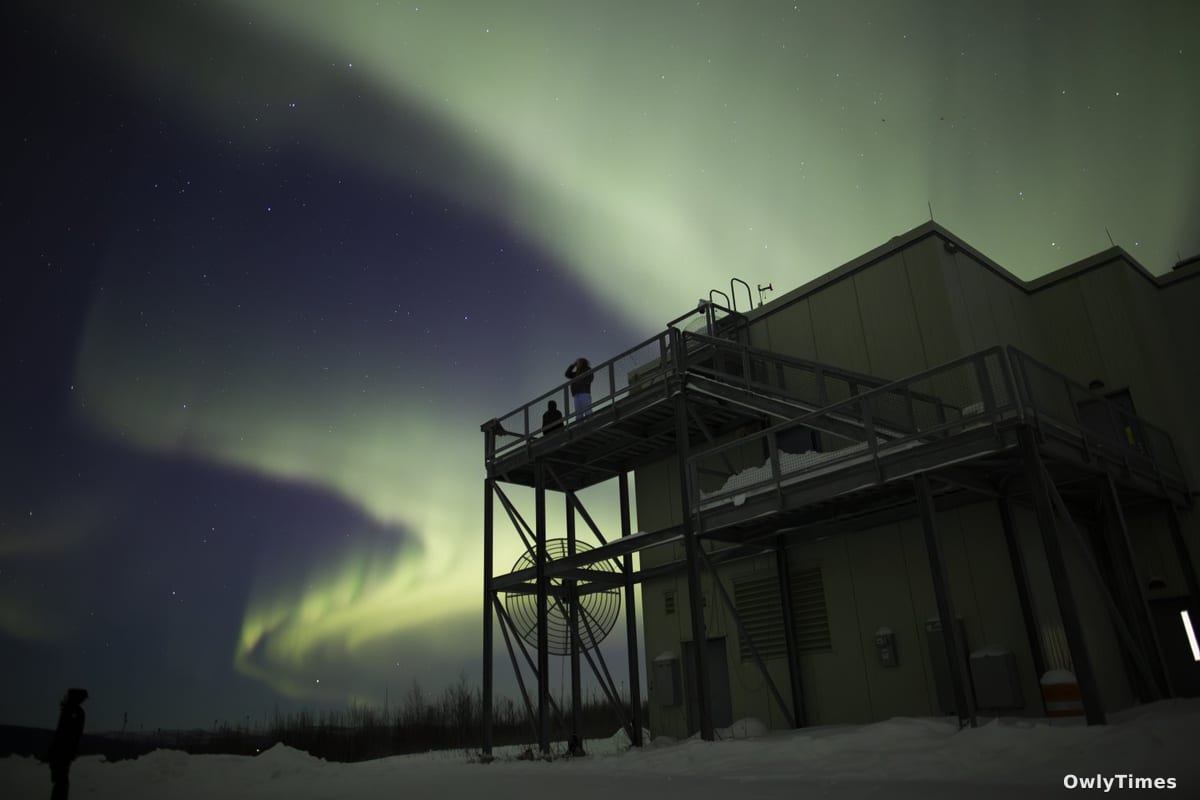

The scientific pursuit of plasma physics is often confined to the sterile, climate-controlled environments of university laboratories, where simulations and colorful plots dominate the research process. Yet, to truly understand the chaotic behavior of ionized gases, researchers must look to the heavens. A team of MIT students recently took this challenge literally, trading their classroom for the frozen wilderness of Fairbanks, Alaska, to study the aurora borealis as a natural, large-scale laboratory for plasma phenomena. As detailed in the MIT news report, this effort highlights a growing shift toward field-based, student-led experimentation that prioritizes rapid, hands-on scientific cycles over traditional, long-term academic pacing.
When Theory Meets the Sub-Zero Reality
The study sought to capture how auroral structures evolve across space by deploying all-sky camera systems and magnetometers across a 100-mile radius. While headlines might suggest a high-tech expedition of seamless data collection, the reality was a grueling test of both human and mechanical endurance. Students worked in conditions where temperatures plummeted to -25 degrees Fahrenheit, necessitating the use of red headlamps to preserve night vision. The cold was not merely an inconvenience; it posed a fundamental threat to the research infrastructure. According to PhD student Leonardo Corsaro, laptops that typically function for hours would lose their entire charge in just 10 minutes, forcing the team to treat every data transfer as a high-stakes race against the elements.
The physical demands of the research were equally significant. To access remote sites away from maintained roads, the team utilized cross-country skis, with the deep, thick snow requiring enough physical exertion to burn up to 900 calories per hour. These constraints serve as a reminder that the environment in which data is collected is as much a variable as the aurora itself. While the study effectively demonstrated that low-cost, distributed instrumentation can yield high-quality scientific insights, the limitations are clear: human exhaustion and battery failure are hard ceilings on how much data can be gathered in a single, short-term expedition.
Scaling Up the Search for Space Weather Clues
The GPOE (Geophysical Plasma Observation Expedition) is now in its third year, evolving from a single-camera experiment in 2023 to a sophisticated multi-site network. This year, the team’s ambition expanded beyond visual imaging by incorporating muon detectors. By pairing these with magnetic field measurements, the researchers are attempting to correlate high-energy particle activity with visible light structures in the upper atmosphere. This is a critical distinction from historical observations; while scientists have long tracked the aurora, integrating these specific sensors aims to demystify the complex relationship between space weather and its impact on Earth’s power infrastructure and satellite communications.
The value of this work lies in its reproducibility and its accessibility. By developing and open-sourcing low-cost camera and magnetometer designs, the team is moving beyond the confines of MIT. The 2024 outreach initiative, which involved 65 high school students from 20 schools in the design of 13 deployed cameras, suggests that this model of "citizen-science-meets-grad-school" is a viable path forward for large-scale data collection. You can learn more about the complexities of this atmospheric science at the American Geophysical Union archives or explore foundational plasma concepts via Wikipedia).
Moving Toward Three-Dimensional Understanding
The long-term goal of the GPOE is to move from two-dimensional images of the night sky to comprehensive three-dimensional reconstructions of auroral behavior. The next reading of the data collected during this year’s solar storm—the strongest in two decades—will be the primary indicator of whether these low-cost, spatially distributed systems can provide the resolution necessary for such complex modeling. As the team continues to refine their instrumentation and site selection, the consistency of their future findings will determine if this student-led, rapid-cycle approach can become a permanent fixture in the broader effort to forecast the next generation of space weather.