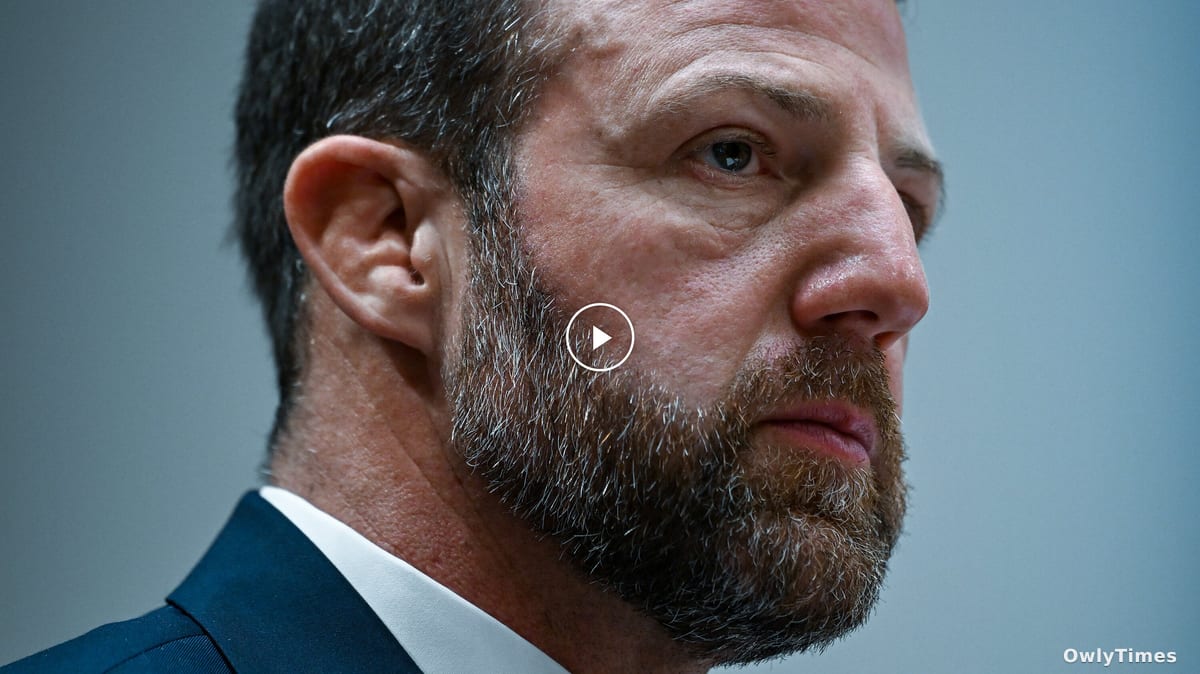

A Calculated Confirmation: Mullin’s Ascent and the Shifting Center of Homeland Security
The 54-45 Senate confirmation of Markwayne Mullin as Secretary of Homeland Security isn’t simply about filling a cabinet position; it’s a strategic realignment of power within the executive branch, signaling a deliberate shift towards prioritizing border security and, crucially, a more aggressive stance on internal dissent. The vote, secured despite unified Democratic opposition, reveals a growing willingness among a core group of moderate Republicans and independent senators to prioritize perceived national security threats over traditional concerns about civil liberties – a trade-off that has historically foreshadowed expansions of executive power. This confirmation wasn’t about whether Mullin was qualified, but how qualified he was to execute a specific, increasingly hardline agenda.
Reporting from The New York Times informs this analysis.
The Border Hawks and the Erosion of Bipartisan Oversight
The breakdown of the vote is revealing. While all 49 Republicans present voted in favor of Mullin, the crucial votes came from five Democrats: Joe Manchin of West Virginia, Kyrsten Sinema of Arizona (now an independent), and Jon Tester of Montana, Mark Kelly of Arizona, and Sherrod Brown of Ohio. These senators, all facing competitive re-election battles in states with significant rural populations and anxieties about border security, effectively signaled their willingness to break with their party on a key issue. This isn’t a new phenomenon; the Clinton administration’s “tough on crime” policies in the 1990s were similarly bolstered by moderate Democrats responding to shifting public sentiment. However, the stakes are demonstrably higher now, as the definition of “security” expands beyond traditional criminal justice concerns to encompass political opposition and immigration enforcement. The $98.7 billion Homeland Security budget for fiscal year 2025, already under intense scrutiny for its allocation towards border infrastructure, will now be implemented under Mullin’s direction, with a clear mandate to prioritize those areas.
From Businessman to Border Security: A Profile in Pragmatism – and Potential Conflict
Markwayne Mullin’s background is distinctly non-traditional for a cabinet secretary overseeing national security. A successful businessman and former Republican congressman representing Oklahoma’s 2nd congressional district, Mullin made his fortune in the plumbing industry. This experience, while lauded by supporters as evidence of his “real-world” problem-solving skills, also raises concerns about potential conflicts of interest, particularly regarding government contracts awarded to companies in the construction and security sectors. During his time in Congress, Mullin consistently voted in favor of stricter immigration enforcement measures and advocated for increased funding for border security. He also cultivated a reputation as a staunch conservative, frequently clashing with Democrats on issues ranging from gun control to environmental regulations. This ideological alignment, coupled with his business acumen, suggests a potential for streamlining bureaucratic processes – but also for prioritizing efficiency over due process. The contrast with his predecessor, Alejandro Mayorkas, who faced criticism from Republicans for what they deemed a too-lenient approach to border security, is stark.
Who Benefits and Who Loses in the New Homeland Security Landscape?
The immediate beneficiaries of Mullin’s confirmation are clear: defense contractors specializing in border security technology, conservative political groups advocating for stricter immigration policies, and the faction within the Republican party that prioritizes a “law and order” agenda. Conversely, civil liberties organizations, immigrant rights groups, and moderate Democrats who favored a more nuanced approach to homeland security are significant losers. The long-term implications are more complex. A more aggressive enforcement posture could lead to increased legal challenges and heightened tensions along the border, potentially escalating humanitarian crises. Furthermore, the expansion of surveillance technologies and the increased scrutiny of political activists, already a concern among privacy advocates, are likely to intensify under Mullin’s leadership. The 2001 Patriot Act, passed in the wake of 9/11, serves as a cautionary tale – demonstrating how quickly security concerns can be used to justify the erosion of fundamental rights.
The Next Move: DHS Internal Investigations and the Targeting of “Domestic Extremists”
The political chess move to watch next isn’t a legislative battle, but an internal one. All eyes will be on Mullin’s approach to internal investigations within the Department of Homeland Security, specifically regarding the definition and targeting of “domestic extremists.” In the past, DHS investigations have been criticized for disproportionately focusing on left-leaning activists and peaceful protesters. Mullin’s rhetoric and voting record suggest a willingness to broaden the definition of “extremism” to include groups critical of the government, potentially leading to a chilling effect on free speech and political dissent. The question isn’t if he will pursue this path, but how aggressively, and whether the five Democrats who secured his confirmation will ultimately challenge his actions. The coming months will reveal whether their votes were a pragmatic calculation for re-election, or a tacit endorsement of a fundamental shift in the balance between security and liberty.





