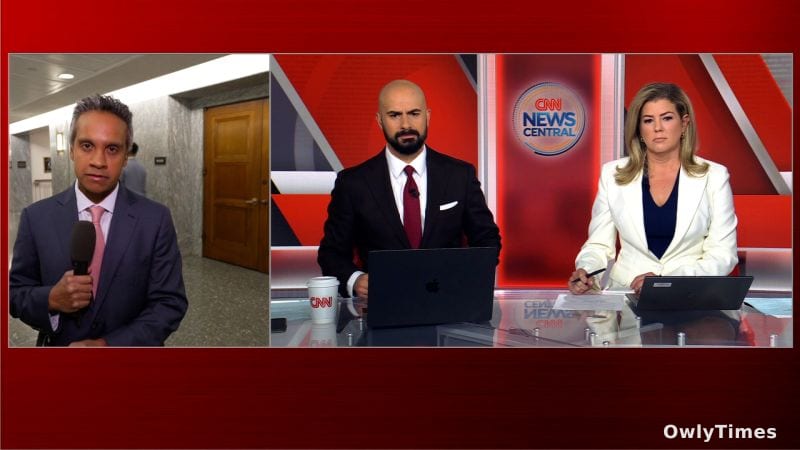

The recent vote in Congress to reopen key sections of the Department of Homeland Security (DHS) represents a calculated retreat for the House GOP, exposing the limits of brinksmanship when foundational government services become collateral damage. By decoupling the funding of the Transportation Security Administration (TSA) from the broader, more contentious debate over Immigration and Customs Enforcement (ICE), the Republican leadership has attempted to arrest a political hemorrhage that threatened to erode their leverage in future negotiations. This maneuver is less a victory and more a strategic withdrawal, necessitated by the realization that internal party infighting had pushed the shutdown into record-breaking territory.
The Cost of Internal Fragmentation
The strategic calculus here is clear: the House GOP leadership recognized that the optics of a stalled, paralyzed agency—specifically one tasked with national security—were becoming unsustainable. When a party prioritizes ideological purity regarding border enforcement funding over the operational continuity of essential transit security, they hand the opposition a narrative of incompetence. In this power dynamic, the beneficiaries are those who favor governance over obstruction, as the public’s tolerance for "record shutdowns" is historically thin. Those who lose are the hardline factions within the GOP, whose refusal to compromise on ICE funding ultimately forced them to accept a bill that did not achieve their primary objective.
A Cycle of Legislative Gridlock
This episode mirrors the recurring patterns of legislative standoffs that have defined recent years, where fiscal policy is held hostage to satisfy base constituencies. Much like past instances where federal agencies faced closures due to partisan deadlocks, the focus often shifts from the actual policy goal to the survival of the political actors involved. By caving on the specific demand for ICE funding in exchange for the reopening of the TSA, the House leadership has effectively conceded that their original line in the sand was not defensible under the pressure of a prolonged shutdown.
The Calculus of Concession
The tension lies in the contradiction between the party's stated commitment to stringent border security and the reality of their legislative failure to secure the necessary funding through the regular order. While lawmakers often frame such maneuvers as tactical retreats to fight another day, the reality is that each instance of caving weakens their standing for subsequent debates. The House leadership has now established a precedent that internal discipline can be overruled by the necessity of preventing total institutional paralysis.
Tracking the Next Legislative Shift
The political chess move to watch next will be the subsequent attempts to secure ICE funding. Whether the GOP attempts to re-litigate the issue in upcoming appropriations cycles or pivots to a different legislative vehicle will indicate if this current concession was a one-time tactical adjustment or a fundamental shift in how the party manages its internal ideological conflicts. The resolution of this specific funding standoff, as reported by Manu Raju on CNN, underscores that the next reading of the legislative floor schedule will reveal whether the party maintains its appetite for high-stakes confrontation or moves toward a more pragmatic, if less ambitious, governing strategy.





