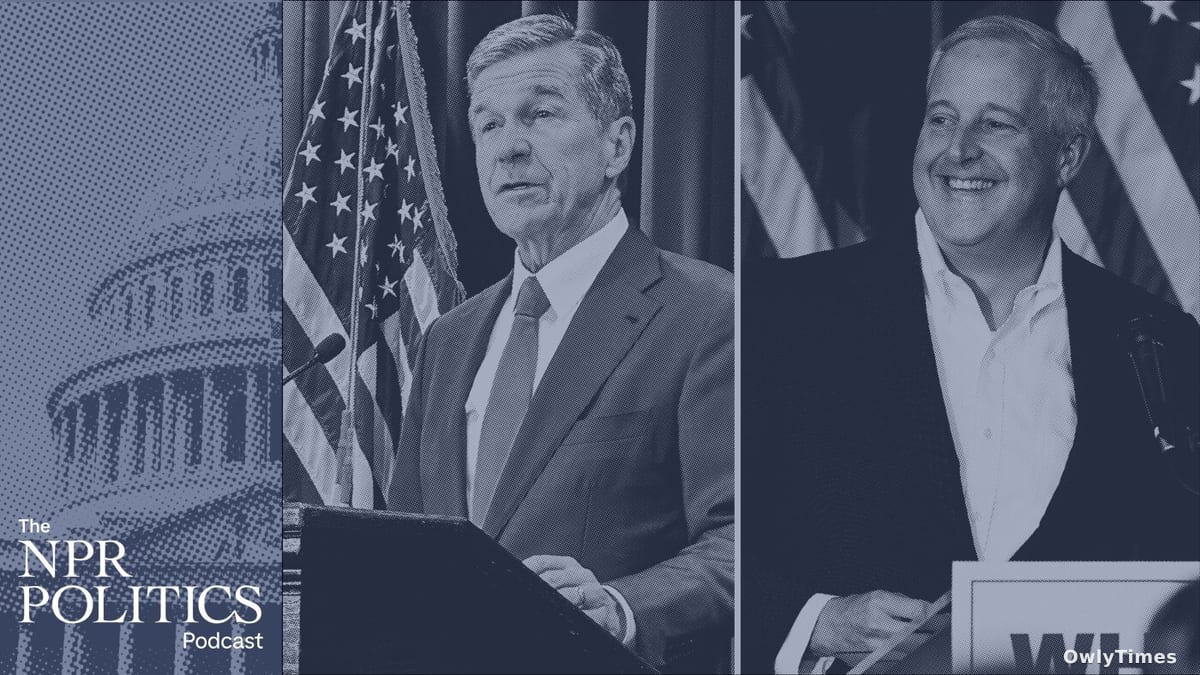

The North Carolina Primaries: A Test of Democratic Endurance
The flurry of early voting already underway in North Carolina isn’t simply about selecting candidates; it’s a strategic probe by both parties to gauge the potency of nationalized messaging versus localized appeals in a crucial swing state. Next week’s primaries, particularly the open Senate seat and the 4th Congressional District Democratic contest, represent a testing ground for how effectively each party can mobilize its base amidst shifting demographic currents and a pervasive sense of voter fatigue. The calculus isn’t about winning these primaries in isolation, but about the data they yield for the general election – turnout rates, demographic breakdowns, and the resonance of key issues. This isn’t a prelude to November; it’s reconnaissance.
Senate Race: Navigating the Moderate-Progressive Divide
The open Senate seat, vacated by Richard Burr, is drawing national attention, but the real story isn’t necessarily who wins the primary, but how they win. Former Governor Roy Cooper’s decision not to run created a vacuum filled by a diverse field, including businessman Harvey Gantt and state Senator Jeff Jackson. The dynamic reveals a familiar tension within the Democratic party: the struggle to balance appealing to moderate, suburban voters – a demographic critical in North Carolina – with energizing the progressive base. Jackson, with his focus on economic issues and accessibility, appears to be attempting this tightrope walk, while Gantt is leaning into his established name recognition and appeal to older voters. Who benefits and who loses hinges on whether the electorate prioritizes experience and perceived electability (favoring Gantt) or a fresh face with a clear progressive message (favoring Jackson). The historical parallel here is 2016, when the Democratic party underestimated the depth of economic anxiety among working-class voters, a mistake North Carolina Democrats are acutely aware of.
Source material: NPR.
4th Congressional District: A Battle for the Soul of the Triad
The Democratic primary in the 4th Congressional District, currently held by Kathy Manning, is a more localized, but equally revealing, contest. The field includes former state Senator Graig Meyer and Durham County Commissioner Brenda Howey. This race isn’t about ideological purity, but about representing a district undergoing rapid demographic change. The Triad region, encompassing Greensboro, Winston-Salem, and High Point, is becoming increasingly diverse, and the candidates are vying to consolidate support among these new voters. Meyer, with his focus on education and affordable housing, is attempting to build a coalition of young professionals and minority voters. Howey, meanwhile, is emphasizing her experience in local government and her ties to established community organizations. The stakes are high: a fractured Democratic primary could hand the seat to a resurgent Republican party eager to capitalize on any internal divisions. The 2018 midterm elections demonstrated the power of grassroots organizing in the 4th District, but sustaining that momentum requires a unified front.
Early Voting Signals and Turnout Expectations
Early voting data, while preliminary, offers a glimpse into the underlying dynamics. As of March 1st, over 200,000 ballots had been cast, a figure slightly lower than the same point in the 2020 primary cycle, but higher than 2018. This suggests a potentially lower-turnout environment overall, which could favor candidates with stronger organizational support and the ability to mobilize their core voters. The demographic breakdown of early voters will be crucial. A higher proportion of older voters could benefit Gantt in the Senate race, while strong turnout among young voters and minorities could boost Meyer in the 4th District. It’s worth noting that North Carolina’s voter ID laws, implemented in 2023, could also be suppressing turnout among certain demographics, particularly those with limited access to acceptable forms of identification. This is a point of contention, with Democrats alleging voter suppression and Republicans defending the law as a measure to ensure election integrity.
The Next Move: Scrutinizing Post-Primary Messaging
The immediate political chess move to watch isn’t the primary results themselves, but the post-primary messaging. Will the winning candidates attempt to broaden their appeal by moderating their positions, or will they double down on their base? More importantly, will the losing candidates offer a full-throated endorsement of the winner, or will lingering resentments create fissures within the party? The answer to that question will determine whether North Carolina Democrats can present a unified front against a well-funded and highly motivated Republican opposition. Specifically, observe whether the Senate nominee pivots to emphasize economic issues – a potential attempt to peel off working-class voters – or continues to focus on social issues, potentially alienating moderate swing voters. The next few weeks will reveal whether these primaries were merely a prelude to November, or a harbinger of deeper strategic challenges for both parties.





