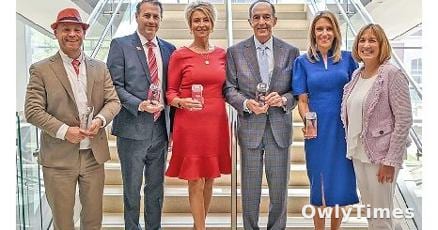

41 years of institutional continuity define the current landscape of the Nebraska business community, as evidenced by the latest round of honors from the University of Nebraska-Lincoln College of Business. While local accolades often serve as mere social calendar fixtures, the composition of this year’s honorees provides a clear map of the state’s evolving economic pillars. By examining the shift from legacy industrial titans to the service-oriented and professional advisory sectors, we can see how capital is flowing toward specialized care and high-level corporate services in the region.
The Shift Toward Specialized Service Infrastructure
The recognition of Lori and Paul Hogan, the founders of Home Instead, alongside the rise of leadership in firms like Deloitte, underscores a transition in the Nebraska economy. When the University presents the Business Leadership Award to the Hogans and the Corporate Leadership Award to a global consultancy like Deloitte, it validates a market that is increasingly predicated on professional services rather than pure manufacturing. This transition is not merely symbolic; it reflects a broader trend where Nebraska-based organizations are successfully scaling niche service models to reach national markets.
Follow the money, and you will find that the physical footprint of these services is expanding in tandem with the talent pool. The recent opening of a new office by BDO USA at The Reg in Omaha is a direct response to this demand for high-level advisory support. When a firm like BDO selects a specific location, it is essentially signaling where it expects the highest concentration of corporate activity and transactional volume to originate over the next fiscal cycle.
Leadership Capital as a Market Indicator
The movement of human capital within local financial institutions further confirms this regional growth. First Westroads Bank appointing Rob Glorvick as Senior Vice President of Lending and Arbor Bank naming Kevin Munro as Executive for Market Strategy in Omaha are calculated moves to capture the credit demand generated by this service-sector expansion. These banks are not hiring for maintenance; they are hiring to facilitate growth in a market where corporate and personal wealth management have become increasingly sophisticated.
The addition of Natalie Lucas, JD, to Security National Bank fits into this same narrative of professionalization. As legal and regulatory complexities increase for mid-market businesses, the integration of JD-level expertise into banking operations becomes a competitive necessity. These personnel shifts are the leading indicators of how banks are positioning their balance sheets to support a more complex, service-heavy local economy.
Sustaining the Nebraska Business Ecosystem
Dean Kathy Farrell noted that these recipients showcase the talent inherent in the Nebraska business community, but the data suggests that the true value lies in the intergenerational transfer of expertise. From Marc LeBaron, the chairman and CEO of Lincoln Industries, who received the Lifetime Achievement Award, to young innovators like Christie Stukenholtz, the founder and CEO of Senior Care Finder, the ecosystem is effectively bridging the gap between established industrial stability and agile, tech-enabled service models.
For investors and consumers, the takeaway is clear: the Nebraska market is pivoting toward a high-service, high-consultancy model that demands more specialized oversight than in previous decades. As these firms continue to hire and expand their physical presence, the next reading of local employment figures and bank lending volume will show whether this concentration of professional services is successfully insulating the regional economy from broader volatility. Monitoring how these specific hires—Glorvick at First Westroads and Munro at Arbor—deploy their resources in the coming quarters will provide the most accurate signal of where the next wave of local capital investment is headed.





