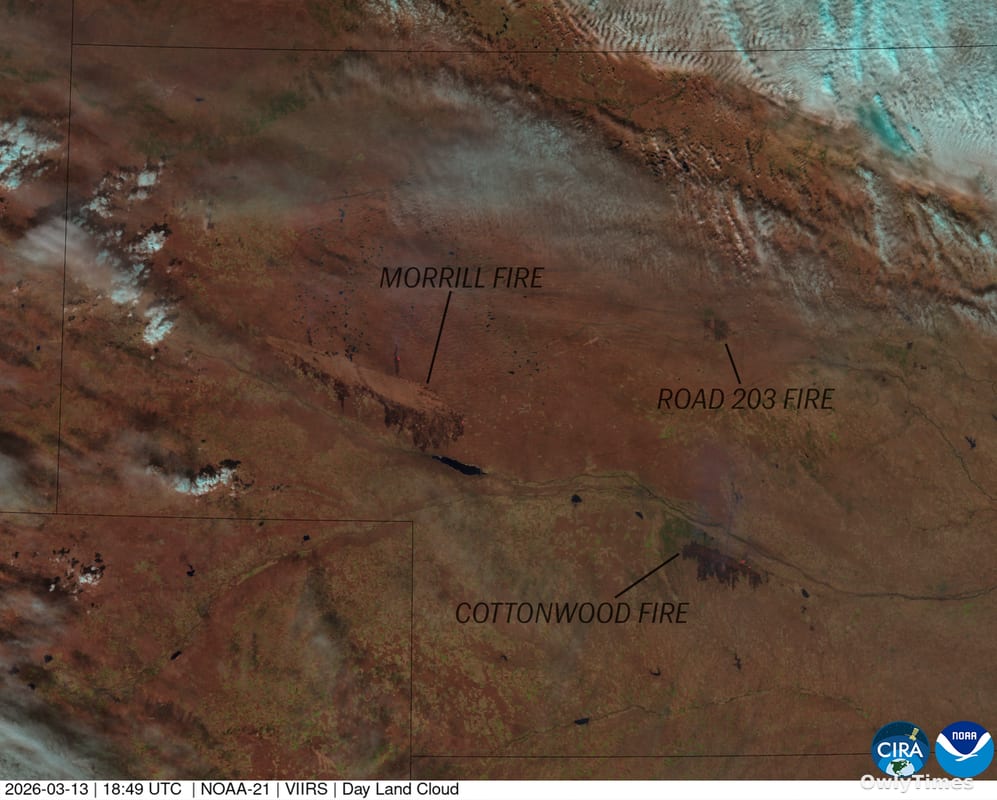

The air in Lincoln smelled faintly of smoke even before the news broke wider – a grim reminder carried on the breeze from the record-breaking Morrill Fire, now officially the largest in Nebraska’s history. Monday in Nebraska wasn’t a day for textbook learning; it was a day where the abstract became brutally real, where the fragility of normalcy was punctuated by a physics lab pulling up to UNL, a bomb threat emptying North Platte High School, and the quiet finality of a plea deal in a Columbus courtroom. These seemingly disparate events, unfolding within hours of each other, aren’t random noise. They’re a snapshot of a state grappling with escalating crises – environmental, societal, and deeply personal – and a system stretched thin trying to respond.
A State on Edge: From Classrooms to Courtrooms
The evacuation of North Platte High School following a bomb threat is, on the surface, a chilling echo of anxieties playing out nationwide. School shootings and threats have increased 69% since 2017, according to data from the National Center for Education Statistics, turning routine drills into genuine fear for students, parents, and staff. But beyond the headlines of lockdown procedures and police sweeps, this incident speaks to a broader erosion of trust and a rising tide of desperation manifesting in alarming ways. The fact that nothing was found doesn’t diminish the trauma inflicted – the disruption, the fear, the feeling of vulnerability. It underscores how easily a single threat can unravel the sense of safety that schools are supposed to provide.
See the original wowt.com story for the full account.
Meanwhile, in Columbus, a plea deal was accepted in the case of a man who fatally shot his stepfather. Details remain sparse, but the acceptance of a plea suggests a complex narrative, likely involving mitigating circumstances or a desire to avoid a protracted trial. These cases, often relegated to the back pages, represent the quiet tragedies unfolding within families, the consequences of unresolved trauma, and the limitations of a justice system struggling to address the root causes of violence. It’s a stark contrast to the public spectacle of a bomb threat, yet equally indicative of a state grappling with internal pressures.
The Morrill Fire and the New Reality of Disaster Response
The scale of the Morrill Fire – confirmed by U.S. Secretary of Agriculture Brooke Rollins as the largest in Nebraska’s history during her aerial tour Monday – isn’t just a statistic; it’s a harbinger. Nebraska, traditionally considered relatively immune to the large-scale wildfires plaguing the West Coast, is now facing a new reality. Climate change is reshaping the risk landscape, extending fire seasons and increasing the intensity of blazes. The fire has already burned over 60,000 acres, forcing evacuations and devastating ranchland, a critical component of the state’s agricultural economy.
Rollins’ pledge of federal support is crucial, but it’s a reactive measure. The real question is whether Nebraska is adequately prepared for a future where wildfires are no longer anomalies but recurring threats. The state’s investment in firefighting resources, preventative measures like controlled burns, and long-term land management strategies will be critical in mitigating future damage. This isn’t simply an environmental issue; it’s an economic one, impacting livelihoods and the state’s agricultural output, which contributed $25 billion to the Nebraska economy in 2022.
Science on Wheels: A Counterpoint to Crisis?
Amidst the anxieties and devastation, the arrival of the mobile physics lab at the University of Nebraska-Lincoln offers a glimmer of hope, a reminder of the enduring power of curiosity and learning. The hands-on experience provided by the lab is a valuable supplement to traditional classroom instruction, particularly in a time when STEM education is increasingly vital. But it also feels like a deliberate attempt to counterbalance the day’s grim realities.
Is this a conscious effort to offer students a space for wonder and exploration amidst a climate of fear and uncertainty? The timing is striking. While authorities investigate threats and firefighters battle blazes, a mobile lab is offering a tangible connection to the scientific principles that could, ultimately, help us understand and address these challenges. It’s a small gesture, but one that speaks volumes about the importance of fostering resilience and critical thinking in the face of adversity.
This confluence of events – the threat, the tragedy, the disaster, and the pursuit of knowledge – isn’t just a Nebraska story. It’s a microcosm of the challenges facing communities across the country. The question now isn’t simply how Nebraska responds to these crises, but whether it can proactively address the underlying vulnerabilities that make them more frequent and more severe. Will the state prioritize long-term investment in disaster preparedness and mental health resources, or will it continue to react to crises as they unfold? The answer will define Nebraska’s future, and serve as a crucial case study for a nation increasingly defined by its capacity to adapt to a rapidly changing world.





