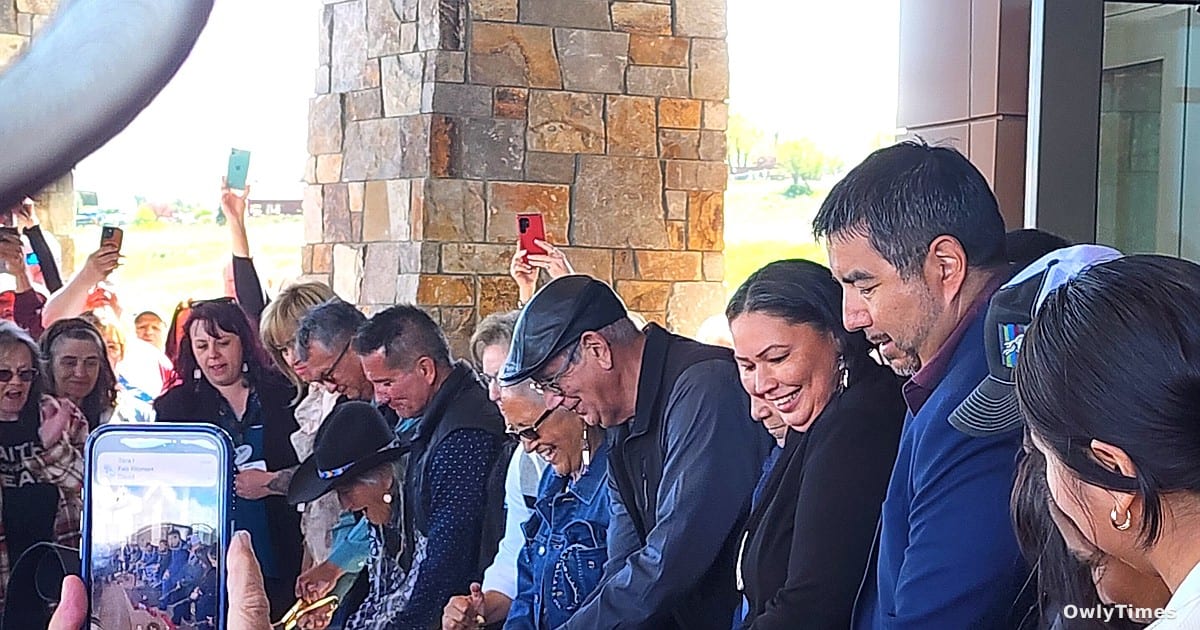

The sun rose over the Flathead Reservation on Tuesday, May 5, illuminating a structure designed not just for commerce, but for cultural alignment. At 100 Irvine Flats Road, the newly opened 400 Horses casino stands as a 35,000-square-foot architectural statement, its orientation meticulously set to face the sunrise, mirroring the traditional placement of a tepee. While the slot machine floor hums with the typical energy of a grand opening, the atmosphere inside suggests something far more profound than simple entertainment. By launching on the day of awareness for Missing and Murdered Indigenous People, S&K Gaming LLC chose to tether their latest venture to a somber, urgent reality, grounding the glitz of a new casino in the history and struggles of the people who built it.
A Legacy Etched in Steel and Tradition
The facility takes its name from Chief Alexander, a leader of the Pend d’Oreille tribe whose legendary herd of horses became his namesake. As one of the signatories of the Hellgate Treaty on July 16, 1855, Chief Alexander remains a towering figure in tribal history, remembered for his strength in battle and his role in navigating a volatile era for his people. During the ribbon-cutting ceremony, the weight of this history was palpable when Stephen Small Salmon, the chief’s oldest living descendant and a fluent Salish speaker, took the floor. Clad in tradition, Small Salmon’s prayer and hand-drum performance served as a reminder that this building is an extension of a lineage that predates the modern gaming industry by generations.
Economic Sovereignty Beyond the Floor
For Sheila Matt, the principal operating officer of S&K Gaming, the path to opening day was a frantic sprint. Speaking to the crowd while wearing a traditional ribbon skirt, Matt credited CEO Byron Miller and a coalition of staff from the Gray Wolf Peak Casino, the Kwataqnuk Resort and Casino, and the Big Arm Resort and Casino for the labor required to install more than 300 gambling machines under a tight deadline. Yet, the metrics of success here extend well beyond the gaming floor. According to Matt, the project has created 70 new jobs, contributing to a broader ecosystem where more than 200 people across the Flathead Reservation are employed by tribal gaming.
Gaming as a Tool for Tribal Independence
The expansion of gaming is often viewed through a purely fiscal lens, but leaders within the industry argue that the narrative is fundamentally flawed. David Bean, chair of the Indian Gaming Association, emphasized that these projects are critical vehicles for advancing economic independence for tribal nations. This sentiment is echoed by the Confederated Salish and Kootenai Tribal Council, which oversees the revenue generated by these assets. The financial stakes are significant: officials anticipate that more than $1 million will flow back to tribal members, with additional funding directed toward local fire departments and reservation charities.
Integrating Culture into Commerce
The integration of the 371 Bar and Grill—named for the deepest point of Flathead Lake—and the inclusion of tribal artifacts curated by Marie Torosian of the Three Chiefs Culture Center signal a deliberate attempt to reclaim space. A Kootenai canoe, currently being carved for the building, serves as a physical bridge between the past and the commercial future of the site. As the crowds dispersed following the opening, the focus shifted from the ceremony to the operational reality of the new facility. The next reading of the tribe’s revenue distribution reports will show whether this latest asset successfully balances its cultural mission with the economic demands of its stakeholders.