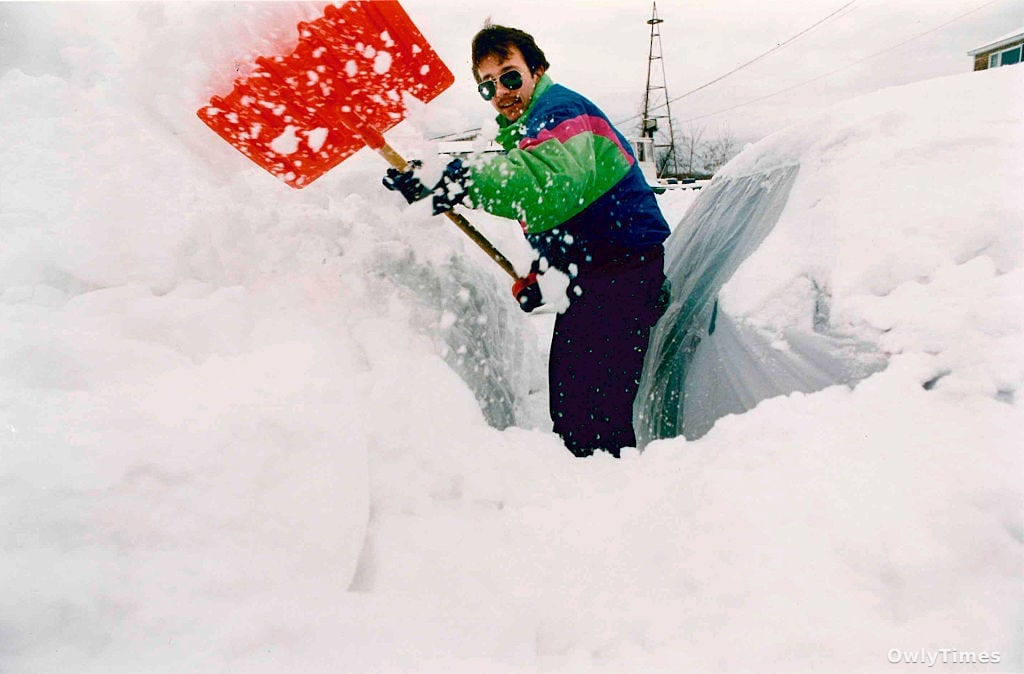

The Unsettling Truth About Nor’easters and Climate Change
The recent string of brutal nor’easters battering New England has understandably fueled a familiar anxiety: is this the “new normal”? Images of snow-choked streets and widespread power outages are potent reminders of nature’s power, and it’s natural to seek explanations, particularly in an era defined by climate change. However, a crucial piece of this narrative is often overlooked – the sobering assessment from the Intergovernmental Panel on Climate Change (IPCC), the world’s foremost authority on climate science. Their conclusion, surprisingly, is that we simply don’t know if these intense storms are increasing in frequency or severity over the long term. This isn’t a dismissal of climate change’s broader impacts, but a vital reminder of the complexities inherent in attributing specific weather events to a global phenomenon.
Why the IPCC’s Uncertainty Matters
The IPCC’s position isn’t born of apathy or denial, but from a deep understanding of how scientific knowledge progresses. Each year, the field of climate science generates a deluge of research – hundreds of thousands of studies employing diverse methodologies and often yielding conflicting results. To treat any single study, no matter how rigorous, as definitive is a dangerous oversimplification. Science thrives on rigorous testing and debate, constantly refining our understanding by challenging existing assumptions. The IPCC, in essence, acts as a filter, synthesizing this vast body of work to identify areas of consensus and, crucially, areas where uncertainty remains.
Drawn from thefp.com.
What the Study Actually Found vs. What Headlines Claim
Headlines often scream about climate change “causing” extreme weather events. While it’s true that a warming climate can influence the intensity and behavior of storms, directly linking a specific nor’easter to climate change is incredibly difficult. The IPCC’s assessment on nor’easters specifically highlights this challenge. They acknowledge that climate change is altering large-scale atmospheric patterns, which could influence storm tracks and intensity. However, disentangling these broader shifts from the natural variability inherent in weather systems is a monumental task. The data simply isn't conclusive enough to definitively state that nor’easters are becoming more intense. This isn’t to say climate change isn’t impacting weather; it’s to say that attributing blame for a specific storm is far more nuanced than popular narratives often suggest.
Limitations to Consider
The difficulty in establishing a clear trend in nor’easter intensity stems from several factors. Historical weather records, particularly detailed measurements of storm intensity, are incomplete. Early data relied on observations from coastal communities, which may not accurately represent the full extent of storm impacts inland. Furthermore, the complex interplay of factors that drive nor’easters – sea surface temperatures, atmospheric pressure gradients, and the jet stream – makes it challenging to isolate the influence of climate change. Models used to project future storm behavior are constantly improving, but still have limitations in accurately capturing the chaotic nature of these systems. Dr. Robert Kopp, a professor of Environmental Sciences at Rutgers University, recently noted that “while we can confidently say that sea level rise exacerbates coastal flooding from nor’easters, projecting future storm intensity with certainty remains a significant challenge.”
Why Memphis Manufacturers Are Watching Closely
While New England bears the brunt of these storms, the implications extend far beyond the region. Disruptions to supply chains, transportation networks, and energy infrastructure can have ripple effects across the national economy. Manufacturers in areas like Memphis, Tennessee, which rely on efficient logistics and timely deliveries, are keenly aware of these vulnerabilities. A major nor’easter can delay shipments, disrupt production schedules, and ultimately impact profitability. The uncertainty surrounding future storm patterns underscores the need for businesses to build resilience into their operations – diversifying suppliers, investing in backup power systems, and developing contingency plans for potential disruptions.
The Next Steps: Refining Regional Climate Models
The IPCC’s acknowledgement of uncertainty isn’t a dead end; it’s a call to action. Future research needs to focus on refining regional climate models to better capture the specific dynamics of nor’easters. This includes incorporating higher-resolution data on sea surface temperatures and atmospheric conditions, as well as improving our understanding of how climate change is affecting the jet stream. Dr. Maria Hood, a research scientist at the National Oceanic and Atmospheric Administration (NOAA), emphasized the importance of “integrating historical storm data with advanced modeling techniques to identify subtle trends that might be masked by natural variability.” Furthermore, improved monitoring of ocean temperatures and atmospheric conditions along the Northeast coast will be crucial for tracking potential changes in storm behavior. The question to watch is whether the next generation of climate models, incorporating these improvements, will begin to reveal a clearer signal of increasing nor’easter intensity, or if the uncertainty will persist.





