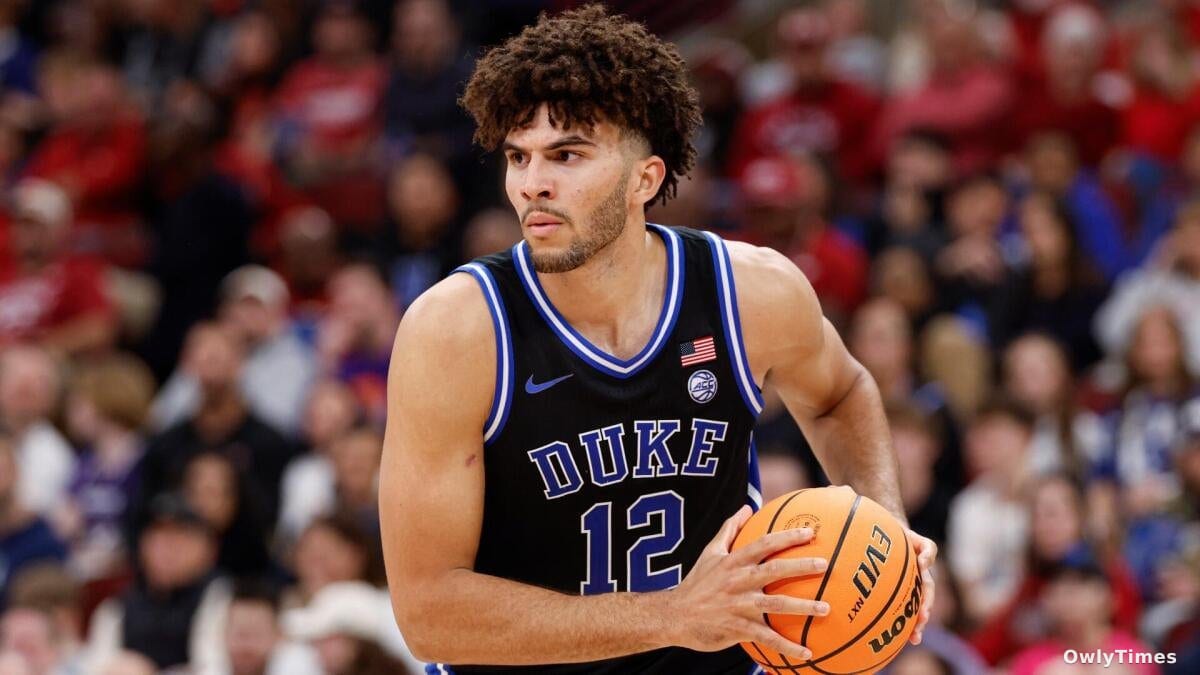

The air in Capital One Arena crackled with anticipation Saturday night, a tangible energy fueled by the collision of college basketball royalty. It wasn’t just a game; it was a statement waiting to be made. Before the tip-off between No. 1 Michigan and No. 3 Duke, the chatter wasn’t about bracketology or potential matchups – it was about legacies. About Cameron Boozer, the Duke freshman poised to redefine the National Player of the Year conversation, and about whether Michigan’s suffocating defense could finally offer a credible answer to his dominance. This wasn’t simply a battle for seeding; it was a microcosm of the shifting power dynamics in the sport, a clash between offensive firepower and defensive grit that spoke to a larger question: in an era of increasingly specialized play, can a team truly excel at everything?
The stakes were undeniably high. Michigan entered the contest 25-1, leading the nation in scoring margin at a staggering 21.8 points per game. Their dominance wasn’t just about winning; it was about how they were winning, racking up 21 victories by double digits, a testament to their relentless pressure and balanced attack. Duke, at 24-2, wasn’t far behind, showcasing a similar level of efficiency. But beyond the impressive records and statistical accolades, this game represented a crucial test for both programs as they jockeyed for the coveted No. 1 overall seed in the upcoming NCAA Tournament. The selection committee places significant weight on metrics like the NET ranking, KenPom, and Wins Above Bubble – all areas where these two teams currently reigned supreme. A head-to-head victory could be the tiebreaker that ultimately determined their postseason fate.
This article draws on reporting from CBS Sports.
The narrative surrounding Boozer loomed large. The freshman sensation, already the favorite to win the John Wooden Award, was on a trajectory that evoked comparisons to legends like Tim Duncan. His ability to impact the game in multiple facets – scoring, rebounding, assists, even steals – was unprecedented for a first-year player. But Michigan, boasting the nation’s No. 1 adjusted defensive efficiency, presented a unique challenge. Anchored by the imposing presence of 7-foot-3 center Aday Mara and the versatile frontcourt duo of Yaxel Lendeborg and Morez Johnson Jr., the Wolverines were built to disrupt offensive rhythms and force opponents into uncomfortable shots. The matchup wasn’t just about Boozer’s individual brilliance; it was about whether Duke could find alternative scoring options against a defense designed to contain him.
Early foul trouble for Mara, picking up his third personal foul before the under-eight timeout, immediately threw a wrench into Michigan’s defensive plans. The Wolverines’ ability to protect the rim and challenge Boozer’s shots diminished significantly with their anchor sidelined. Duke capitalized, finding success with corner three-pointers from Isaiah Evans and Dame Sarr, exploiting the gaps created by Mara’s absence. But Michigan responded with a flurry of points from Lendeborg, who finished with a game-high 12 points on a perfect 5-for-5 shooting in the first half, demonstrating their own offensive firepower. The first half was a back-and-forth affair, a testament to the evenly matched talent on display. It wasn’t a game of runs, but of calculated possessions, each team probing for weaknesses and exploiting mismatches.
Looking beyond the box score, the game highlighted a growing trend in college basketball: the rise of the “Big Three.” Michigan’s reliance on Lendeborg, Johnson, and Mara mirrored a shift away from the one-and-done superstar model towards a more balanced, team-oriented approach. While Boozer undoubtedly carried a heavy load for Duke, the Blue Devils also demonstrated a willingness to distribute the ball and involve multiple players in the offense. This dynamic, fueled by the transfer portal and the increasing emphasis on roster construction, is reshaping the landscape of the sport. The days of relying solely on a single dominant player are fading, replaced by a need for versatile, complementary pieces.
Duke ultimately prevailed, 85-78, but the victory wasn’t a simple coronation. It was a hard-fought battle that exposed vulnerabilities on both sides. Boozer finished with 24 points and 11 rebounds, a solid performance but not the overwhelming statement some anticipated. Michigan, despite Mara’s foul trouble, remained competitive throughout, showcasing their resilience and defensive tenacity. The game served as a reminder that even the most dominant teams are susceptible to challenges, and that the road to the NCAA Tournament championship is paved with adversity.
This game wasn’t just about two elite teams colliding; it was a preview of the future of college basketball. The emphasis on defensive efficiency, the emergence of balanced offensive attacks, and the importance of versatile players are all trends that will continue to shape the sport in the years to come. The question now is: will other programs adapt and embrace these changes, or will they be left behind in the pursuit of championship glory? Will we see more teams prioritizing defensive versatility and balanced scoring over relying on a single superstar? The answer to that question will determine the next era of college basketball dominance.

