
The Erosion of Environmental Monitoring: A Veteran NOAA Leader Sounds the Alarm
The question of whether scientific integrity can survive sustained political pressure isn’t abstract. It’s playing out right now within the National Oceanic and Atmospheric Administration (NOAA), and the implications extend far beyond bureaucratic infighting. Recent public statements by Stephen Volz, a 30-year veteran of NOAA and former associate administrator for satellite and information services, reveal a deeply concerning pattern: a systematic dismantling of the agency’s scientific capacity, driven by workforce reductions and a shift towards privatization. While headlines have focused on Volz’s unexpected placement on administrative leave for over six months – a situation he himself admits he has “no insight” into – the core of his warning is far more significant. He isn’t simply lamenting his own predicament; he’s detailing what he believes is a deliberate weakening of the nation’s ability to understand and respond to environmental change.
Reporting from spacenews.com informs this analysis.
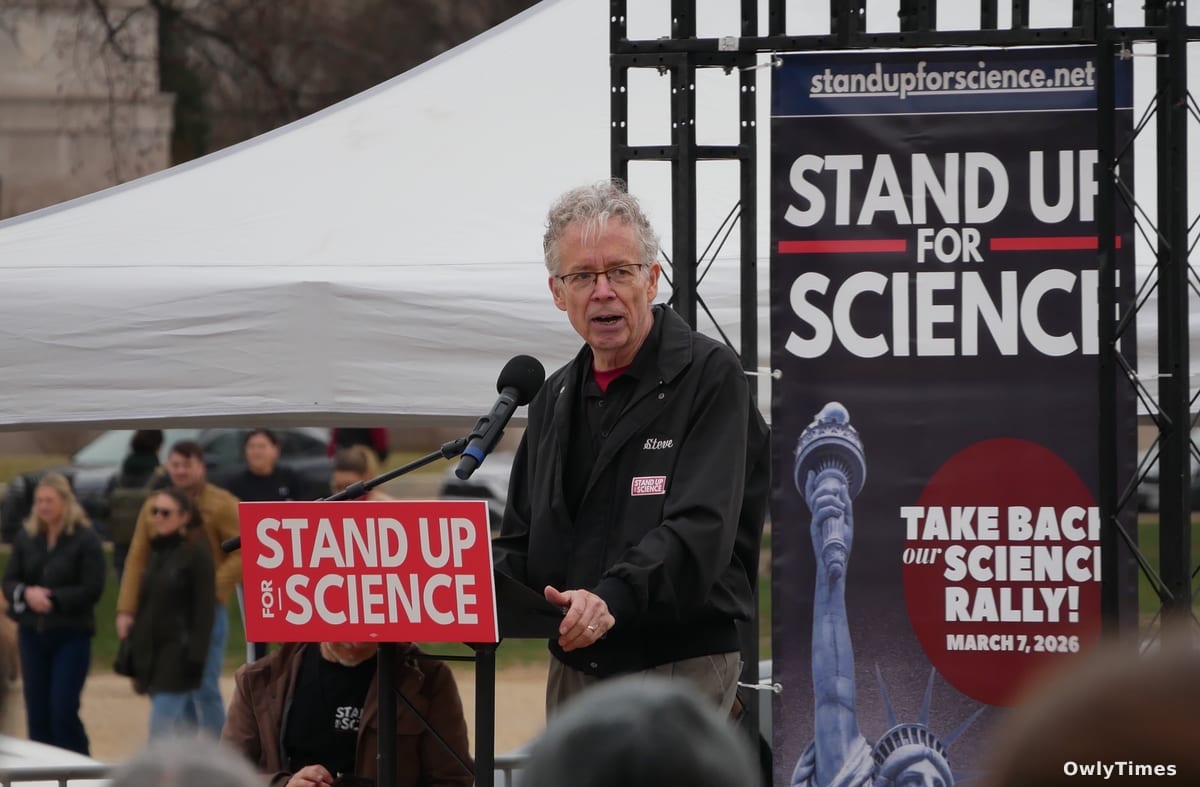
Volz’s most striking claim, delivered at the “Stand Up for Science” rally on the National Mall March 7, is that the federal government has been “lobotomized” by the separation of 95,000 federal science positions in the past year, including 10,000 STEM Ph.D.s. This isn’t hyperbole, he argues, but a direct consequence of policies that prioritize short-term cost savings over long-term scientific understanding. To put this number in perspective, NOAA’s total workforce is approximately 12,000. The scale of the broader federal science workforce reduction suggests a strategic, rather than accidental, depletion of expertise. Volz specifically cited the cancellation of planned instruments designed to measure air and water quality – decisions made, he emphasizes, “without congressional approval.” This raises a critical question: if these cuts bypassed the established legislative process, what mechanisms are currently in place to ensure scientific priorities are being met?
The timing of Volz’s leave, coinciding with the Senate’s consideration of Neil Jacobs’ nomination to become NOAA administrator, has fueled speculation of retaliation. Some in Congress believe the leave was connected to an investigation during the previous administration when Jacobs served as acting administrator. While NOAA has offered no explanation for Volz’s administrative leave, the lack of transparency is itself damaging. It creates an environment of uncertainty and fear, discouraging other scientists from speaking out about concerns. Jacobs, in a presentation to NOAA’s Science Advisory Board March 10, notably avoided addressing Volz’s status or the restructuring within NESDIS, instead focusing on workforce morale – a telling omission given the context. He stated the agency was in a “much better place” than a few months prior, but offered no supporting data, leaving the assessment feeling unsubstantiated.
Beyond personnel issues, Volz’s critique extends to a concerning trend towards privatization. He alleges an “effort…to divert significant federal funds from our government systems to for-profit companies,” suggesting a shift from publicly-driven data collection and analysis to a model where environmental information becomes a commodity. This isn’t simply about efficiency; it’s about control. Private companies are accountable to shareholders, not to the public, and their priorities may not align with the need for unbiased, accessible environmental data. This echoes broader anxieties about the commercialization of space-based observation systems, where data access and control are increasingly concentrated in the hands of a few large corporations. The potential for skewed data or restricted access is a significant threat to informed policymaking.
Limitations to Consider
It’s crucial to acknowledge the inherent limitations of Volz’s perspective. As a directly affected party, his criticism is understandably pointed. While his decades of experience lend weight to his claims, a fully objective assessment requires independent verification. Furthermore, the rally itself – while a valuable platform for raising awareness – wasn’t a peer-reviewed scientific forum. The claims made require scrutiny and corroboration through official investigations and data analysis. It’s also important to note that Congress did successfully override proposed cuts to NASA’s science directorate in the fiscal year 2026 budget, as highlighted by Senator Chris Van Hollen, demonstrating that legislative oversight can and does function as a check on executive actions. However, Van Hollen’s warning about potential cuts in the upcoming 2027 budget, coupled with comments from Russell Vought, director of the Office of Management and Budget, about inflicting “trauma” on federal employees, underscores the ongoing vulnerability of science funding.
Despite these successes, the broader trend remains concerning. Volz’s description of a “great silencing” within government agencies – where scientists are discouraged from speaking out – is particularly alarming. This chilling effect undermines the very foundation of scientific inquiry, which relies on open communication and critical debate. The fact that NOAA and NASA received only passing mention during a two-hour rally dedicated to defending science speaks volumes about the perceived difficulty of challenging the status quo within these institutions. Volz himself is now working with a “scientific diaspora” – scientists who have left government service – to preserve and reconstruct a global observing system, a testament to the scale of the knowledge loss and the urgency of the situation.
The next critical step is independent investigation into the claims made by Volz and others. Congress must exercise its oversight authority to determine the extent of the workforce reductions, the rationale behind the cancellation of scientific instruments, and the details of the proposed privatization efforts. More importantly, we need to watch for the composition of the upcoming fiscal year 2027 budget proposal. Will the administration continue to prioritize cuts to science funding, or will it heed the warnings of scientists like Volz and invest in the long-term health of our planet and our ability to understand it? The future of environmental monitoring – and, arguably, our ability to navigate the challenges of climate change – hangs in the balance.