
Is the AI revolution actually a technological shift, or are we just witnessing the most expensive construction project in the history of the modern world?
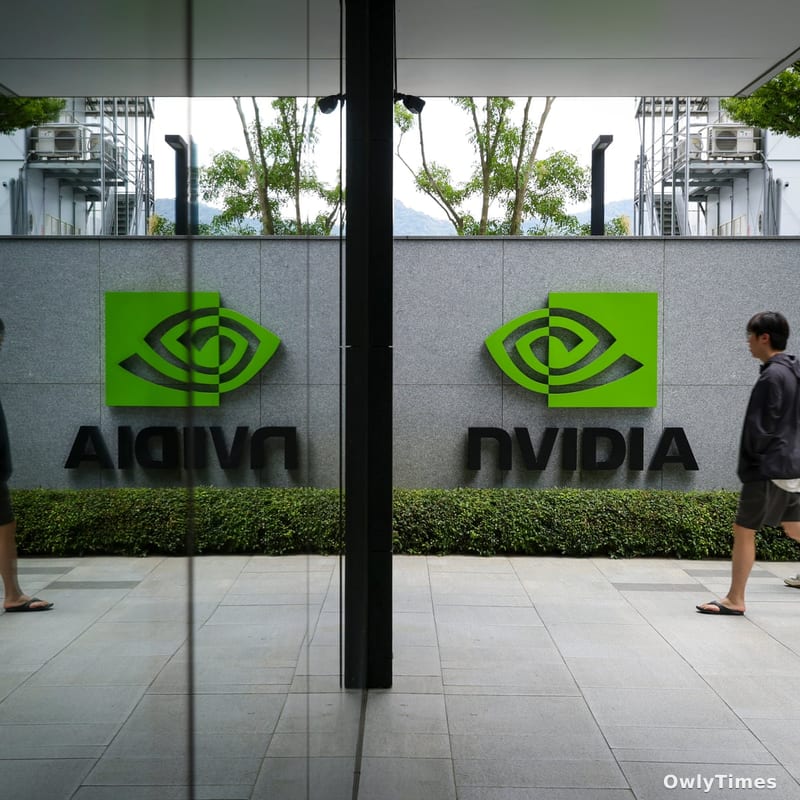
The real story here isn’t the ticker-tape parade of earnings reports or the latest record-breaking valuation—it’s the realization that the digital cloud has finally grown a physical skeleton. Nvidia, now the world’s most valuable company with a $5.4tn market cap, isn't just selling chips; they are acting as the general contractor for an era of "AI factories." According to the Guardian report, this infrastructure expansion is moving at a speed that makes traditional tech cycles look like a leisurely stroll.
The Cost of the Digital Industrial Complex
For the average user, "the cloud" has always felt like a metaphorical space where photos and emails live. In reality, it’s a massive, power-hungry warehouse. The industry is currently locked in a cycle of aggressive capital expenditure, with US tech giants collectively planning to spend $750bn this year on AI infrastructure alone. To put that in perspective, that is a staggering amount of capital diverted from consumer-facing innovation into the raw, heavy lifting of server racks and cooling systems.
Nvidia’s latest earnings confirm that the appetite for this hardware remains ravenous. The company reported a record $75.2bn for its datacenter vertical, representing a 92% year-over-year growth. While analysts expected $78.86bn in total revenue for the first quarter of 2026, the company cleared $81.62bn, proving that the "AI boom" is currently less of a speculative bubble and more of a supply-chain bottleneck. When Jensen Huang, Nvidia’s CEO, calls this the "largest infrastructure expansion in human history," he isn't just using marketing hyperbole; he is describing a world where compute capacity is the new oil.
Navigating the Geopolitical Chip-Gap
Tech dominance is rarely just about engineering prowess; it’s increasingly about who is allowed to buy the keys to the kingdom. Last week, Huang joined Elon Musk and Donald Trump on Air Force One for a trip to China, a move that highlights just how high the stakes have become for the semiconductor industry. The tension is palpable: while the Trump administration cleared the export of H200 AI chips to China last December, the US is hedging its bets by collecting a 25% fee on these sales.
The contradiction is clear. Nvidia wants access to the massive Chinese market, yet they are simultaneously navigating a complex web of protectionism. As it stands, the company stated they are not currently expecting datacenter compute revenue from China, effectively leaving those sales in a state of diplomatic limbo. While Huang remains optimistic that the market will eventually open, the reality is that Nvidia is caught between the administrative demands of Washington and the regulatory roadblocks potentially set by Xi Jinping.
Building for the Next Generational Leap
Looking ahead, the industry is already bracing for the next phase of this buildout. Nvidia has promised that their new Vera Rubin platform will represent a "generational leap" in capability, with a rollout slated for the second half of 2026. For the average consumer, this means the software they use daily—from language models to productivity tools—will likely get faster and more "agentic," capable of performing complex, multi-step tasks rather than just answering basic queries.
The next reading of the company’s datacenter compute revenue, specifically regarding the success of the Vera Rubin launch, will show whether this infrastructure-heavy strategy can sustain such aggressive growth or if the market for these massive AI factories will eventually hit a ceiling.