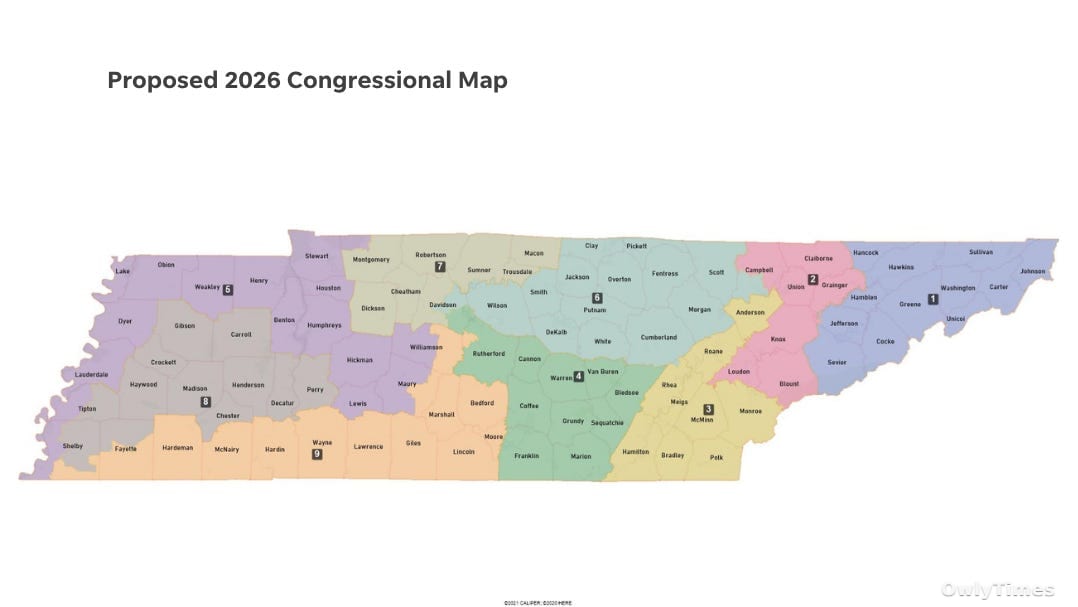

The strategic calculus behind Tennessee’s latest redistricting move centers on the preservation of a singular, high-stakes pipeline: the flow of federal capital into the state’s nuclear and defense infrastructure. By keeping Oak Ridge firmly within the 3rd Congressional District, state lawmakers are prioritizing continuity for the city’s complex ecosystem of science and security assets over the geographic cohesion of the district itself. The move ensures that Chuck Fleischmann, a Republican representative whose power is rooted in his position on the House Committee on Appropriations, maintains his oversight of the institutions that fuel the regional economy.
The Appropriations Powerhouse
For the city of Oak Ridge, geography is secondary to the political leverage held by its representative. Since 2011, Fleischmann has cultivated a portfolio that hinges on his ability to secure federal dollars for the Oak Ridge National Lab—the nation's largest multiprogram science and tech facility—and the Y-12 National Security Complex. With Fleischmann serving as chair of an appropriations subcommittee with jurisdiction over energy and water development, the city’s reliance on his seniority is acute. Over his 15 years in Congress, he has directed billions in funding toward these projects, creating a dependency that local officials describe as vital to the survival of the regional energy sector.
Who Benefits and Who Loses
The primary beneficiary of this map is the established energy-industrial complex in East Tennessee. By retaining Oak Ridge, Fleischmann secures his influence over the Tennessee Valley Authority and its ambitious plans to deploy small modular reactors in the area. Local politicians and private energy advocates, who expressed alarm in May when it appeared Oak Ridge might be excised from the district, have effectively won their lobby for stability.
The losers in this equation are the residents of Morgan, Campbell, and Scott counties. These areas are being offloaded to the 2nd District, represented by Tim Burchett, and the 6th District, represented by John Rose. For these communities, the redrawing is a clear signal that their interests are being subordinated to the strategic necessity of keeping Oak Ridge’s federal funding stream under the singular control of a seasoned appropriations chair.
Historical Precedent and the Legislative Pivot
The impetus for this session lies in the wake of a Supreme Court ruling that gutted Voting Rights Act protections for majority racial minority districts, forcing Tennessee’s legislature to return to the drawing board in May. Much like the legislative scrambles that follow major judicial overhauls of election law, the current process is less about standard reapportionment and more about hardening existing power structures against potential political volatility. The map announced on May 6 serves as a defensive bulwark, ensuring that even as the state's electoral geography shifts, the nexus of energy funding remains untouched.
The Next Move in the Nuclear Portfolio
The political chess move to watch now is the integration of Rhea and Meigs counties into the 3rd District. While the map secures the Oak Ridge footprint, the addition of Rhea County—home to the Watts Bar nuclear plant—expands Fleischmann’s direct oversight of Tennessee's nuclear production capacity. As the state moves toward final adoption of this map, the next reading of funding allocations for small modular reactors will indicate whether this legislative consolidation successfully bolsters the region's long-term energy development goals or creates new friction in the surrounding districts.





