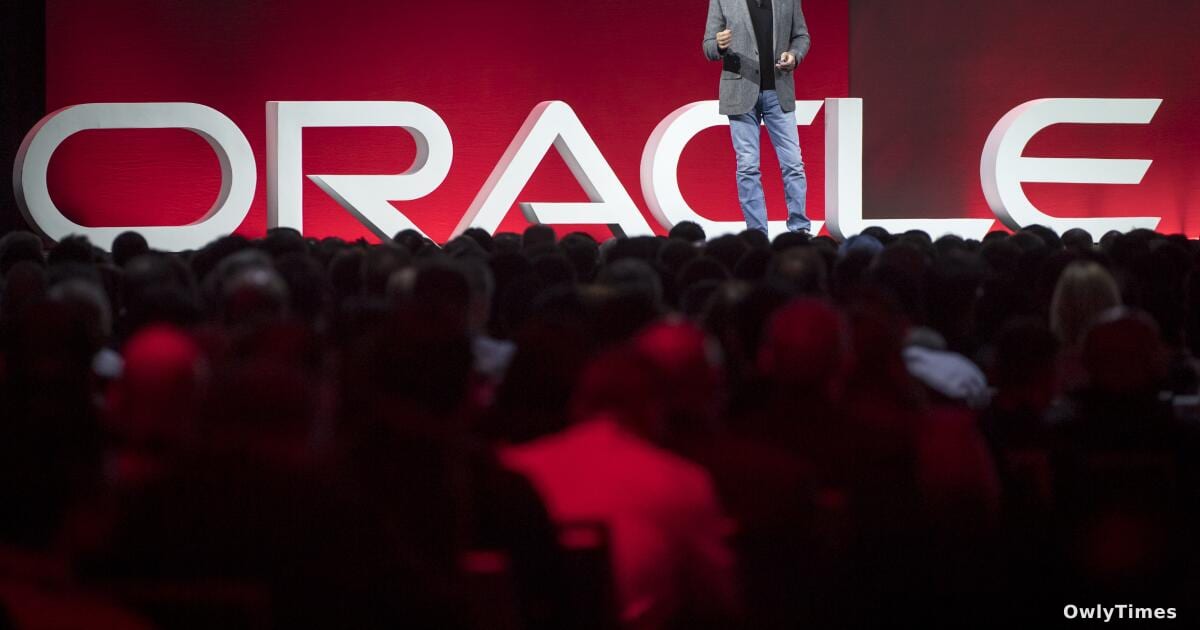

Is Silicon Valley finally admitting its growth was a mirage? The headlines scream “AI pivot!” and “cost-cutting measures!” as Oracle initiates another round of layoffs, but the real story here isn't a strategic realignment – it’s a stark acknowledgement that the promised land of endless tech expansion is, at least for now, closed. On Tuesday, the software giant began slashing jobs, with affected employees – software engineers, account executives, program managers – publicly announcing their departures on LinkedIn. While Oracle hasn’t disclosed the exact number, reports suggest “thousands” are impacted from a workforce of 162,000 as of May 2025. This isn’t an isolated incident; U.S.-based tech companies have already announced over 33,000 job cuts between January and February alone, a 51% jump year-over-year according to Challenger, Gray & Christmas.
The narrative being spun is, predictably, about AI. Oracle, alongside OpenAI and Softbank, committed to a staggering $500 billion investment in AI infrastructure through their “Stargate” project last year. The logic is simple: AI needs data, data needs centers, and Oracle wants to be the landlord. But the speed at which this transition is happening, and the scale of the cuts, suggests something more fundamental is at play. It’s not just about where the money is going, but that the existing business model is under pressure. The stock price bump – over 5% on Tuesday, despite a 24% drop since January – feels less like a vote of confidence and more like a short-term reaction to perceived efficiency. Investors aren’t rewarding AI investment; they’re rewarding the promise of future profitability through cost reduction.
This isn’t simply a matter of bean counters tightening belts. Oracle’s move from its California roots to Austin, Texas in 2020 was already a signal of shifting priorities – a search for lower costs and a more favorable business climate. Now, those signals are amplified. The company is streamlining, and that streamlining is hitting skilled workers across its California offices in Irvine, Santa Monica, Redwood City, and Santa Clara. The email sent to affected employees – a cold, formulaic notification of role elimination – speaks volumes about the human cost of this “pivot.” It’s a reminder that the tech revolution isn’t always about innovation; often, it’s about doing more with less, and someone always pays the price.
The broader context is crucial. Larry Ellison, Oracle’s co-founder, isn’t just focused on cloud infrastructure and AI. His foray into Hollywood, backing his son David Ellison’s bid for Warner Bros. Discovery with a personal guarantee of $40.4 billion, demonstrates a diversification strategy that feels…distracted. While a successful media deal could be lucrative, it also highlights a potential spreading of resources away from Oracle’s core business. Simultaneously, Oracle is deeply entangled with TikTok, holding a roughly $2 billion stake in the app’s U.S. operations as part of a deal to avoid a potential ban. This relationship, while financially beneficial, adds another layer of geopolitical complexity and potential risk.
Original reporting: the Los Angeles Times.
The fact that Oracle is raising up to $50 billion through debt and equity to expand its cloud infrastructure, while simultaneously laying off workers, is a contradiction that demands scrutiny. They’re betting big on AI, partnering with giants like Nvidia and competing fiercely with Amazon, Salesforce, and Microsoft, but the cuts suggest they’re not entirely convinced that current revenue streams can support that level of investment. The reliance on massive data troves to fuel AI systems is real, but the assumption that demand will automatically translate into profits is increasingly questionable. The real story here isn't the AI boom – it's the growing realization that the cost of participating in that boom is higher than many companies anticipated.
Looking ahead, watch for a consolidation wave in the cloud infrastructure market. Oracle isn’t alone in its cost-cutting measures, and the pressure to demonstrate profitability will only intensify. The question isn’t if more layoffs are coming, but when and where. Specifically, keep an eye on whether Oracle can successfully leverage its investment in TikTok to offset the costs of its AI push, and whether Ellison’s Hollywood ventures will prove to be a shrewd diversification or a costly distraction. The next 12 months will reveal whether Oracle’s gamble on AI is a calculated risk or a desperate attempt to stay relevant in a rapidly changing landscape.





