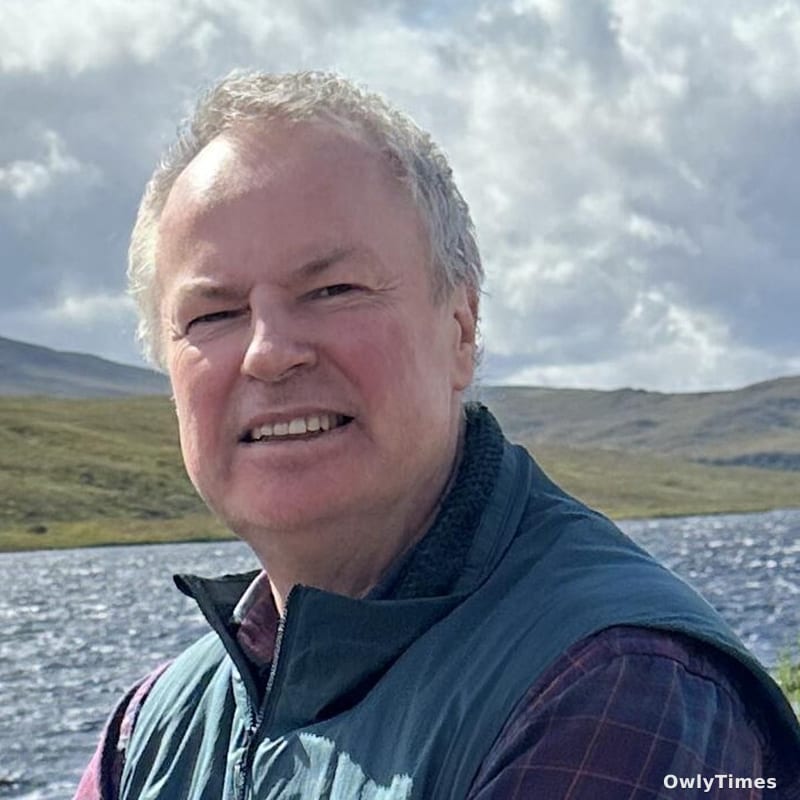

The intricate dance between microscopic life and our macroscopic world presents one of science’s grandest challenges: how do we systematically map, understand, and leverage the vast, unseen microbial communities that influence everything from human health to global ecosystems? It was this profound question that animated the life and work of Peer Bork, a pioneering bioinformatician who passed away unexpectedly at the age of 62. His contributions laid much of the computational groundwork for what we now understand about the microbiome, leaving an indelible mark on modern biology.
A Journey from East Berlin to Global Bioinformatics
Born in East Berlin, Peer Bork’s early life was shaped by a unique intellectual environment. His father, Joachim, worked in economic statistics, and his mother, Regina, in construction administration, perhaps subtly instilling an appreciation for data and structure. His exceptional mathematical aptitude earned him a place at the Heinrich-Hertz-Oberschule, a high school specializing in mathematics and science. Following military service, he pursued biochemistry at the University of Leipzig, a foundation that would prove crucial for his later work. He then earned his PhD in bioinformatics under the guidance of Jens Reich at the Central Institute for Molecular Biology of the Academy of Sciences of the GDR in Berlin. This trajectory from a divided Germany to the forefront of international science underscores his remarkable drive and intellectual curiosity.
After the fall of the Berlin Wall in 1989, Bork joined the European Molecular Biology Laboratory (EMBL) in Heidelberg in 1991 as a visiting scientist. This institution would become his scientific home, where he rose through the ranks, eventually becoming interim director general in 2025. EMBL, an intergovernmental research organisation with six sites including the European Bioinformatics Institute near Cambridge, provided the fertile ground for his revolutionary work. It was also at EMBL that he met his wife in 1991, marrying in Canterbury, Kent, in 1994, and starting a family with their two sons, Udo and Robin.
Decoding the Unseen: From Genes to Gut Enterotypes
Bork’s career trajectory in bioinformatics was a testament to his foresight, progressing from the statistical analysis of individual protein sequences to the human genome, and ultimately, to the complex bioinformatics analysis of entire microbial communities. While popular headlines often highlighted the concept of "gut enterotypes," a breakthrough that captured public imagination through numerous newspaper articles, radio, and TV features, the true depth of his contribution lies in the foundational tools he meticulously developed. He didn't just identify patterns; he built the sophisticated software and curated the extensive datasets that made such discoveries possible. These computational resources are now cornerstones, widely utilized by the global scientific community in both academia and industry, enabling researchers to explore microbial ecosystems with unprecedented rigor. His work truly established the computational framework for analyzing the human microbiome, moving beyond simple observation to systemic classification.
The Enduring Challenge of Microbial Complexity
While Peer Bork’s pioneering efforts provided us with crucial entry points into understanding microbial life, the field he helped forge remains vast and immensely complex. The identification of gut enterotypes, for instance, opened a new avenue for categorizing human gut microbiomes, but the precise functional implications and dynamic interplay within these communities continue to be areas of active and challenging research. The sheer diversity and adaptability of microbial ecosystems, both within humans and across the planet, mean that even with Bork's powerful bioinformatics tools, we are still charting unknown territories. The "limitations" in this context are not of his methodologies, but rather a reflection of the profound complexity of the biological systems themselves, reminding us how much remains to be mapped and understood. The Human Microbiome Project (HMP) and similar global initiatives, for example, continue to grapple with the sheer scale of microbial diversity and its impact on health and disease, a testament to the scientific frontier Bork so boldly advanced.
Beyond his scientific output, Peer Bork was celebrated for his exceptional mentorship. He had a remarkable ability to make science both challenging and enjoyable, fostering a vibrant environment for young researchers. Among his many accolades, which included honorary doctorates and the 2009 Royal Society and Académie des Sciences Microsoft award, he held particular pride for the Nature award for mentoring in science he received in 2008. This recognition highlights his deep commitment not just to discovery, but to nurturing the next generation of scientific minds. His dedication to furthering EMBL, an institution at the heart of European biological research, underscored his belief in collaborative, interdisciplinary science. More information about EMBL's mission can be found on their official website: European Molecular Biology Laboratory (EMBL).
At the time of his passing in Taiwan, where he was scheduled to speak at an international conference on the microbiome, Bork was actively engaged in expanding a consortium he had initiated to systematically document coastal ecosystems in Europe. This work represents a crucial next frontier, extending the detailed microbial analysis he pioneered from human guts to vast environmental systems. The continued development of such large-scale environmental bioinformatics initiatives, building on the tools and conceptual frameworks he established, will be vital for understanding ecological health and predicting the impacts of environmental change. The ongoing efforts of this consortium, now without its visionary leader, will serve as a poignant measure of the lasting impact of his foundational work and the enduring questions he inspired us to ask about the unseen world. His legacy is not just in what he discovered, but in the enduring infrastructure he built for future generations of scientists.