
Does anyone else feel like the entire tech discourse has been swallowed whole by the latest AI chatbot, leaving us collectively blind to the actual, physical machinery that still builds our world? While Silicon Valley prognosticators debate the nuances of large language models and the metaverse, a far more grounded, yet equally revolutionary, shift is quietly unfolding in places like Greenville, North Carolina. It’s a shift that directly impacts the quality of our infrastructure, the goods we consume, and the very fabric of our local economies.
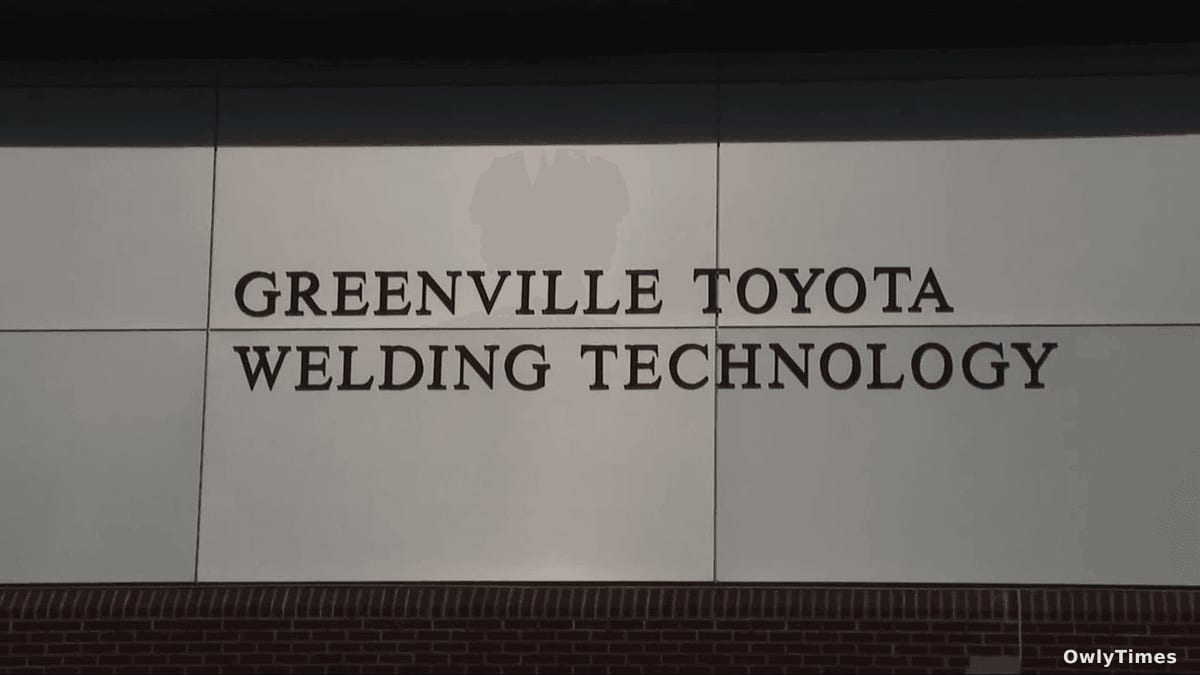
The real story here isn't just that Pitt Community College opened a shiny new facility; it's that this $17 million investment in the Greenville-Toyota Welding Technology Building offers a potent blueprint for how communities can future-proof their workforce by blending traditional trades with advanced robotics, creating tangible economic growth beyond the digital bubble. This isn't abstract innovation; it's the kind that keeps the lights on, the factories humming, and the goods moving for ordinary users.
On Wednesday, May 13, 2026, at 3:24 PM, as reported by Emilia Paz for WCTI12.com [ college leaders cut the ribbon on a facility designed to expand what officials say is already the largest welding program in North Carolina. This isn't merely about adding more square footage; it's about nearly 100 welding booths equipped with updated equipment and, critically, robotic training capabilities. This isn't your grandfather's dusty welding shop; it’s a high-tech lab preparing students for the precise, automated demands of modern manufacturing, where human skill often guides robotic precision.
Beyond the "Code or Bust" Mentality
For years, the loudest voices in the tech world have pushed a singular, often elitist, narrative: learn to code, or be left behind. While software skills are undeniably valuable, this narrow focus often overlooks the foundational trades that underpin our physical infrastructure, manufacturing base, and even the data centers that house our digital lives. The new Pitt Community College facility directly challenges this "code or bust" mentality, demonstrating that high-value, future-proof careers don't always require a four-year computer science degree.
Keith Kinlaw, dean for industry and technology at Pitt Community College, captured the momentum perfectly, stating, “It’s incredible we’re just growing, growing, growing.” He added, “This new building is going to represent what the program has been doing for years.” This growth isn't accidental; it's a direct response to acute market demand. Local industry partners, along with Pitt County and the broader community, supported the facility's development, recognizing the pressing need for skilled welders capable of working with advanced machinery. For more on the college's programs, visit [
The Robotic Weld: Precision Meets Practicality
The inclusion of robotic training capabilities is where this investment truly shines from a technology perspective. We're not talking about dystopian scenarios of robots entirely replacing human workers, but rather augmenting their capabilities and making them more productive. Imagine a skilled human welder, with years of experience, now able to program and oversee a robotic arm to perform repetitive, highly precise welds, freeing themselves to tackle more complex, custom, or intricate tasks that still require human intuition and problem-solving. This fusion of human expertise and machine efficiency is the real frontier of practical automation. It's about making skilled trades even more valuable, not less, by elevating the scope of human work.
This blend of traditional craft and cutting-edge automation directly impacts everyday users in profound ways. From the structural integrity of bridges and buildings that we drive over daily to the manufacturing quality of cars, appliances, and even medical devices, skilled welders are absolutely foundational. When these essential professionals are trained on robotic systems, it translates into more consistent quality, faster production cycles, and ultimately, safer, more durable, and more reliable products entering our homes and infrastructure. It’s a tangible link between a local community college and the global supply chain, demonstrating how local investment creates global ripple effects.
A Template for Regional Economic Resilience
College leaders explicitly stated that the expansion is expected to benefit both students and the local workforce, with companies in the region already eager to hire trained workers from the program. This isn't merely an investment in education; it's a strategic economic boost, creating a direct, demand-driven pipeline of talent that serves critical local industry needs. It's a localized, practical model that many regions grappling with workforce shortages and the often-elusive promises of tech booms could emulate.
The lesson from Greenville is clear: while the digital realm captures headlines and investor dollars, the physical world still needs building, repairing, and innovating with precision. The next significant indicator of economic resilience for many communities won't be their latest venture capital round or the number of new app startups, but rather the enrollment numbers in their advanced manufacturing and skilled trades programs, and the speed with which their graduates are snapped up by local employers for these high-tech, hands-on roles. The future of work, it turns out, is a fascinating and crucial blend of old-school grit and new-school tech.