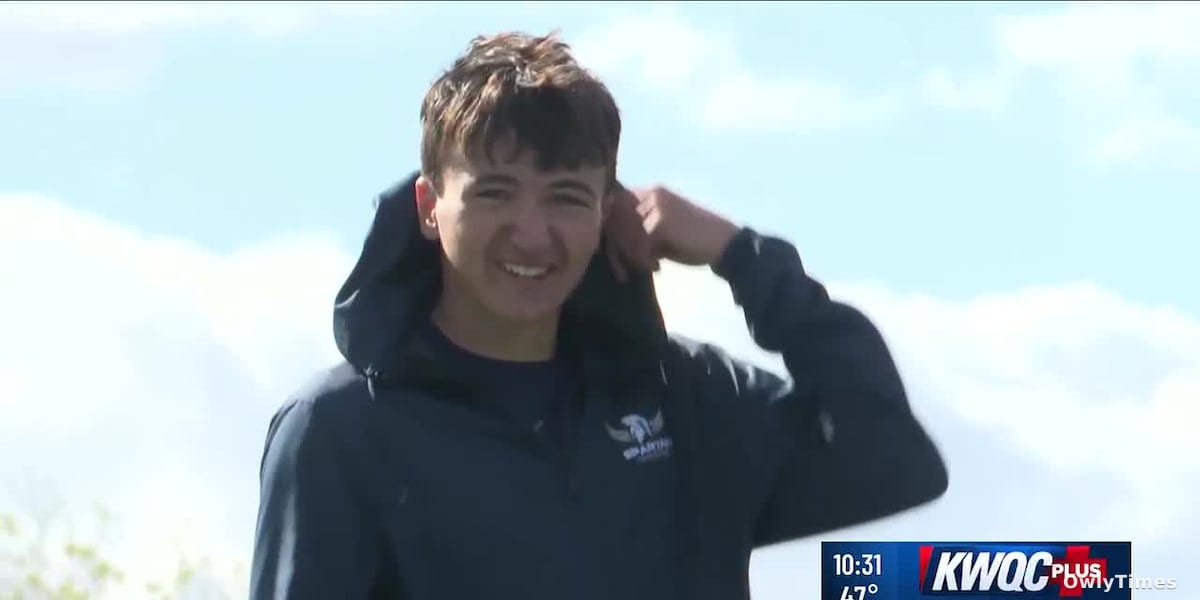

How do we reconcile the high-intensity physical demands of competitive athletics with the equally taxing cognitive load of elite academic competition? For most students, the extracurricular landscape is a zero-sum game, yet Dillon Krause, a junior at Pleasant Valley High School in Riverdale, Iowa, has demonstrated that these pursuits need not be mutually exclusive. Last week, Krause helped his team set a school record in the boys 4x400 relay at the Drake Relays, a performance that serves as a compelling case study in the intersection of physical discipline and academic focus.
The Science of the Comeback
The narrative surrounding Krause’s athletic success is often simplified into a story of raw talent, but the underlying methodology of his return to the sport suggests a more deliberate approach. Having stepped away from track entirely during his freshman year—largely due to a lack of interest fostered during his earlier years in club track—Krause’s return was driven by social motivation and a shift in perspective. His transition from distance running to the 4x400 relay reflects a tactical adjustment in how he allocates his physical energy, allowing him to balance training with his commitment to the school’s Science Bowl team.
What headlines often miss is that Krause’s athletic achievement was not a surprise to those involved; it was a calibrated objective. “We were telling each other like, yes, we got this,” Krause noted regarding the team’s expectation to break the record. The sense of relief he described upon seeing the time on the leaderboard acts as a psychological feedback loop, confirming that his structured approach to both track and his studies—which he prioritizes alongside eight hours of sleep—is functionally sustainable.
Physics as a Framework for Performance
While the track record is a measurable outcome, Krause’s engagement with physics offers insight into his cognitive framework. He describes physics as his favorite subject, noting that the work becomes less of a chore when the individual is intrinsically motivated by the material. This perspective aligns with current educational research suggesting that "academic flow"—a state of deep immersion—is remarkably similar to the focus required during an athletic event. By viewing both the track and the laboratory as environments where effort yields predictable, empirical results, Krause maintains a high level of output without the burnout often associated with dual-track excellence.
Limitations to Consider
It is essential to view this success within the context of individual temperament and circumstance. Krause himself acknowledges a degree of fortune in his ability to manage his schedule, stating he is “blessed to be a little smarter,” which hints at a baseline of cognitive ease that may not be universal. Furthermore, the 4x400 relay is a team-dependent event; his record-breaking success is inextricably linked to the performance of his relay teammates. To interpret his path as a simple blueprint for every high school athlete would be to overlook the specific synergy of his school’s competitive environment and his own unique interest-based time management.
Looking Toward Washington
The validity of this dual-track approach will face its next major test as the Pleasant Valley Science Bowl team prepares to head to the National Science Bowl in Washington, D.C. Having secured a repeat appearance for the team, Krause is now tasked with applying the same deliberate, focused effort to a national academic stage. As he looks toward an eventual transition to Iowa State University to study electrical engineering, the upcoming competition will serve as a final indicator of whether this specific model of balanced intensity can hold up under the pressure of national-level academic scrutiny.





