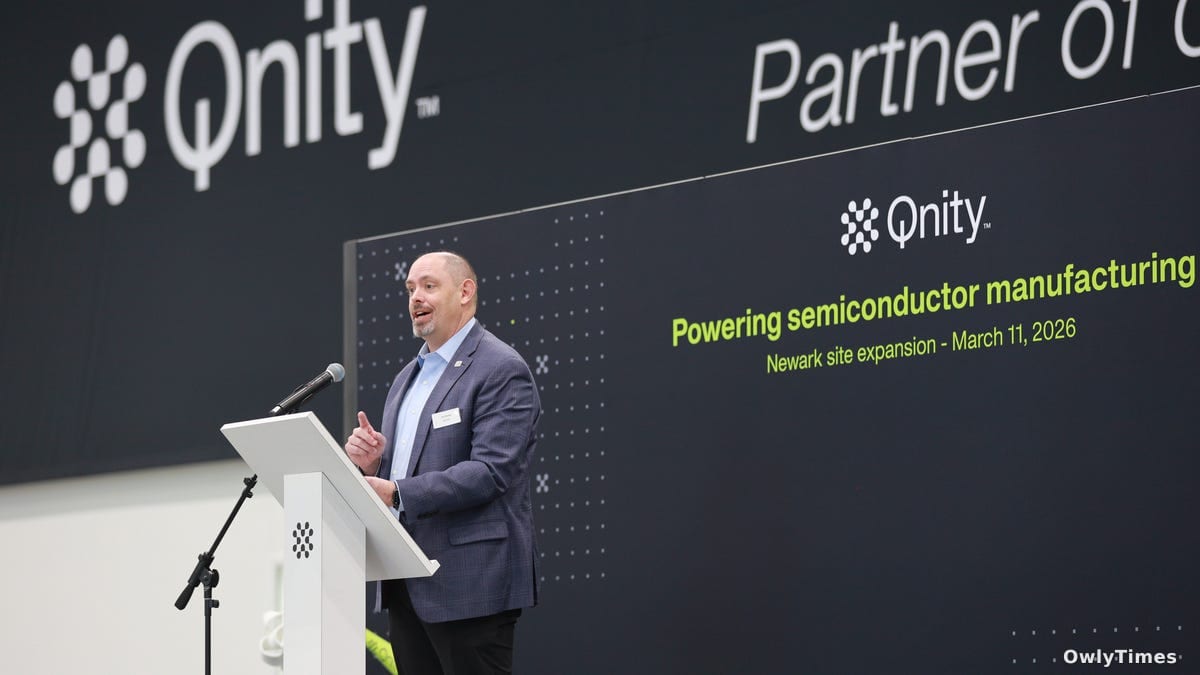

Is the future of your smartphone really made in Delaware? That’s the question no one is asking about Qnity Electronics’ new 385,000-square-foot facility in Glasgow. Everyone’s fixated on the AI boom and the trillion-dollar semiconductor industry forecast, but the real story here isn't the hype around chips – it’s the surprisingly unglamorous materials that make those chips possible, and where they’re being made. Because while Silicon Valley dreams of designing the next processor, the actual building blocks are increasingly coming from places like Newark and Glasgow, Delaware.
Qnity Electronics, a relatively new name spun off from DuPont on November 1, 2025, isn’t building the chips themselves. They’re manufacturing the chemical mechanical planarization (CMP) pads – essentially super-precise polishing cloths – used to smooth the surface of those chips during fabrication. As Governor Matt Meyer succinctly put it at the ribbon-cutting on March 11th, “Qnity makes the stuff that makes the stuff that makes our phones work.” It’s a crucial, if invisible, link in the supply chain, and one that’s suddenly become incredibly valuable. The semiconductor industry is projected to hit a trillion dollars in the next year, fueled by AI and high-performance computing, but that growth is meaningless without the materials to actually create the chips.
This isn’t just about Delaware pride, though. Qnity’s decision to expand in Glasgow, its fourth manufacturing facility in the state, speaks to a larger trend: a quiet reshoring of critical materials production. For years, the US ceded control of these foundational elements to Asia, prioritizing design and marketing. Now, with geopolitical tensions rising and supply chains proving brittle, the focus is shifting back to domestic manufacturing. Sam Ponzo, president of semiconductor technology at Qnity, emphasized the attractiveness of investing in Delaware due to existing capabilities, stating, “For us, it’s attractive to put investment in Delaware where we have all this capability already.” This isn’t a random choice; it’s a strategic move to secure a vital piece of the tech puzzle.
The scale of the Glasgow facility is telling. While currently only partially utilized, the company deliberately chose a massive space to accommodate anticipated growth. This isn’t a “just-in-case” scenario; it’s a calculated bet on continued demand. Ryan Maus, Newark site leader, notes the main campus already employs over 650 people, and that number is expected to rise as the Glasgow site ramps up production. But the expansion isn’t solely about meeting current demand. It’s about preparing for the next generation of chips, which will require even more precise and sophisticated materials. Qnity also maintains facilities in Ohio, Massachusetts, Asia, and Europe, demonstrating a global footprint, but the concentration of investment in Delaware signals a clear prioritization.
Source material: delawareonline.com.
The spin-off from DuPont, led by former DuPont executive Jon Kemp, wasn’t driven by a sudden passion for polishing pads. It was a calculated move to unlock shareholder value, as announced to investors the previous year. But the consequence of that financial maneuver is a more focused, agile company dedicated to a critical – and often overlooked – part of the tech ecosystem. This isn’t about flashy consumer products; it’s about the unsexy, essential components that underpin everything from smartphones to cars to medical devices.
Here’s what to watch for: over the next six months, keep an eye on the rate at which Qnity qualifies its materials for high-volume manufacturing at the Glasgow facility. If they hit significant roadblocks, it will expose vulnerabilities in the US semiconductor supply chain that everyone is currently ignoring. The real test won’t be the ribbon-cutting ceremonies, but the consistent, reliable production of the materials that keep the digital world running.





