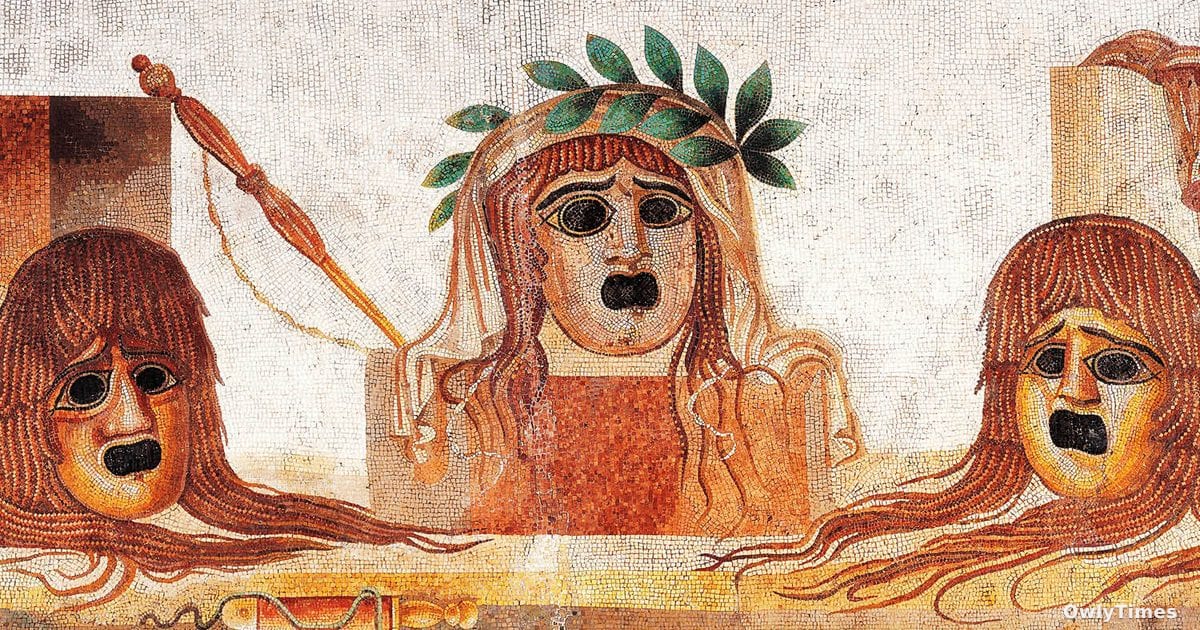

The air in Pompeii, frozen in 79 AD, still seems to vibrate with the echoes of applause. A mosaic from the House of the Tragic Poet depicts a scene of theatrical performance, a snapshot of a world where entertainment wasn’t simply escapism, but a calculated power play. While productions of Sophocles’ Antigone and Euripides’ Medea continue to fill theaters globally, Roman plays remain largely absent from the modern stage. This isn’t a matter of artistic merit, but a consequence of a fundamental difference in how the Romans did theatre – and what that reveals about the nature of power itself. “We might think of theatre today as belonging to the cultural sphere,” explains Dr. Jessica Clarke, a research associate at the Institute of Classical Studies at the University of London and author of A New History of Ancient Roman Theatre, “but in ancient Rome, it belonged to an incredibly political sphere.”
The stark contrast between the enduring legacy of Greek drama and the relative obscurity of Roman plays isn’t about quality, but control. The Greeks gifted the world with stories exploring universal themes of fate, justice, and morality – narratives that resonate across millennia. The Romans, however, didn’t have “independent theatres,” as Clarke points out. Every performance was a political event, orchestrated by those vying for influence. This meant theatre wasn’t a space for independent artistic expression, but a tool for manipulation, a carefully constructed spectacle designed to win favor and solidify power. The ancient historian Livy traced the origins of Roman theatre to actors arriving from Etruria, but Clarke argues for a more complex origin story, a “complicated web” of influences including translated Greek plays and farcical traditions from Campania. Regardless of its roots, the Roman stage quickly became a proving ground for ambitious politicians.
This article draws on reporting from historyextra.com.
This political entanglement began early in a politician’s career. The Cursus Honorum, the traditional path to power in Rome, included the position of aedile – a role primarily responsible for staging games and performances. A spectacular show wasn’t just entertainment; it was a crucial stepping stone. By 182 BC, the extravagance had become so excessive that Tiberius Sempronius Gracchus was forced to implement a spending cap, as his events had become “burdensome” to the state and its allies. This wasn’t about fiscal responsibility, but about preventing a bidding war for popularity, a situation where the wealthiest could simply buy their way to power. The senate’s intervention underscores the degree to which theatre had become inextricably linked to the political process, a battlefield for ambition disguised as public amusement.
The choice of plays themselves was a strategic decision. Tragedy, Clarke notes, was often deployed during moments of political tension, as evidenced by Pompey’s selection of Clytemnestra and The Trojan Horse for the opening of Rome’s first permanent theatre in 55 BC, and the use of tragedies at Julius Caesar’s funeral. These weren’t random selections; they were carefully chosen to evoke specific emotions and reinforce particular narratives. Conversely, comedies served to reinforce the existing social order, often at the expense of marginalized groups. The casual depiction of violence against women and the playful reversal of slave-master dynamics weren’t simply jokes, but a normalization of systemic oppression. While some scholars argue the comedic portrayal of slaves as having agency was subversive, Clarke contends it ultimately served to justify the institution of slavery itself.
This is why Roman theatre feels…uncomfortable today. The themes, steeped in a society that normalized slavery and violence, don’t translate to a modern sensibility. While we continue to grapple with the timeless questions posed by Greek tragedy, the Roman stage offers a chilling reminder of how easily entertainment can be weaponized. The absence of Roman plays from contemporary repertoires isn’t a judgment on their artistic merit, but a reflection of our evolving moral compass. It forces us to confront the uncomfortable truth that entertainment is never neutral, and that even laughter can be a tool of control. The question now is: as entertainment becomes increasingly intertwined with political messaging and social media algorithms, are we truly aware of the narratives being staged for us – and who is holding the script?