
The Paradox of Protest: Why We Judge Actions Differently Based on Who’s Doing Them
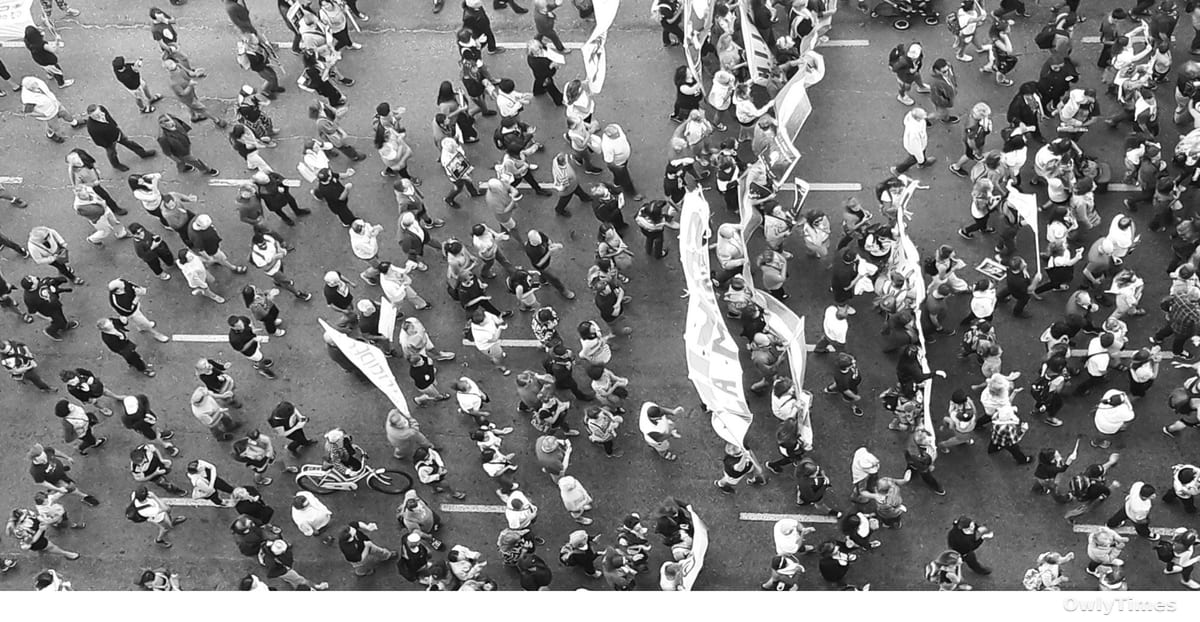
The enduring image of Colin Kaepernick kneeling during the national anthem in 2016 wasn’t simply a protest against racial injustice and police brutality; it was a catalyst for a deeper investigation into how we, as individuals, evaluate the legitimacy of collective action. The immediate and sharply divided public response – overwhelmingly negative from Republicans and white Americans, largely supportive from Democrats and Black Americans – wasn’t about the act of kneeling itself, but about who was doing it. This is the core finding emerging from research at UC Santa Barbara, and it speaks to a fundamental tension in how we understand social change and the right to dissent. It’s not that we oppose protest in principle, but that we apply a shifting moral calculus depending on whether the protesters align with our own beliefs.
Nils Reimer, an assistant professor in the Department of Psychology & Brain Science at UC Santa Barbara, and his team formalized this observation in their study, “Double standards in judging collective action,” published in the Journal of Experimental Psychology: General. The work doesn’t attempt to resolve the ethical questions surrounding protest, but rather to explain why perceptions of acceptability vary so dramatically. Reimer’s team discovered that ideological alignment is a powerful predictor of whether a protest tactic is seen as legitimate. A corporate boycott, for example, might be lauded when organized by a group one agrees with, but condemned when initiated by a group one opposes – even if the tactic itself is identical. This isn’t necessarily a sign of hypocrisy, Reimer argues, but a reflection of how deeply ingrained our group affiliations are in our moral reasoning.
Reporting from news.ucsb.edu informs this analysis.
The study’s origins lie in observing the stark contrast in reactions to Kaepernick’s protest. As Reimer points out, the act itself – kneeling peacefully, not disrupting the event, and remaining within legal boundaries – shouldn’t have been inherently controversial. Yet, opinion polls from the time revealed a significant divide: only 11% of Republicans and 29% of white Americans considered it an acceptable form of protest, while support was considerably higher among Democrats and Black Americans. This disparity wasn’t about differing interpretations of the issues at stake, but about differing evaluations of the protest as a protest. The research suggests we’re less concerned with the objective characteristics of a protest and more concerned with the perceived legitimacy of the group enacting it. This is a crucial distinction, as it suggests that attempts to frame protests as “violent” or “disruptive” may be less about the actions themselves and more about discrediting the protesters’ motives.
It’s important to note the limitations to consider. The initial observations stemmed from a single, highly charged event – the Kaepernick protest – and subsequent research, while expanding on the initial findings, relies heavily on survey data and experimental scenarios. While these methods allow for controlled investigation of attitudes, they don’t fully capture the complexity of real-world protests, which are often messy, unpredictable, and influenced by a multitude of factors. Furthermore, the study primarily focuses on ideological alignment as a predictor of judgment, and doesn’t fully account for other variables such as personal experiences, media exposure, or pre-existing biases. The research also doesn’t address the question of whether this double standard causes polarization, or is simply a symptom of it.
Reimer’s team has recently been awarded a three-year grant from the National Science Foundation to further explore these dynamics. The project aims to develop a comprehensive model explaining why people differ in their judgments of public events, with the ultimate goal of fostering more informed and productive discourse. A key question for future research is whether interventions – such as encouraging perspective-taking or highlighting shared values – can mitigate these double standards. If we understand why we judge protests differently, can we begin to bridge the divides and engage in more constructive dialogue about the issues at stake? The next steps will involve examining how these biases manifest in different cultural contexts and across a wider range of protest tactics. Watch for studies examining the impact of social media algorithms on reinforcing these echo chambers of judgment, and whether exposure to diverse perspectives can shift perceptions of protest legitimacy.