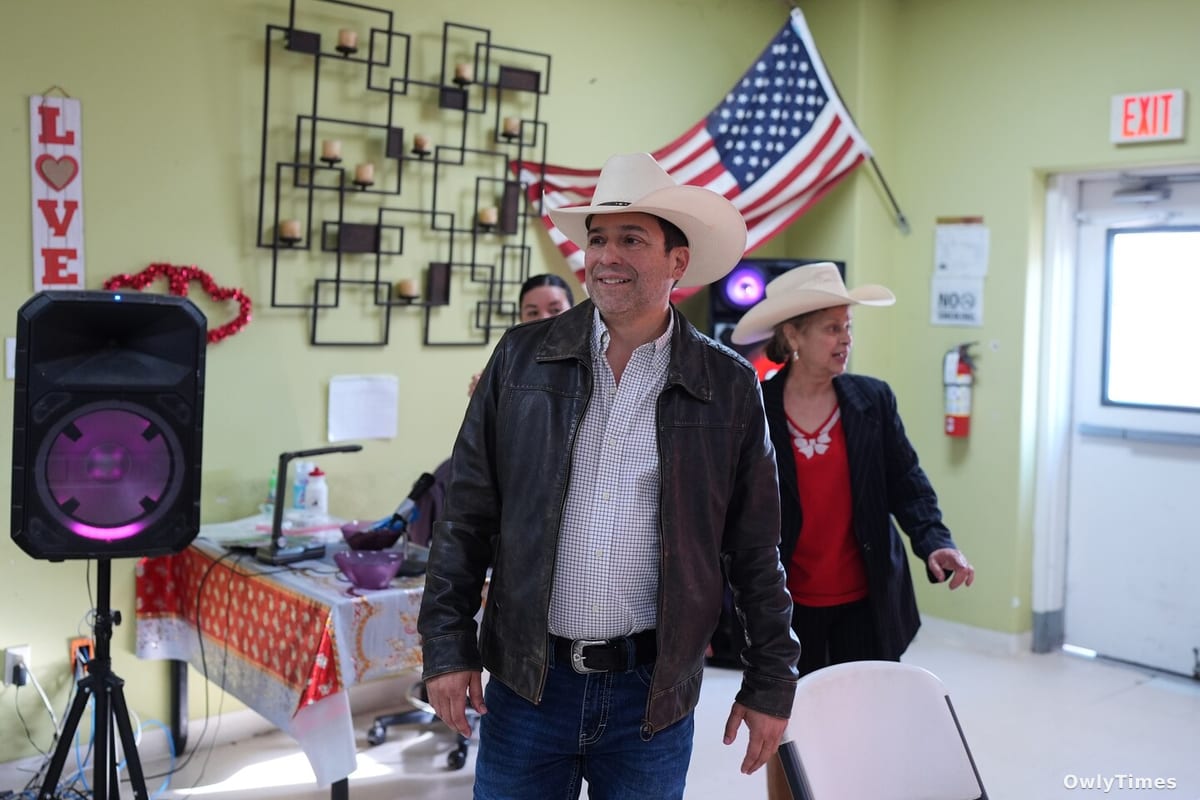

The deployment of Bobby Pulido, a Tejano music icon, as a congressional candidate in South Texas isn’t a grassroots surge – it’s a calculated gamble by the Democratic Party to exploit a fracturing demographic and circumvent years of declining influence in a region once considered a bedrock of their support. The strategic calculus is simple: traditional political outreach has demonstrably failed to stem the Republican tide among Hispanic voters in the 28th Congressional District, so Democrats are attempting a direct appeal to cultural identity, hoping celebrity recognition can translate into electoral gains. This isn’t about policy debates; it’s about activating a voting bloc through emotional resonance, a tactic with a long and often fraught history in American politics.
The Shifting Sands of South Texas Politics
For decades, South Texas was reliably Democratic, fueled by a coalition of Hispanic voters and unionized labor. However, the 2020 and 2022 election cycles revealed a significant shift, with Donald Trump making substantial inroads into traditionally Democratic counties along the border. In 2022, Republican Mayra Flores flipped the 34th Congressional District, a neighboring district to the 28th, signaling a broader realignment. While Flores lost her re-election bid in 2024, the damage was done – the Republican Party had demonstrated its ability to compete, and even win, in a region long considered safe for Democrats. The 28th district, currently held by Republican Casandra Garcia, presents a similar challenge, with a demographic composition that increasingly favors the GOP. Garcia won her seat in 2024 with 52% of the vote, a margin that, while not insurmountable, demands a drastic change in Democratic strategy.
Drawn from The Washington Post.
Who Stands to Gain, and Who Faces Risk?
The immediate beneficiary of Pulido’s candidacy is the Democratic Congressional Campaign Committee (DCCC), which is heavily invested in reclaiming lost ground in Texas. The DCCC views South Texas as a crucial battleground in their efforts to regain control of the House of Representatives. However, the strategy carries significant risks. Relying heavily on celebrity endorsement can alienate voters who prioritize policy substance over cultural connection. Furthermore, it implicitly acknowledges the failure of previous Democratic candidates to connect with Hispanic voters on issues beyond identity. Pulido’s opponent, Casandra Garcia, benefits from the potential for the Democratic strategy to backfire, allowing her to portray Pulido as an out-of-touch celebrity disconnected from the everyday concerns of the district. Local Democratic organizations, particularly those focused on grassroots organizing, may also feel sidelined by the top-down approach, potentially leading to internal friction. The long-term risk is further entrenching identity politics as the dominant framework for engaging Hispanic voters, potentially hindering the development of a broader, issue-based coalition.
Echoes of Past Political Appeals
The use of celebrity to mobilize voters isn’t new. In 1960, John F. Kennedy leveraged the popularity of entertainers like Frank Sinatra and Dean Martin to attract younger voters and project an image of dynamism. More recently, Donald Trump successfully tapped into a pre-existing celebrity persona to connect with his base. However, the Pulido case differs in a crucial respect: it’s a targeted appeal to a specific ethnic group, framed around cultural identity. This echoes the “Operation Wetback” era of the 1950s, where appeals to nativism and anxieties about cultural change were used to mobilize white voters. While the context is vastly different, the underlying principle – using identity to drive political mobilization – remains the same. The key difference now is the attempt to include a demographic through cultural affirmation, rather than exclude another through fear. Whether this approach will prove more successful remains to be seen.
Beyond the Music: The Next Phase of the Campaign
The initial phase of the Democratic strategy – generating excitement around Pulido’s candidacy – appears to be underway, with campaign events drawing significant crowds. However, the real test will come when Pulido is forced to articulate concrete policy positions on issues like border security, energy policy, and healthcare. His ability to move beyond cultural appeals and demonstrate a nuanced understanding of the district’s challenges will be critical. The political chess move to watch next isn’t whether Pulido can fill a concert hall, but whether he can effectively counter the inevitable Republican attacks framing him as a lightweight candidate relying solely on name recognition. Specifically, will the DCCC provide him with substantive policy support, or leave him to navigate these complex issues alone? The answer will reveal whether this is a genuine attempt to win back South Texas, or simply a desperate gamble to avoid further losses.





