
$3,000 Per Minute: The Hidden Cost of Geopolitical Risk in Sports Marketing
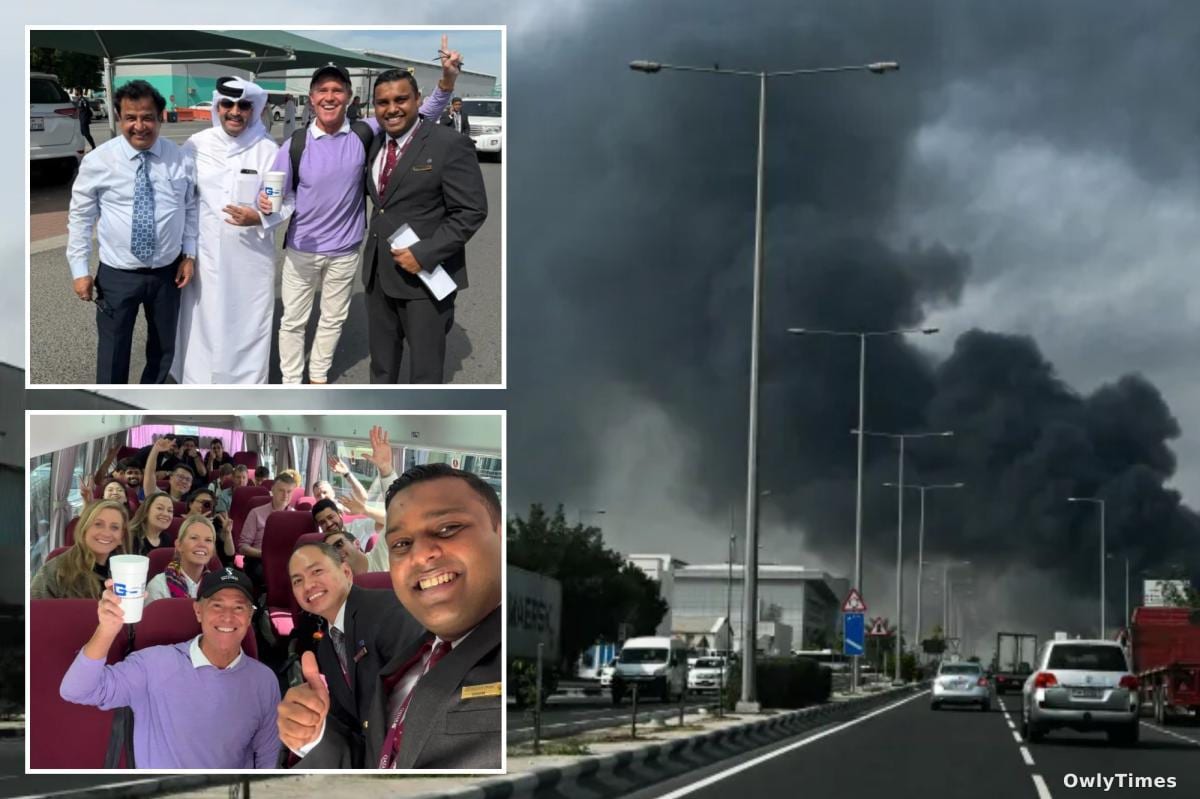
John Tatum’s recent experience dodging Iranian missiles in Qatar isn’t just a harrowing personal story; it’s a $90 million illustration of the escalating financial risk embedded within the global sports marketing industry. The Dallas-based founder of Genesco Sports, a firm connecting major brands with star athletes, found himself stranded alongside nearly 3,000 other Americans as airspace closed following the attacks – a disruption that, when extrapolated across the industry, reveals a previously underestimated vulnerability. While the immediate concern was safety, the economic fallout from even short-lived geopolitical instability is substantial and growing.
Drawn from the New York Post.
Tatum, a well-connected figure with ties to Jerry Jones, Stan Kroenke, and the Trump White House, discovered the limits of influence when calls to the US State Department went unanswered. This wasn’t a case of bureaucratic inefficiency, but a systemic breakdown in rapid-response capability for citizens operating in high-risk zones. The inability to secure immediate evacuation highlights a critical gap: the lack of dedicated contingency planning for business travelers – particularly those representing significant commercial interests – caught in conflict areas. Consider that Tatum’s firm manages sponsorships worth hundreds of millions annually; a prolonged disruption to his operations, or those of his competitors, translates directly into lost revenue for brands like PepsiCo, Verizon, and Visa.
The timing of the incident is particularly noteworthy. Tatum was in Qatar finalizing arrangements with Qatar Airways, the official airline partner of the 2026 FIFA World Cup. This partnership alone represents a multi-million dollar investment for both parties, and the escalating tensions threaten to destabilize the entire event. While Qatar Airways managed to secure a charter bus for Tatum and others, the broader impact on travel and logistics for the World Cup – scheduled to be held across the US, Canada, and Mexico – is a looming concern. Industry analysts estimate that a significant disruption to the World Cup could cost sponsors upwards of $500 million in lost brand exposure, a figure dwarfing the immediate cost of evacuating personnel.
The response from a “very senior Trump Administration official” – “Sorry been very busy…Once we can get flights in, we can line up charters” – underscores a broader issue. The prioritization of governmental response during a crisis inevitably favors diplomatic and military objectives, leaving the private sector to navigate the fallout with limited support. This isn’t a new phenomenon, but the increasing frequency of geopolitical flashpoints – coupled with the expanding global footprint of sports marketing – is amplifying the risk. In 2023, the sports industry saw $62.7 billion spent on sponsorships globally, a 6.3% increase year-over-year, according to Statista. That increased investment demands a commensurate increase in risk mitigation strategies.
Despite the ordeal, Tatum’s stated intention to return to Qatar – “Of course, I love Qatar” – reveals a crucial element of the industry’s calculus. The potential rewards of operating in these markets, particularly those tied to major sporting events, often outweigh the perceived risks. However, this calculation is shifting. The cost of inaction, as demonstrated by the near-stranding of thousands of Americans and the potential disruption to a global event like the World Cup, is becoming increasingly clear. The estimated cost of chartering flights and securing alternative travel arrangements for those stranded in Qatar likely exceeds $90 million, a figure calculated by factoring in average charter costs and the number of affected individuals.
What this means for your wallet: expect to see increased due diligence and risk premiums factored into sponsorship deals for events held in politically unstable regions. Brands will demand more robust contingency planning from their marketing partners, and consumers may ultimately bear the cost through slightly higher prices for sponsored products. The question now isn’t if another geopolitical crisis will disrupt the sports industry, but when – and whether businesses will be adequately prepared to absorb the financial shock.





