
Beyond Oyster Farms: A New Vision for Working Waterfronts in Harpswell
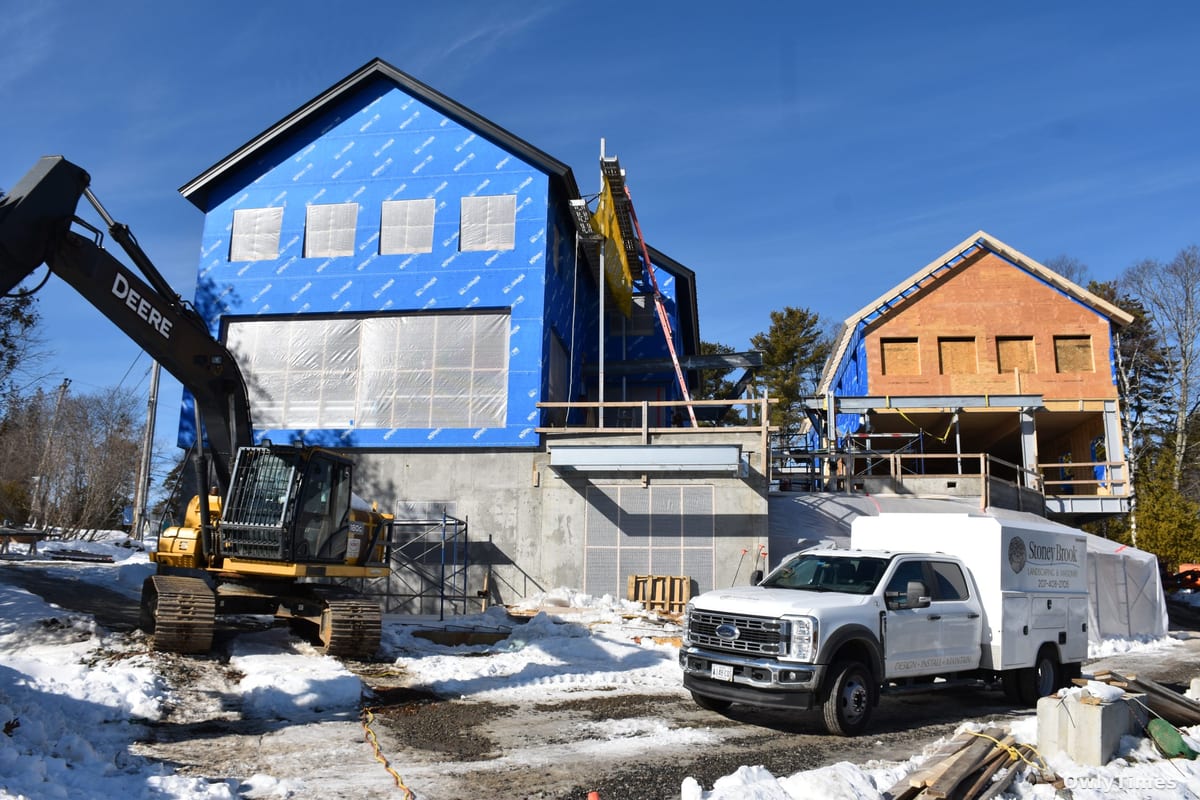
The narrative surrounding coastal development often pits conservation against commerce, framing them as mutually exclusive goals. But in Harpswell, Maine, a project currently rising from the foundations of the former Quahog Bay Inn suggests a different path – one where rigorous scientific inquiry and a thriving working waterfront aren’t just compatible, but actively reinforce each other. Construction of the Quahog Bay Conservancy’s Marine Science Center is approximately halfway complete, a development that’s garnering attention not simply for its $11-13 million price tag, but for its deliberate attempt to bridge the gap between research and the realities of a coastal economy. While headlines tout a “hub of marine research excellence,” the story is more nuanced: this isn’t solely about academic study, but about embedding that study within the community it aims to serve.
The project’s origins lie with Patrick Scanlan, founder and President of the Quahog Bay Conservancy, established in 2015 with a mission to restore and protect Quahog Bay. In November 2022, JD LLC, a company owned by Scanlan, purchased the Waddle’s Wharf property – historically the site of both an inn and a commercial wharf operated by the late Robert Waddle – for $2.7 million. This acquisition wasn’t about eliminating a working waterfront, but about reimagining it. As Laura Campbell, the conservancy’s executive director, explained, “The working waterfront is at the center of Quahog Bay Conservancy’s focus, and we want to maintain that.” The planned facility, designed to be completed by summer 2027, will include a 26-foot by 56-foot saltwater laboratory, housing for students and researchers, a seafood market for the conservancy’s Snow Island Oysters, and a new wharf accessible to both commercial fishermen and researchers.
Based on the original harpswellanchor.org report.
This emphasis on accessibility is crucial. Many marine research facilities operate somewhat in isolation, generating data that doesn’t always translate into practical solutions for those directly impacted by coastal changes. The Quahog Bay Conservancy’s model, however, aims to foster a “touchstone between the research community and the commercial fishing community,” as Campbell articulated. This isn’t simply about sharing findings; it’s about co-creating research questions and ensuring that scientific efforts address the immediate needs of local fisheries. The planned research areas – water quality, habitat health, microplastics, and invasive species like green crabs – are all issues directly impacting the livelihoods of those who depend on Quahog Bay. The conservancy intends to be a tenant and collaborator within the facility, strengthening its existing programs while partnering with other institutions.
However, the structure of the project itself introduces a layer of complexity. While the Quahog Bay Conservancy will be a key user of the facility, the land and building will be legally owned by JD LLC, a private company controlled by Scanlan. This arrangement, while not inherently problematic, raises questions about long-term control and potential conflicts of interest. The conservancy’s mission is publicly stated – to revitalize the bay’s ecosystem – but the ultimate decision-making power rests with a private entity. This isn’t to suggest any wrongdoing, but it’s a structural detail that warrants continued scrutiny as the project progresses. The Harpswell Planning Board approved the project enthusiastically in 2023, but ongoing transparency regarding the relationship between the conservancy and JD LLC will be essential to maintain public trust.
It’s also important to contextualize the projected cost. $11-13 million is a substantial investment for a relatively small, localized facility. While comparable marine labs can easily exceed this figure, the scale of the Quahog Bay project suggests a focused, pragmatic approach. The facility isn’t intended to be a comprehensive oceanographic institute, but rather a specialized center tailored to the specific needs of the bay and its surrounding communities. This targeted approach could prove to be a strength, allowing for a more efficient allocation of resources and a greater impact on local issues. The inclusion of a seafood market, while seemingly ancillary, further underscores this commitment to economic sustainability, providing a direct outlet for the conservancy’s oyster farming operations and potentially supporting other local producers.
Looking ahead, the success of the Quahog Bay Marine Science Center won’t be measured solely by the completion of its buildings or the number of research papers published. The critical question will be whether it can genuinely function as a collaborative hub, fostering meaningful partnerships between scientists, fishermen, and the broader community. Will the data generated lead to tangible improvements in water quality, sustainable fisheries management, and effective control of invasive species? And, perhaps most importantly, will this model – integrating research within a working waterfront – prove replicable in other coastal communities grappling with similar challenges? The future of Waddle’s Wharf is, in many ways, a test case for a new kind of coastal development, one that prioritizes both ecological health and economic vitality.





