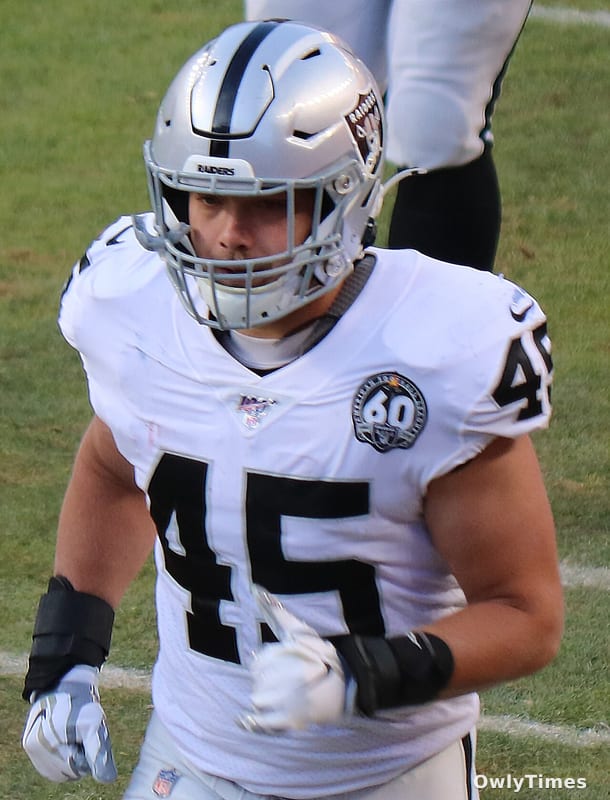

The stale air of the NFL Scouting Combine in Indianapolis hung thick with potential, but for Klint Kubiak, the new head coach of the Las Vegas Raiders, the focus wasn’t solely on the flashiest quarterbacks or towering offensive tackles. It was on the quiet necessity of a position seemingly lost to football’s evolution: the fullback. While the nation fixates on the Raiders’ desperate need for a franchise quarterback – a saga that’s become synonymous with Silver & Black frustration – Kubiak is quietly building a vision for a balanced, bruising offense, one that doesn’t treat running backs as disposable commodities. This isn’t nostalgia; it’s a calculated response to a league increasingly valuing versatility and punishing offenses that rely on a single dimension.
The Raiders’ struggles are well-documented. The quarterback carousel has spun relentlessly, and last season’s offensive line, infamously overseen by Pete Carroll’s son, Brennan, was a disaster. But beyond the headlines of quarterback woes and line failures lies a deeper issue: a lack of offensive identity. Last year, second-year tailback Ashton Jeanty carried the ball 266 times, a clear indication the Raiders wanted to establish the run. Yet, his supporting cast – Raheem Mostert, Zamir White, and Dylan Laube – combined for a paltry 41 carries. That imbalance isn’t just a statistical anomaly; it’s a recipe for a worn-down bell cow and a predictable offense. Kubiak recognizes this, stating plainly, “We definitely want to have a two-man show, guys that can share the load.” It’s a simple statement, but one that signals a fundamental shift in philosophy.
Kubiak’s history offers clues to his intentions. As the offensive coordinator for the Seattle Seahawks, he worked with Kenneth Walker III, who rushed for 1,027 yards and five touchdowns last season. Walker, valued between $6.281 million and $9 million annually, represents a tempting, albeit expensive, free agent option. But Kubiak isn’t limiting his search to familiar faces. He’s also exploring options like Rachaad White of the Tampa Bay Buccaneers, a player he knows well from his time as the Buccaneers’ vice president of player personnel. The Raiders could also look to the draft, eyeing prospects like Arkansas’ Mike Washington Jr. or Wake Forest’s Demond Claiborne, players who offer a blend of speed and power. The point isn’t necessarily who they acquire, but that they acquire someone to alleviate the burden on Jeanty.
This piece references the Yahoo Sports report.
This renewed emphasis on the backfield isn’t happening in a vacuum. The NFL is experiencing a subtle but significant shift. Teams are realizing that a strong running game isn’t just about racking up yardage; it’s about controlling the clock, wearing down defenses, and opening up play-action opportunities for the quarterback – whoever that may be. The fullback, once considered a relic, is now being viewed as a valuable asset in short-yardage situations, as a lead blocker, and even as a receiving threat. Kubiak’s desire to “play with a fullback” isn’t a quaint throwback; it’s a strategic move to create a more versatile and unpredictable offense. He acknowledges the difficulty in finding the right player, stating, “They are harder to find. So that’s the fun part right now…seeing who is available and who we can develop.”
The Raiders’ rebuild isn’t just about finding a quarterback and fixing the offensive line. It’s about establishing a sustainable identity, one built on a foundation of physicality and balance. Kubiak’s focus on the backfield, and the potential return of the fullback, is a crucial piece of that puzzle. The question now isn’t just whether the Raiders can find a quarterback, but whether they can build an offense that can support him – and whether other teams, still clinging to a pass-first mentality, will recognize the value of a truly balanced attack before it’s too late. Will we see a league-wide resurgence of the running game, or will the Raiders’ gamble on a more traditional approach be a lonely one? That’s the storyline to watch as the 2024 NFL season unfolds.

