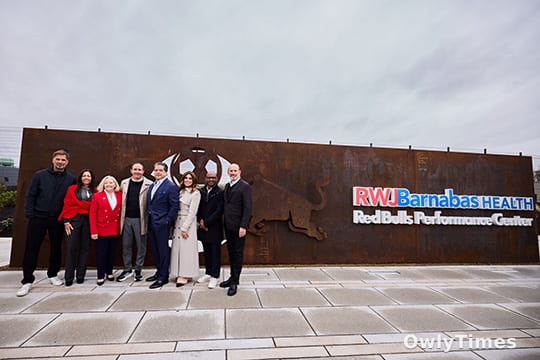

How do we define the modern architecture of athletic excellence? For decades, sports science has moved beyond the simple dichotomy of training and recovery, shifting toward a model of total physiological integration. The opening of the RWJBarnabas Health Red Bulls Performance Center in Morris Township, New Jersey, on April 22, 2026, serves as a significant case study in this evolution. Rather than merely expanding field space, the facility represents a pivot toward data-driven, longitudinal athlete management that bridges the gap between youth development and professional longevity.
The facility sits on an 80-acre parcel, a massive footprint that allows for the centralization of Red Bull New York’s entire talent pipeline. While headlines have touted the site as the most innovative in North America, the real scientific utility lies in the 88,400-square-foot main building. This space functions as an interconnected hub where biometric data collected on the field—via platforms like Kinexon and GameOn—is synthesized with physiological feedback from the medical suite. By integrating professional and Academy teams within the same infrastructure, the organization is attempting to standardize recovery and performance metrics from the earliest stages of a player’s development.
The center distinguishes itself through its specific approach to "preventative health," a term that often loses its meaning in sports marketing. Here, it is operationalized through an ortho-biologic system, aquatic therapy, and fatigue detection processes. According to Dr. Gerardo Chiricolo, the Club’s Chief Medical Officer, the objective is to move away from reactive injury treatment toward proactive, real-time training load monitoring. By utilizing high-speed Wi-Fi across the entire campus to aggregate performance insights, the staff can theoretically adjust an individual athlete's workload before a soft-tissue injury occurs. This is a departure from traditional models that relied heavily on subjective player reporting or periodic check-ins.
However, there are limitations to consider regarding this data-heavy approach. The efficacy of "predictive" training is entirely dependent on the quality of the data pipeline and the cultural buy-in from the athletes themselves. While the facility provides the technical capacity for granular, daily monitoring, there is an inherent challenge in balancing constant surveillance with the psychological well-being of young Academy players. Additionally, the reliance on high-tech diagnostic modalities creates a disparity in training standards; while this center sets a new benchmark for North American soccer, it underscores the widening gap between elite, well-resourced clubs and the rest of the competitive landscape.
The partnership with RWJBarnabas Health, led by President and CEO Mark E. Manigan, positions this facility as a dual-purpose institution—both a laboratory for elite sports performance and a broader investment in regional health. The inclusion of a demonstration kitchen for nutritional education for youth players, for example, suggests a focus on the "social determinants of health" that the health system frequently emphasizes in its public mandates. It is a strategic move to normalize the presence of clinical-grade sports science in the daily life of a developing athlete.
The next steps for this project will be measured by the longitudinal health outcomes of the athletes who pass through these doors. We will be watching for the next update on the integration of these "innovative fatigue detection processes" into the standard training cycle for the First Team. The success of this facility will not be determined by the number of grass pitches or the square footage of the gyms, but by the tangible reduction in non-contact injuries and the stability of player availability over the coming seasons. In a sport where the physical toll is cumulative, the ability to manage the "invisible" fatigue of an athlete may prove to be the most valuable resource on the property.





