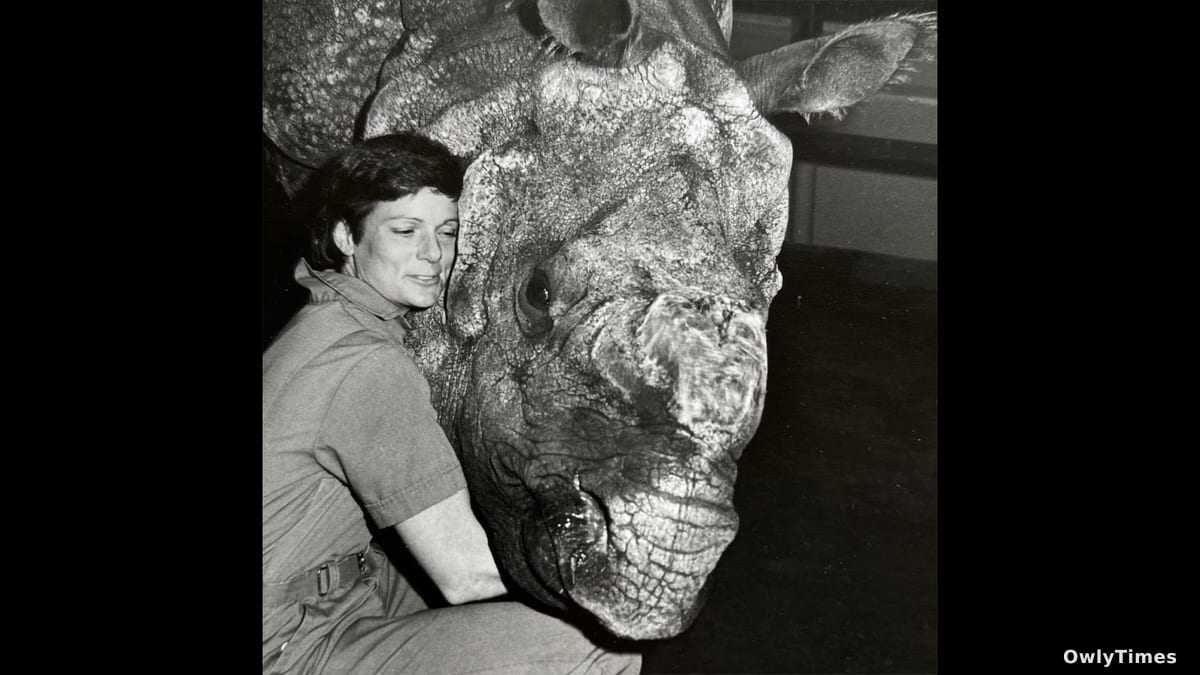

How do we reconcile the loss of a species with the preservation of human diversity? For Nan Schaffer, a veterinarian who pioneered the study of rhinoceros reproduction, this was not merely a philosophical question—it was the central challenge of her life’s work. Schaffer, who passed away on March 27th at the age of 72 following a prolonged battle with cancer, spent decades in the quiet, technical struggle of deciphering why some of the world’s most endangered mammals were failing to reproduce in captivity.
The Science of Reproductive Persistence
Schaffer’s methodology was rooted in a pragmatic, hands-on approach to biological barriers. When she began her career, the field of reproductive physiology for large, endangered mammals was virtually nonexistent. She worked in pens and barns, improvising equipment and observing animals whose cycles were poorly understood. Her research focused on the granular, often frustrating realities of rhino biology: female miscarriages, male infertility, and the dangerous, often ineffective mating behaviors that occurred when animals were paired in zoo enclosures.
What the public often perceives as a straightforward conservation goal—"breeding in captivity"—Schaffer understood as a high-stakes, procedural battle against time. By collecting and preserving genetic material from males unlikely to breed naturally, she created a biological insurance policy for the future. Her success in managing the pregnancy of an older black rhino that had previously aborted served as a landmark case, proving that with enough technical persistence, the biological trajectory of a species could be shifted.
A Legacy Beyond the Laboratory
While the headlines surrounding Schaffer’s death emphasize her role as a veterinarian and advocate for the Sumatran rhino, her impact extended deep into her home city of Chicago. She was a prominent supporter of LGBTQ+ causes and a founder of a local newspaper that evolved into the Windy City Times. In 2004, she was inducted into the Chicago LGBTQ+ Hall of Fame, highlighting a commitment to social diversity that mirrored her biological work.
Schaffer argued that there was a moral link between these two worlds. She famously stated, “One of the great tragedies of the 21st century will be humanity’s homogeneity.” To her, the loss of species was an erosion of the natural world’s complexity, a process of simplification that mirrored the loss of human diversity. She viewed extinction as a cultural crisis, maintaining that humanity could not simply "build" nature to replace what was lost through attrition.
Limitations and Future Realities
It is important to recognize that Schaffer’s work did not provide a definitive solution to the extinction crisis. Despite her contributions, the Sumatran rhino remains on the precipice of collapse, with its survival still dependent on the volatile combination of captive breeding, habitat protection, and international political will. Her techniques, while foundational, face the inherent limitation that captive breeding is an imperfect, often uneven strategy that cannot fully replicate the wild.
The next steps for the conservation community now rely on the infrastructure Schaffer helped build. The efficacy of these reproductive programs will be measured by the success of captive breeding efforts at locations like the Sumatran Rhino Sanctuary. As researchers continue to utilize the genetic preservation techniques she championed, the ongoing birth rates within these sanctuaries will serve as the primary indicator of whether the biological foundation she established is sufficient to sustain the species, or if the loss she warned against is inevitable.





