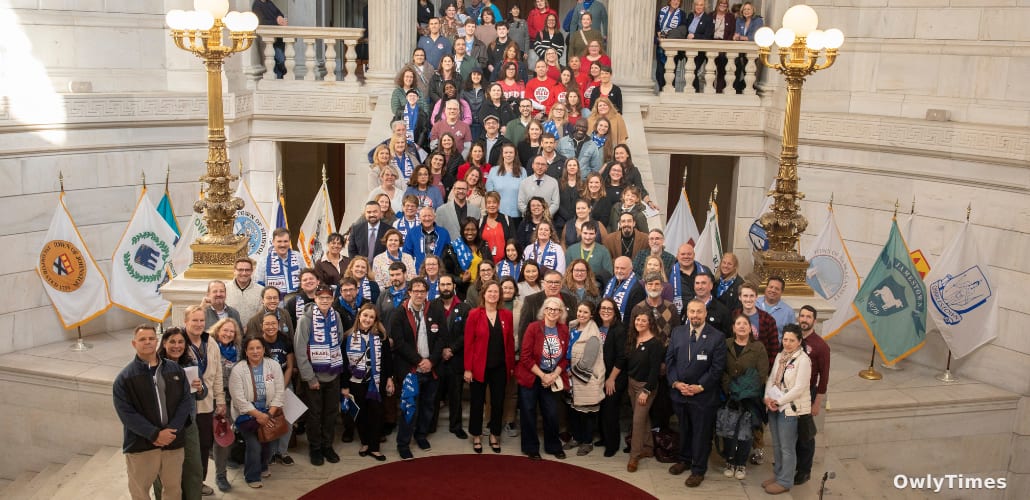

The transformation of Rhode Island’s political landscape over the last decade offers a masterclass in institutional power-building. While many observers view the state’s current progressive trajectory as a natural partisan evolution, the reality is a deliberate, structural recalibration of influence. By systematically targeting the primary process and shifting the locus of power away from the executive branch and toward the state legislature, labor unions have effectively rewritten the rules of engagement in a state once defined by the austerity politics of former Republican Governor Donald Carcieri.
From Defensive Posture to Legislative Dominance
The strategic calculus here is clear: labor realized that a "blue" state is not a monolith, and centrist Democrats were previously acting as a buffer for anti-labor policies. During the Carcieri administration from 2003 to 2011, the state saw the elimination of 1,000 public sector jobs and attacks on teacher pensions. According to Patrick Crowley, president of the Rhode Island AFL-CIO, the turning point was the realization that the House of Representatives held more leverage than the Governor’s office.
By utilizing voter databases like VAN to identify high-density union districts, the AFL-CIO, alongside affiliates like the National Education Association (NEA) Rhode Island and Painters (IUPAT) District Council 11, began recruiting pro-labor candidates to challenge incumbents in primaries. Who benefits? The labor movement, which has secured a legislative trifecta and passed landmark protections, including 2023 legislation classifying wage theft as a felony. Who loses? The centrist Democratic faction that previously operated with minimal accountability to the working-class base.
The Infrastructure of Influence
The Rhode Island model mirrors a broader historical trend where organized groups consolidate power by building "stable anchors" for political activity. Unlike campaigns that rely on ephemeral "lit drops," union leaders like Justin Kelley, political director of Painters District 11, emphasize long-form, deep-canvassing conversations. This shift in methodology—prioritizing member-to-member engagement over broad-spectrum advertising—has allowed unions to move the needle on sensitive social issues, such as the 2013 marriage equality bill and the 2023 assault weapons ban, which was framed effectively as a workplace safety concern.
This approach has yielded tangible economic outcomes. Beyond the 2024 pension improvements, the state is moving toward a $17 minimum wage by 2027. Furthermore, by framing climate policy as a jobs program—partnering with Climate Jobs Rhode Island to mandate glazing standards on public projects—the building trades have successfully insulated themselves from the common tension between environmental regulation and labor interests.
Aligning Institutional Resources with Policy Goals
The integration of labor’s agenda into the state’s governance is perhaps best illustrated by the 2025 Democratic Party platform, which now explicitly reflects union priorities. This did not happen by accident; it resulted from a concerted effort to move beyond transactional politics—donating to fundraisers and "slapping backs"—toward a model of persistent lobbying. Stephanie Mandeville, communications director for NEA Rhode Island, notes that the union’s success stems from aligning workers’ rights with community well-being, as seen in the coalition-building with the Healthy Schools Coalition.
As the labor movement looks to codify further protections, such as the Warehouse Worker Protection Act championed by Teamsters Local 251, the focus remains on scaling these local victories. The next reading of the state’s legislative progress on a proposed millionaires tax will serve as the primary indicator of whether the labor movement can continue to dictate the fiscal agenda of the Rhode Island Democratic Party or if they will face a ceiling in their effort to redistribute the state’s economic burden.





