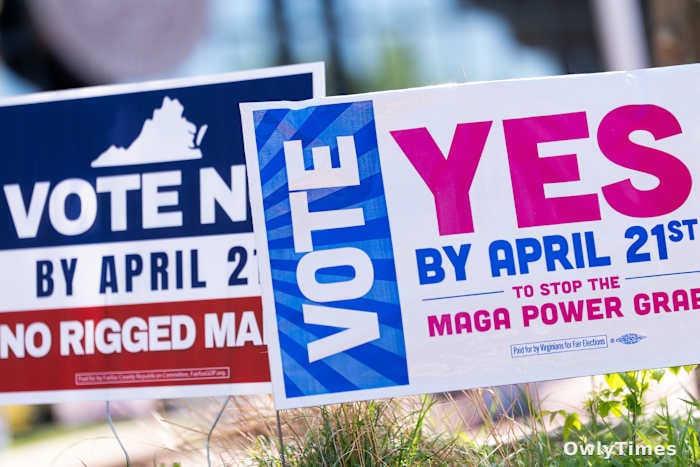

The strategic calculus currently playing out in the Virginia Supreme Court reveals a cold, mechanical approach to power: if you cannot win the electorate, you must win the definition of the process itself. By attempting to codify a mid-decade redistricting plan through a constitutional amendment, Democratic state legislators sought to insulate their gains from the standard volatility of legislative shifts. However, the move has triggered a procedural trap, forcing the judiciary to decide whether the state’s constitutional "election" requirements are a rigid firewall or merely a flexible hurdle for the party in power.
The central tension rests on the definition of an "election." Attorney Matthew Seligman, representing the Democratic legislators, is pushing for a narrow interpretation that restricts the term to the single day of the general election. Conversely, plaintiffs—including Republican lawmakers and voter Camilla Simon—argue that the modern reality of early voting transforms the "election" into a weeks-long window. Who benefits and who loses here is clear: a ruling in favor of Seligman’s narrow timeline preserves a map that could net Democrats four additional seats, while a victory for the plaintiffs would invalidate the amendment entirely, rendering the voter-approved maps null and void.
This legal maneuvering serves as a microcosm of a broader, national tit-for-tat strategy. The current conflict traces its roots to last summer, when President Donald Trump urged Texas Republicans to redraw districts, effectively greenlighting a cycle of aggressive gerrymandering across the U.S. As both parties scramble to secure the House majority in the upcoming midterm elections, the courtroom has become the primary arena for setting these boundaries. Much like the legislative gridlock that often follows a contested mandate, the current situation mirrors historical precedents where the integrity of a legislative process is pitted against the perceived will of the voters.
The stakes are amplified by the specific history of Virginia’s current map. The state is currently represented by six Democrats and five Republicans, a configuration forced upon the legislature by a court after a bipartisan commission failed to act following the 2020 census. The Democratic-led legislature’s attempt to bypass this via a constitutional amendment has created a fragile legal structure. Circuit Judge Jack Hurley Jr. of Tazewell County previously ruled in January that the amendment was invalid, citing not only the timing of the vote but also a failure to provide the constitutionally required three-month public notice. While the Virginia Supreme Court stayed that order to allow the referendum to proceed, the underlying procedural flaws identified by Judge Hurley remain a potent threat to the map's long-term survival.
The political chess move to watch next will be the Virginia Supreme Court’s eventual ruling on the validity of the constitutional amendment. With candidates already campaigning for the August 4 primary election under the new, contested districts, any judicial intervention will force an immediate, chaotic recalibration of the state's electoral map. Simultaneously, observers should monitor the special session of the Florida legislature, where Governor Ron DeSantis is pursuing a redistricting plan designed to neutralize the gains Democrats are currently fighting to keep in Virginia. Until the Virginia court issues its decision, the state remains in a period of electoral limbo, with the legislative power balance in the U.S. House hanging on the court’s interpretation of when a vote actually begins.





