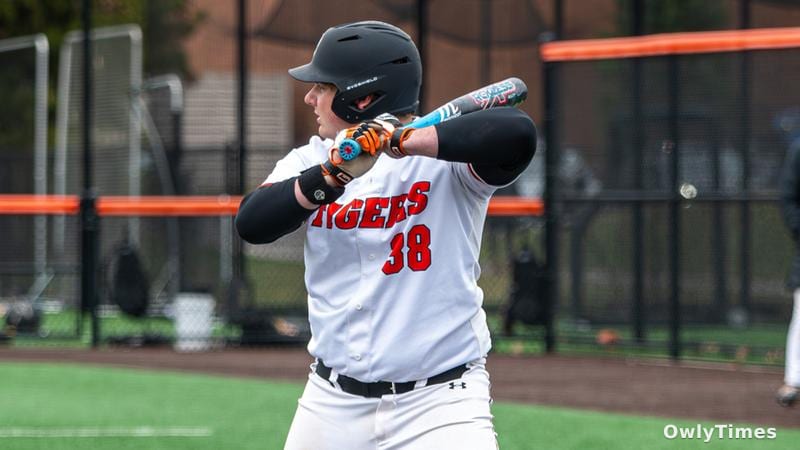

The rain was coming down in sheets, the kind that soaks you through before you even realize you’re wet. It wasn’t exactly the postcard weather for a college baseball series, but on a frigid Sunday morning in Rochester, New York, the RIT Tigers didn’t seem to mind. They dismantled Clarkson, 13-3, in a seven-inning mercy rule victory, a win that feels less like a typical baseball outcome and more like a statement about resilience – both on the field and in a program quietly building something special. It’s easy to dismiss a lopsided game in late March as just another early-season blip, but this series win, and the way it unfolded, speaks to a shift happening within RIT’s athletic department, and a broader trend of overlooked programs seizing their moment.
A Six-Run Burst and the Power of Momentum
The game wasn’t a slow burn; it exploded in the second inning. After a scoreless first, Roberto Reade sparked the offense with a double, quickly followed by RBIs from Mikey Zacher and Trent Rapp. Then came the moment that truly broke the game open: a three-run homer from Jarin Moses, sending the ball sailing over the left field fence. Six runs in a single inning isn’t just about hitting; it’s about a team believing, fully and unequivocally, in its ability to score. This wasn’t a team content with scratching across a run here and there. They were hungry, aggressive, and capitalizing on every opportunity. That kind of offensive outburst, especially in challenging conditions, is a testament to a batting order that’s clearly finding its rhythm. While the final scoreline suggests dominance, Clarkson didn’t simply roll over. They clawed back with two runs in the third and one in the fourth, demonstrating a competitive spirit that kept the game within reach – for a while.
Reporting from ritathletics.com informs this analysis.
Beyond the Box Score: The Rise of the Mid-Major
The win improves RIT’s record to 7-8 overall and 2-1 in the Liberty League, numbers that won’t grab national headlines. But that’s precisely the point. College baseball is often dominated by the powerhouses – the Floridas, LSUs, and Oklahomas – but the real drama, the compelling narratives, often unfold at the mid-major level. Programs like RIT are operating with smaller budgets, less media attention, and often, less recruiting clout. Yet, they’re consistently producing competitive teams, fueled by players who are driven, dedicated, and eager to prove themselves. This victory over Clarkson, a program with a strong baseball tradition, isn’t an anomaly. It’s part of a larger trend of these institutions challenging the established order. The Tigers’ error-free defense, contrasted with Clarkson’s three errors, highlights a focus on fundamentals that often separates these programs. It’s not always about the flashiest plays; it’s about consistent execution.
Pitching Depth and the Value of Relief
While the offensive fireworks understandably grabbed attention, the pitching performance was equally crucial. Starter Liam Miller set the tone with three strikeouts over 2.2 innings, but it was the relief pitching of Ryan Moran that truly sealed the deal. Moran tossed 4.1 innings, allowing just one earned run and striking out three, earning the win and improving his record to 2-0. In college baseball, where pitching staffs are often stretched thin, the ability to rely on reliable relievers is invaluable. Moran’s performance underscores the importance of developing pitching depth, a strategy that allows teams to navigate long seasons and challenging schedules. The Tigers’ ability to seamlessly transition from Miller to Moran, without losing momentum, was a key factor in their victory. Max Matteucci’s two-run homer in the sixth, extending the lead to 8-3, felt like a direct response to Clarkson’s attempts to get back into the game, a signal that RIT wasn’t about to relinquish control.
What This Means for the Future of RIT Baseball
The 13-3 victory isn’t just a win; it’s a validation. It’s a sign that the program is on the right track, that the players are buying into the coaching staff’s vision, and that the hard work is paying off. The Tigers’ next challenge comes this Wednesday against Oswego, a non-conference matchup that will provide another opportunity to test their mettle. But the bigger question isn’t about this single game. It’s about whether RIT can sustain this momentum, continue to develop its players, and establish itself as a consistent contender in the Liberty League. Will other programs begin to take notice? Will recruiting become easier? And, perhaps most importantly, will this success translate into increased support for the athletic department as a whole? The rain may have stopped falling in Rochester, but the ripples from this victory are just beginning to spread.