
$10 Million in Lost Sales: Why the Supreme Court’s Tariff Ruling Isn’t a Quick Fix
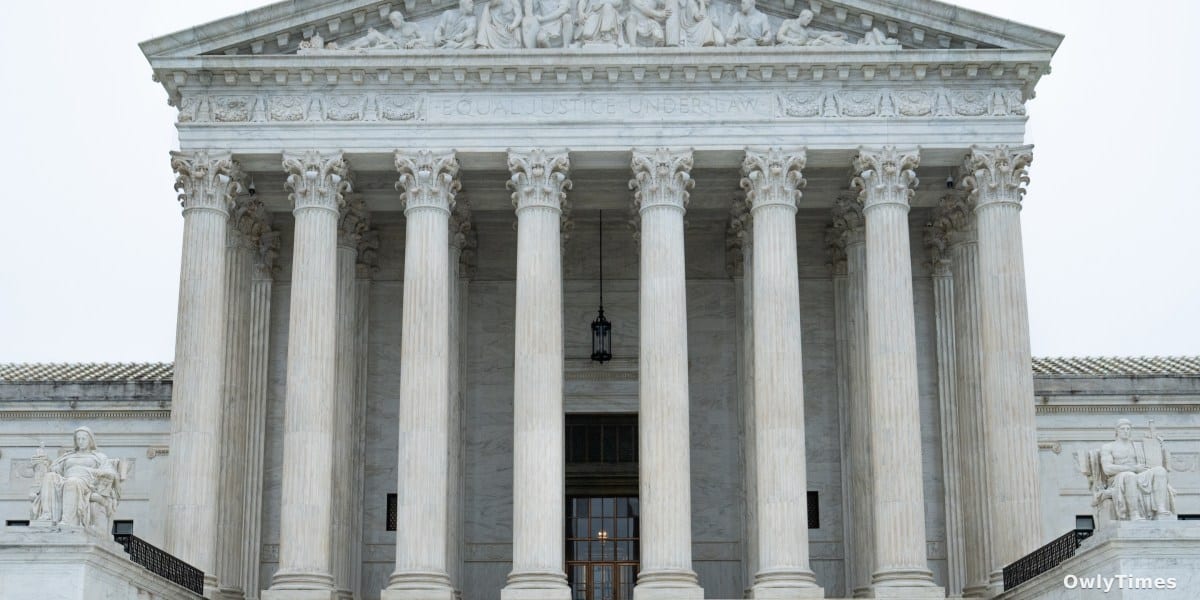
A 10% drop in sales at a single, Illinois-based manufacturer – Trim-Tex, a company processing over 25 million pounds of PVC annually – encapsulates the economic drag of prolonged tariff uncertainty. Friday’s Supreme Court ruling, striking down President Trump’s use of the International Emergency Economic Powers Act (IEEPA) to impose tariffs, is being hailed as a win for free markets, but a closer look reveals a complex landscape where immediate financial benefits are far from assured. This isn’t simply a legal victory; it’s a stark illustration of how policy volatility directly impacts the bottom line of American businesses, and the ripple effects extend far beyond headline figures.
The 6–3 decision limits the president’s unilateral tariff authority, invalidating portions of levies on steel, aluminum, and imports from China. While the ruling addresses a constitutional concern – the power to regulate trade residing with Congress, not the executive branch, as Matt Totsch, CFO of Trim-Tex since 2020, articulated – the immediate financial implications are muted by practical hurdles. Follow the money: the uncertainty created by the tariffs wasn’t about the tariffs themselves, but about the unpredictable cost environment they fostered. Even with the legal challenge resolved, the systems for refunds and revised customs procedures haven’t been updated, leaving importers in a precarious position.
Original reporting: Fortune.
The impact on construction, a key sector for Trim-Tex which manufactures drywall and stucco corner beads, was demonstrably negative. The producer price index for materials and services used in nonresidential construction rose 3.3% from December 2024 to December 2025 – the largest annual increase in several years. This wasn’t an abstract statistic for Totsch; it translated directly into project delays, cancellations, and ultimately, a $10 million decline in sales for Trim-Tex in 2025 compared to the previous year. He connects this instability to broader economic pressures, noting that tariffs, combined with immigration policies, created a double bind on both material costs and labor availability. This highlights a critical point: tariffs aren’t isolated events; they interact with existing supply chain vulnerabilities and labor market dynamics.
The Duke University/Federal Reserve Banks of Richmond and Atlanta Q4 2025 CFO survey confirms this widespread anxiety. Trade policy and tariffs remained a top concern for finance chiefs, who anticipated price increases exceeding 3% in 2026 before the Supreme Court ruling. This suggests a pre-existing expectation of continued inflationary pressure, even without the contested tariffs. The ruling, therefore, removes a potential accelerant, but doesn’t necessarily reverse course. Andrew Siciliano, a partner at KPMG specializing in trade and customs, cautions against hasty adjustments, emphasizing the logistical complexities of updating customs systems and the lack of clear guidance on refund processes.
This caution is well-founded. The potential for a swift policy reversal by a future administration looms large. Mark Williams, a finance lecturer at Boston University, points out that the financial benefit of the ruling could be “short-lived” if the Trump administration responds with new anti-trade policies. This underscores a fundamental tension: the ruling establishes a legal precedent, but doesn’t guarantee a sustained shift in trade policy. While Williams frames the decision as “a win for free market economics,” predicting reduced consumer costs and support for U.S. GDP growth through increased trade with China, Mexico, and Canada, that outcome hinges on political will.
Trim-Tex, for now, is adopting a wait-and-see approach. Totsch states the company isn’t positioned for immediate pricing adjustments, prioritizing stability and consistent pricing for its customers. This reflects a broader sentiment among manufacturers: a desire for predictability, not necessarily immediate cost savings. The company’s focus on a “stable framework” rather than government intervention speaks to a long-term strategy built on efficient operations and reliable supply chains.
What this means for your wallet: don’t expect immediate price drops at the hardware store. While the Supreme Court ruling offers a potential reprieve from escalating construction costs, the benefits will likely be gradual and contingent on sustained policy stability. The key question for consumers and investors is this: will the administration prioritize clarifying the refund process and establishing clear trade guidelines, or will this ruling simply become another battleground in the ongoing trade policy debate? The answer will determine whether this legal victory translates into tangible economic relief, or remains a fleeting moment of calm in a turbulent market.





